This tuna tartare appetizer is the kind of dish that looks restaurant-level but comes together in minutes. It’s bright, clean, and full of flavor, with citrus, sesame, and a gentle kick of heat. Serve it on crisp wonton chips, cucumber rounds, or buttery crostini, and you’ve got an instant crowd-pleaser.
It’s perfect for date nights, dinner parties, or when you want something light and satisfying. If you love fresh, simple food that feels special, this one’s for you.
What Makes This Recipe So Good
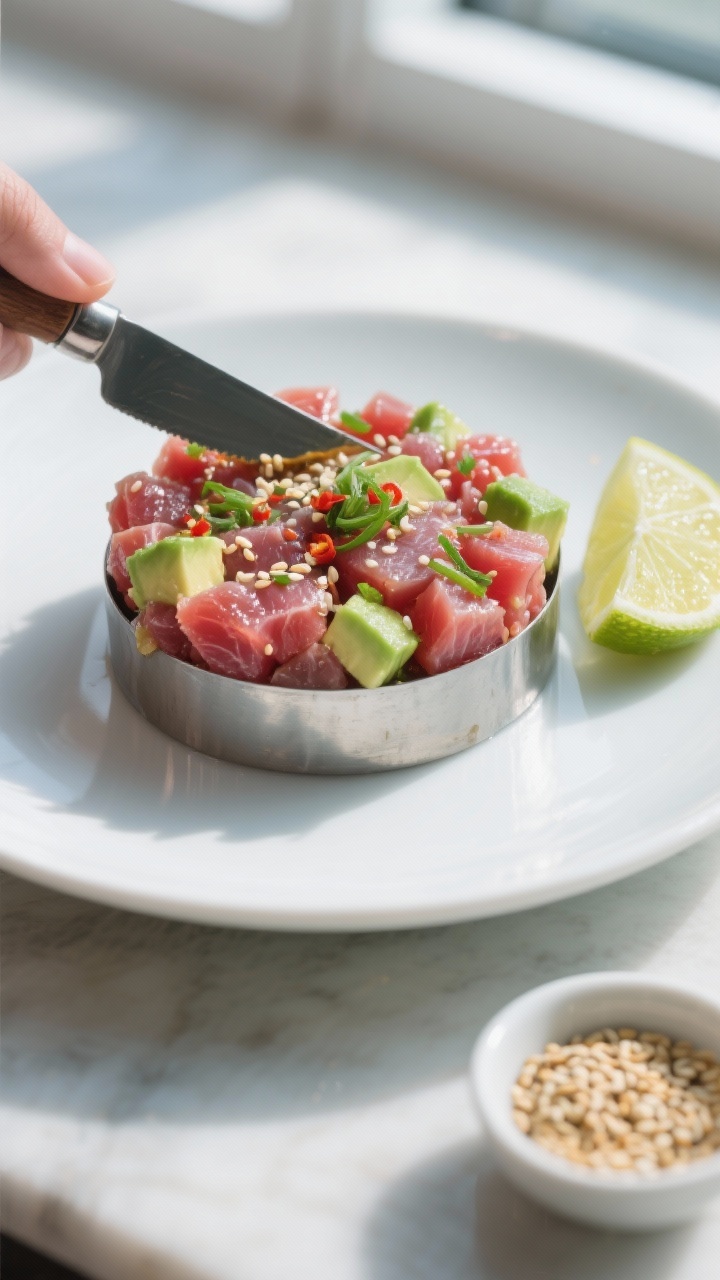
- Fast and fuss-free: You can prep it in about 15 minutes, no cooking required.
- Fresh and bright flavors: Lime, soy, sesame, and a touch of chili bring the tuna to life without overpowering it.
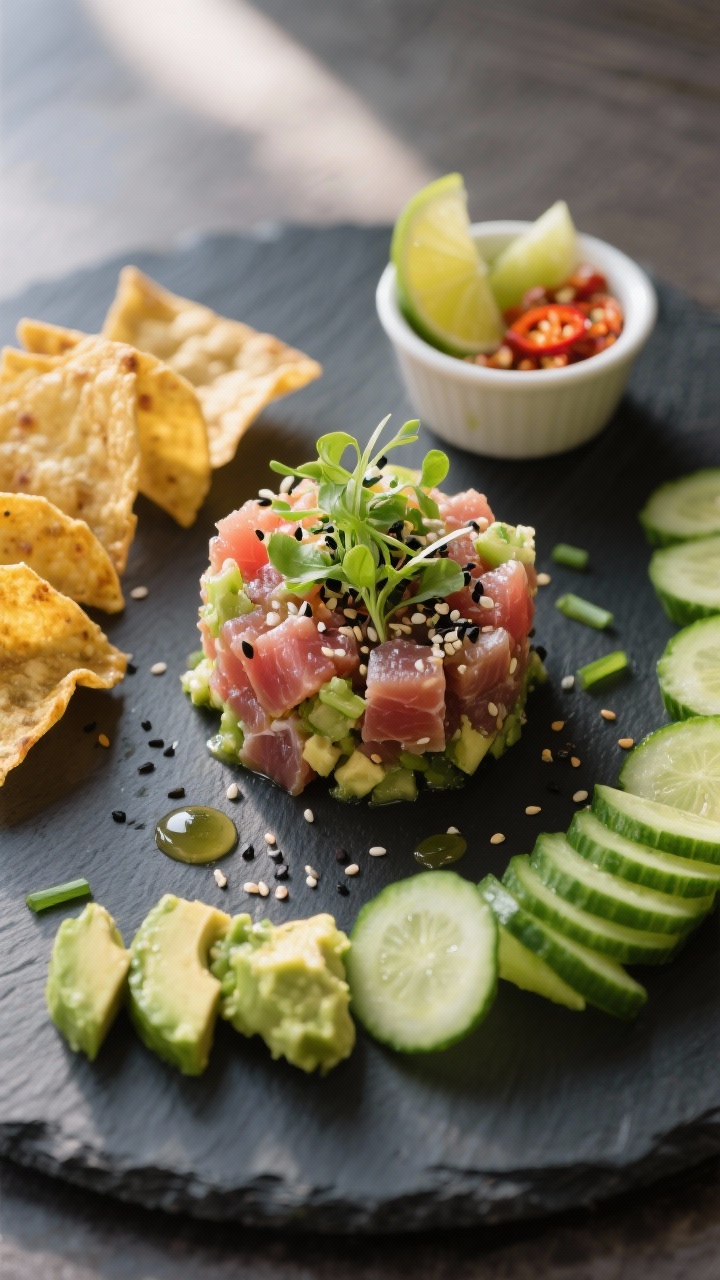
- Restaurant-worthy presentation: A neat mound of jewel-toned tuna with avocado and herbs instantly elevates your table.
- Customizable: Adjust the heat, swap herbs, or add crunchy elements like radish or fried shallots.
- Light but satisfying: Packed with protein and healthy fats, it feels indulgent without being heavy.
Ingredients
- 8 ounces sushi-grade ahi tuna, very cold, finely diced
- 1 small ripe avocado, diced
- 2 teaspoons soy sauce or tamari
- 1 teaspoon toasted sesame oil
- 1 teaspoon fresh lime juice (plus more to taste)
- 1 teaspoon rice vinegar
- 1 teaspoon finely grated fresh ginger
- 1 teaspoon minced shallot or red onion
- 1 teaspoon finely chopped fresh chives (or green onion)
- 1 teaspoon sesame seeds (black or white), plus extra for garnish
- 1–2 teaspoons chili crisp or sriracha (optional, to taste)
- Sea salt and freshly ground black pepper, to taste
- Neutral oil (like avocado or grapeseed), a few drops if needed to gloss
- To serve: Wonton chips, cucumber rounds, seaweed snacks, or crostini; microgreens or cilantro for garnish
Instructions
- Chill everything: Place a mixing bowl in the fridge and keep the tuna very cold. Cold ingredients help with clean cuts and keep the tartare safe and fresh.
- Make the dressing: In the chilled bowl, whisk together soy sauce, sesame oil, lime juice, rice vinegar, grated ginger, shallot, chives, sesame seeds, and chili crisp if using.
Taste and adjust acidity or heat as needed.
- Dice the tuna: Using a sharp knife, cut the tuna into small, even cubes (about 1/4 inch). Work quickly to keep the fish cold. Pat dry with a paper towel if there’s excess moisture.
- Fold the tuna into the dressing: Add the tuna to the bowl and gently fold to coat.
You want the fish glossy, not drowning. If it looks a bit dry, add a few drops of neutral oil for shine.
- Prepare the avocado: Dice the avocado and season with a pinch of salt and a squeeze of lime. Fold it gently into the tuna mixture so it stays intact.
- Season and rest briefly: Add a small pinch of salt and pepper.
Let the tartare sit in the fridge for 5 minutes to meld, but not much longer to keep the texture pristine.
- Plate: Spoon the tartare into a ring mold for a clean, stacked look or simply mound it neatly. Sprinkle with extra sesame seeds and top with microgreens or cilantro.
- Serve right away: Pair with crisp wonton chips, cucumber slices, toasted baguette, or sheets of roasted seaweed. Offer lime wedges on the side.
Keeping It Fresh
- Buy true sushi-grade tuna from a trusted fishmonger.
Ask when it was cut and how to best store it.
- Keep it cold from store to table. Transport on ice if possible, and refrigerate immediately.
- Prep close to serving time. Mix the tartare within an hour of eating for the best texture and flavor.
- Short-term storage only: If needed, cover tightly and refrigerate for up to 12 hours. The texture softens over time, and avocado may discolor.
- Avoid freezing the tartare. Freezing changes the fish’s texture and releases excess moisture once thawed.
Benefits of This Recipe
- Nutrient-dense: Tuna is rich in lean protein and omega-3s, while avocado adds healthy fats and fiber.
- Low-effort elegance: You get a sophisticated appetizer without cooking or complicated steps.
- Balanced flavors: Salty, tangy, nutty, and gently spicy elements complement the tuna instead of hiding it.
- Versatile serving options: Works as a plated starter, passed appetizer, or even a light lunch bowl with greens.
- Easily scalable: Double or triple the recipe for gatherings, or make a small batch for two.
What Not to Do
- Don’t use low-quality fish. The tuna is the star; anything less than sushi-grade won’t taste or feel right.
- Don’t over-marinate. Too much acid or too much time will start to “cook” the tuna and alter its delicate texture.
- Don’t oversalt early. Soy sauce already brings salt. Taste before adding more to avoid a harsh flavor.
- Don’t chop the tuna too fine. You want small cubes, not a paste.
Texture matters.
- Don’t serve warm. This dish should be cool and crisp, not room temperature.
Recipe Variations
- Classic French-style: Swap lime and soy for lemon juice and high-quality olive oil; add capers, finely chopped cornichons, and parsley.
- Spicy sesame: Add extra chili crisp, a splash of gochujang, and thinly sliced scallions. Top with toasted nori flakes.
- Tropical twist: Fold in tiny cubes of mango or pineapple, plus cilantro and a little jalapeño. Use lime and a pinch of sea salt.
- Citrus yuzu: Replace lime with yuzu juice and add a touch of ponzu.
Garnish with shiso if you can find it.
- Crunch factor: Add finely diced cucumber or watermelon radish, or finish with crispy fried shallots.
- Carb-free service: Serve in avocado halves, on cucumber coins, or spooned into endive leaves.
FAQ
How do I know if tuna is sushi-grade?
Ask your fishmonger directly. Sushi-grade typically means the fish was handled and frozen according to standards suitable for raw consumption. Look for a clean, ocean-fresh smell and a vibrant, moist appearance.
Can I make tuna tartare ahead of time?
It’s best fresh.
You can mix the dressing and dice aromatics ahead, then cut and combine the tuna just before serving. If you must, keep it tightly covered in the coldest part of the fridge for up to 12 hours.
What can I use instead of soy sauce?
Tamari works well if you need a gluten-free option. For a soy-free version, try coconut aminos, then add a pinch of salt to balance sweetness.
Is it safe to eat raw tuna?
Using sushi-grade tuna from a reputable source and keeping it cold greatly reduces risk.
If you’re pregnant, immunocompromised, or have concerns, consult your healthcare provider and consider a cooked alternative.
What should I serve with tuna tartare?
Crisp wonton chips, toasted baguette slices, seed crackers, cucumber rounds, or seaweed snacks all pair beautifully. A dry white wine, ice-cold sake, or a light lager complements the flavors.
My tartare tastes flat. How can I fix it?
Add brightness and balance.
A squeeze more lime, a pinch of salt, a few drops of sesame oil, or a little chili crisp can bring it to life. Taste and adjust gradually.
Can I substitute another fish?
Yes. Sushi-grade salmon is a great alternative.
Yellowtail or kampachi also work, but adjust seasonings to match their flavor.
In Conclusion
Tuna tartare is one of those dishes that proves simple can be stunning. With quality tuna, a few pantry staples, and a light hand, you get an appetizer that feels special without piling on effort. Keep it cold, keep it bright, and serve it with something crisp.
It’s fresh, elegant, and easy—exactly what a great starter should be.