Italian cooking is all about simple ingredients treated with care. You don’t need fancy techniques or rare spices—just good tomatoes, fresh herbs, quality olive oil, and time. This recipe brings together three classics on one plate: a bright tomato-basil sauce, tender homemade meatballs, and creamy polenta.
It’s hearty, unfussy, and perfect for a cozy dinner. If you love honest flavor and comforting textures, you’ll come back to this meal again and again.
Why This Recipe Works
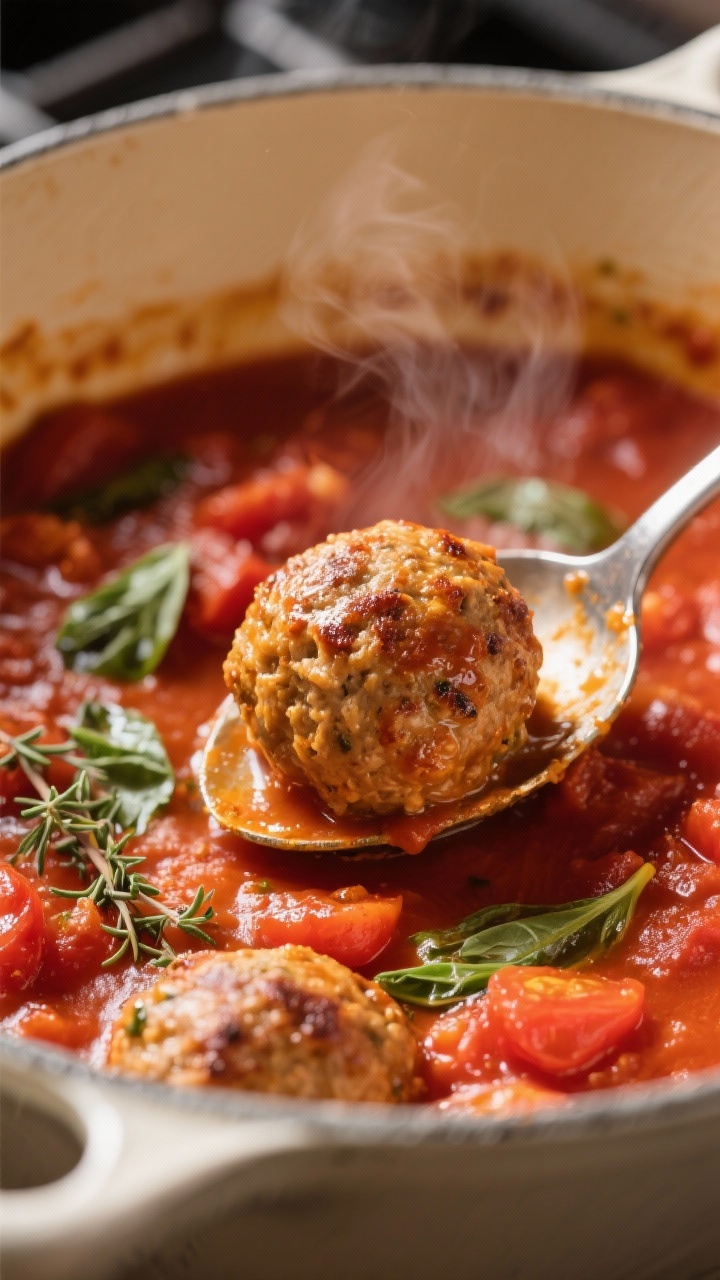
This recipe leans on a few high-quality ingredients and lets them shine. The slow-simmered tomato sauce builds sweetness and depth without extra sugar.
Meatballs stay juicy thanks to milk-soaked bread and gentle mixing. Creamy polenta gives the whole dish a buttery, soft base that pairs beautifully with the sauce. Together, these elements feel special yet familiar, like something your nonna might make.
What You’ll Need
- For the Tomato-Basil Sauce:
- 2 tablespoons extra-virgin olive oil
- 1 small yellow onion, finely chopped
- 3 garlic cloves, minced
- 1 can (28 ounces) whole peeled San Marzano tomatoes
- 1 teaspoon kosher salt
- 1/2 teaspoon freshly ground black pepper
- 1 teaspoon dried oregano
- 1 small pinch red pepper flakes (optional)
- 1 small bunch fresh basil, torn
- For the Meatballs:
- 1/2 cup milk
- 2 slices day-old bread, crusts removed, torn into pieces
- 1 pound ground beef (80–85% lean) or a mix of beef and pork
- 1/3 cup grated Parmigiano-Reggiano
- 1 large egg
- 2 tablespoons chopped fresh parsley
- 1 teaspoon kosher salt
- 1/2 teaspoon black pepper
- Olive oil, for searing
- For the Creamy Polenta:
- 4 cups water (or 3 cups water + 1 cup milk)
- 1 cup coarse cornmeal (polenta)
- 1 teaspoon kosher salt
- 2 tablespoons unsalted butter
- 1/3 cup grated Parmigiano-Reggiano
- To Serve:
- Extra basil leaves
- More grated Parmesan
- Good extra-virgin olive oil for finishing
Instructions
- Start the sauce. Warm olive oil in a wide pot over medium heat.
Add the onion and cook until soft and translucent, about 5–7 minutes. Stir in garlic for 30 seconds.
- Build flavor. Crush the tomatoes by hand directly into the pot (or use a spoon). Add salt, pepper, oregano, and red pepper flakes if using.
Simmer gently, partially covered, for 25–30 minutes, stirring occasionally until thickened. Stir in torn basil during the last 5 minutes.
- Soak the bread. In a bowl, combine milk and bread. Let it sit 5 minutes until the bread is soft.
Mash into a paste.
- Mix the meatballs. In a large bowl, combine ground meat, bread-milk paste, Parmesan, egg, parsley, salt, and pepper. Mix with your hands just until combined. Do not overwork or the meatballs will be tough.
- Shape and sear. Form 12–14 golf-ball-sized meatballs. Heat a film of olive oil in a skillet over medium-high heat.
Sear meatballs in batches until browned on two sides, about 5 minutes total. They don’t need to be cooked through.
- Finish in sauce. Nestle the seared meatballs into the simmering sauce. Cover and cook over low heat for 15–20 minutes, turning once, until cooked through and tender.
- Cook the polenta. Bring water (or water and milk) to a gentle boil in a saucepan.
Whisk in polenta in a thin stream to avoid lumps. Reduce heat to low and cook, whisking often, until thick and creamy, 25–35 minutes. Stir in salt, butter, and Parmesan.
Adjust seasoning.
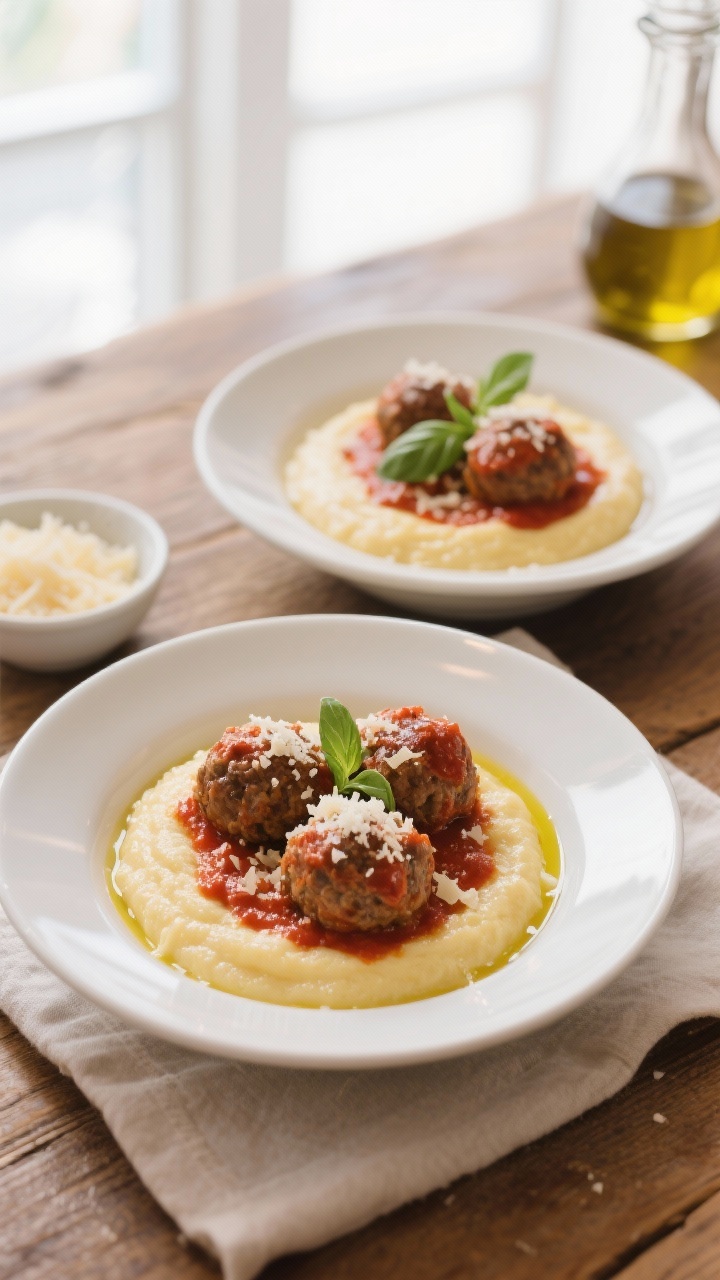
- Assemble. Spoon polenta into bowls, top with sauce and meatballs, then finish with extra basil, a drizzle of olive oil, and more Parmesan.
Storage Instructions
- Sauce and meatballs: Cool completely, then store together in an airtight container for up to 4 days in the fridge. Reheat gently on the stove with a splash of water.
- Polenta: Keeps for 3 days refrigerated. It will firm up; reheat with a bit of water or milk, whisking until creamy again.
- Freezing: The sauce and meatballs freeze well for up to 3 months.
Thaw overnight in the fridge and reheat slowly. Polenta is best fresh but can be sliced and pan-fried from cold.
Health Benefits
- Balanced meal: You get protein from the meatballs, complex carbs from polenta, and fiber plus antioxidants from the tomato sauce.
- Heart-friendly fats: Extra-virgin olive oil provides monounsaturated fats that support heart health.
- Lycopene boost: Cooking tomatoes increases lycopene availability, which may support cellular health.
- Portion control: Rich flavors mean smaller portions still feel satisfying, helping keep calories in check.
Pitfalls to Watch Out For
- Overmixing meat: This makes meatballs dense. Mix until just combined and use a light touch.
- Boiling the sauce: High heat can make the sauce sharp and splattery.
Keep it to a gentle simmer for a rounder flavor.
- Lumpy polenta: Add the cornmeal slowly while whisking and keep stirring as it thickens.
- Underseasoning: Taste at each step—sauce, meatballs, and polenta all need proper seasoning.
- Skipping the sear: Browning the meatballs adds crucial flavor; don’t skip it.
Variations You Can Try
- All-beef or mixed meats: Try a classic beef-pork-veal mix for extra tenderness.
- Herb swap: Use fresh oregano or thyme if basil is scarce. A little rosemary can add depth—use lightly.
- Spicy arrabbiata: Increase red pepper flakes and add a spoon of tomato paste to the sauce for heat and richness.
- Mushroom polenta: Stir in sautéed mushrooms and thyme at the end for an earthy twist.
- Cheese core: Tuck a small mozzarella cube inside each meatball for a melty surprise.
- Gluten-free: Use gluten-free bread or ground oats for the panade in the meatballs.
- Lighter option: Swap part of the meat with cooked lentils, or try all-turkey meatballs with extra olive oil for moisture.
FAQ
Can I use crushed tomatoes instead of whole?
Yes. Crushed tomatoes work well and save time.
Whole tomatoes usually taste slightly fresher, but the difference is small if you choose a good brand.
What if my sauce tastes too acidic?
Simmer longer to mellow it out. A small knob of butter or a splash of olive oil can round the edges. Avoid adding sugar unless absolutely necessary.
How do I keep meatballs from falling apart?
Use the milk-soaked bread, don’t skip the egg, and chill the formed meatballs for 15 minutes before searing if your mixture feels loose.
Turn gently with a thin spatula.
Can I make the polenta ahead of time?
Yes. Spread cooked polenta in a dish to cool. Reheat with water or milk, whisking until smooth.
Or slice the firm polenta and pan-fry in olive oil for a crispy variation.
What’s the best cheese to use?
Parmigiano-Reggiano gives a salty, nutty lift. Pecorino Romano is sharper and saltier—great if you prefer bolder flavor. Adjust salt accordingly.
Could I serve this with pasta instead of polenta?
Absolutely.
Cook spaghetti or rigatoni until al dente, toss with the sauce, and top with the meatballs. Reserve some pasta water to loosen the sauce if needed.
How do I scale the recipe for a crowd?
Double everything. Keep the sauce in a large Dutch oven, brown meatballs in batches, and hold cooked polenta warm over low heat with extra liquid on hand to maintain creaminess.
Wrapping Up
This Italian classic proves that humble ingredients can make a deeply satisfying meal.
The mellow tomato-basil sauce, tender meatballs, and silky polenta bring comfort without complication. Keep your heat gentle, season confidently, and let time do the work. It’s the kind of dinner that feels welcoming on any night of the week—and even better shared with people you love.