Sweet potato pancakes are a gentle, cozy way to introduce new flavors and textures to your baby or toddler. They’re naturally sweet, soft enough for little mouths, and easy to hold with tiny hands. Plus, they use simple ingredients you probably already have.
Whether you’re doing baby-led weaning or just want a nutrient-packed breakfast, these pancakes fit the moment. You can make a batch ahead, freeze some, and reheat in minutes for stress-free mornings.
Why This Recipe Works
- Soft, moist texture: Mashed sweet potato keeps the pancakes tender and easy to chew, even without a lot of oil or sugar.
- Naturally sweet: Sweet potato adds gentle sweetness, so you don’t need added sugar. Great for early eaters.
- Protein and iron boost: Egg and fortified flour help support growing bodies.
You can also add iron-rich mix-ins.
- Quick to make: The batter comes together in one bowl and cooks in under 10 minutes.
- Freezer-friendly: Make once, serve multiple times. They reheat beautifully in a toaster or skillet.
Shopping List
- 1 medium sweet potato (about 1 cup mashed)
- 1 large egg (or a flax egg for egg-free)
- 1/2 cup milk (breast milk, formula, dairy, or unsweetened non-dairy)
- 1/2 cup whole wheat flour (or all-purpose, oat flour works too)
- 1 teaspoon baking powder
- 1/2 teaspoon cinnamon (optional)
- 1 teaspoon vanilla extract (optional)
- 1–2 teaspoons neutral oil or melted butter for the pan
- Optional mix-ins: finely grated apple, mashed banana, chia seeds, hemp hearts, very finely chopped spinach
How to Make It
- Cook the sweet potato: Peel, cube, and steam until very soft (10–12 minutes), or microwave a pierced sweet potato until tender. Mash well with a fork until smooth.
You’ll need about 1 cup.
- Whisk the wet ingredients: In a bowl, whisk mashed sweet potato, egg, and milk until mostly smooth. Add vanilla if using.
- Add the dry ingredients: Sprinkle in flour, baking powder, and cinnamon. Stir gently until just combined.
The batter should be thick but scoopable. If it’s too thick, add 1–2 tablespoons milk.
- Preheat the pan: Warm a nonstick skillet over medium-low heat. Add a light brush of oil or butter.
Keep heat moderate to avoid over-browning.
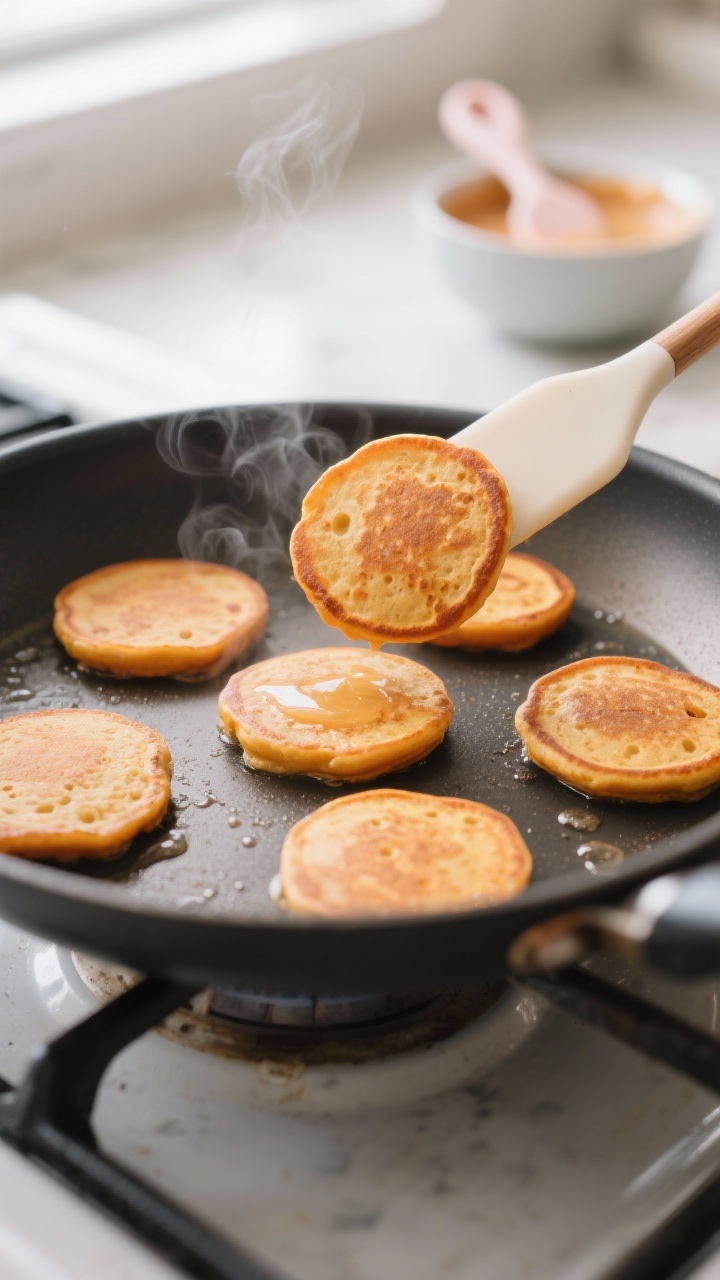
- Cook small pancakes: Spoon 1–2 tablespoons of batter per pancake. Spread into small rounds for baby-friendly portions. Cook 2–3 minutes, until bubbles form on top and edges look set.
- Flip gently: Turn and cook another 1–2 minutes, until golden and cooked through.
Lower heat if browning too fast.
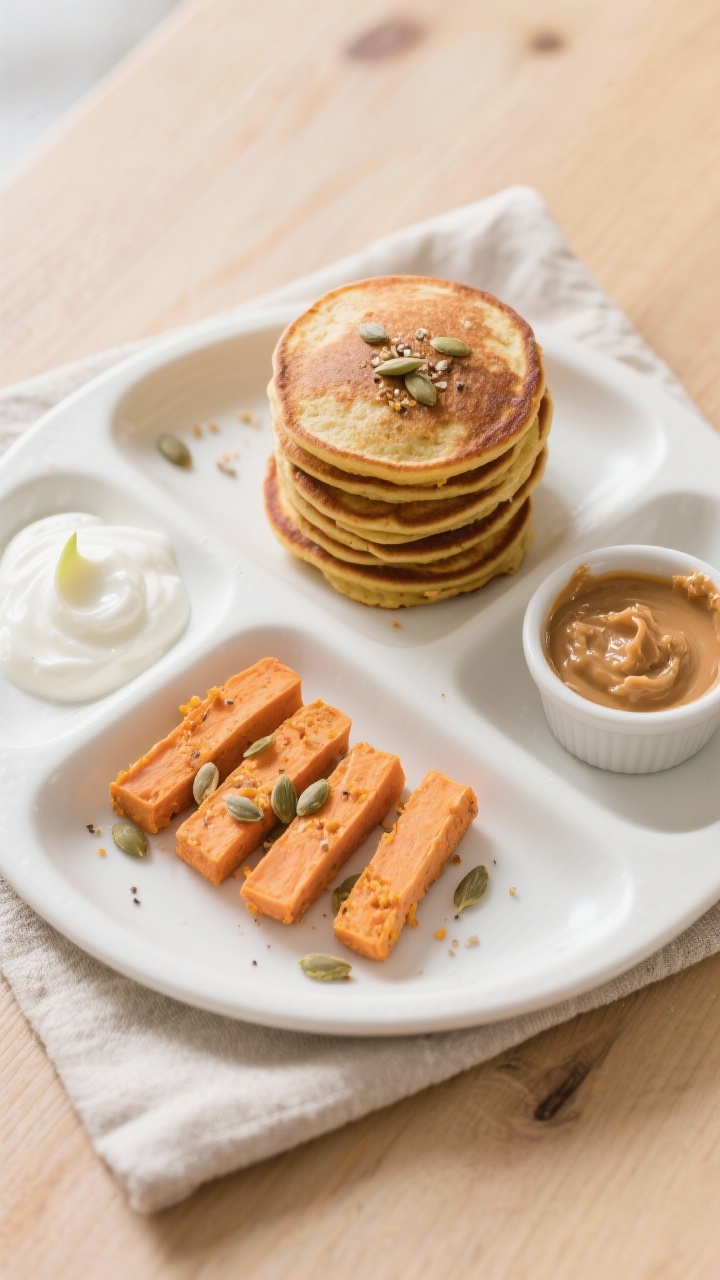
- Cool before serving: Let pancakes cool to warm. Cut into strips or small pieces depending on your child’s age and chewing skills.
- Serve plain or with soft toppings: Try a thin smear of plain yogurt, unsweetened applesauce, or peanut butter thinned with water.
Storage Instructions
- Fridge: Store in an airtight container for up to 4 days. Reheat briefly in a dry skillet or toaster until warm.
- Freezer: Freeze in a single layer, then transfer to a freezer bag.
Keep up to 2 months. Reheat from frozen on low in a skillet or toaster, or microwave in short bursts.
- Lunchbox tips: Pack cold or room temp for toddlers. Add a small container of yogurt or fruit for dipping.
Benefits of This Recipe
- Nutrient-dense: Sweet potatoes provide beta-carotene (vitamin A), vitamin C, potassium, and fiber to support immunity and growth.
- Supports self-feeding: Small, soft pancakes are easy to grasp and encourage independent eating.
- Customizable for allergies: Can be made egg-free, dairy-free, and even gluten-free with simple swaps.
- Balanced bites: Combine complex carbs, a bit of protein, and fat for longer-lasting energy.
What Not to Do
- Don’t use high heat: The outside will burn before the inside cooks through.
Keep the heat medium-low.
- Don’t add sugar or honey: Honey isn’t safe for babies under one. The sweet potato provides enough sweetness.
- Don’t make them too big or thick: Small, thinner pancakes cook evenly and are easier for little hands.
- Don’t serve while too hot: Always cool to warm to prevent mouth burns.
- Don’t overload mix-ins: Too many add-ins can make pancakes fall apart or become hard to chew.
Variations You Can Try
- Egg-free: Replace the egg with a flax egg (1 tablespoon ground flax + 3 tablespoons warm water; rest 5 minutes). Add an extra tablespoon of milk if needed.
- Gluten-free: Use certified gluten-free oat flour or a 1:1 gluten-free flour blend.
- Dairy-free: Use unsweetened almond milk, oat milk, or coconut milk.
Cook with oil instead of butter.
- Iron boost: Stir in 1–2 teaspoons of hemp hearts or chia seeds, or serve with a smear of smooth nut or seed butter.
- Fruit twist: Fold in finely grated apple or a few mashed blueberries for extra flavor and moisture.
- Savory version: Skip vanilla and cinnamon. Add a pinch of garlic powder and very finely chopped spinach or zucchini.
FAQ
What age can babies start eating these pancakes?
Most babies can try soft pancakes around 6 months when showing signs of readiness: sitting with support, good head control, and interest in food. Always cut into safe sizes and supervise.
How should I cut the pancakes for different ages?
For babies 6–9 months, slice into finger-length strips.
For 9–12 months, try bite-size pieces. For toddlers, serve whole or halved, depending on their preference.
Can I use leftover mashed sweet potato?
Yes. If your mash is very thick or contains butter or milk, adjust the batter with a splash of milk until it’s scoopable.
Avoid mashed sweet potatoes that are heavily sweetened.
What if my batter is too runny or too thick?
If runny, add a teaspoon of flour at a time. If thick, stir in a tablespoon of milk until it loosens. The batter should fall slowly off a spoon, not pour like water.
Can I bake these instead of pan-cooking?
Yes.
Spoon small mounds onto a lined baking sheet and flatten slightly. Bake at 375°F (190°C) for 10–12 minutes, flipping once halfway, until set and lightly golden.
How do I keep pancakes from sticking?
Use a good nonstick skillet and a light brush of oil or butter. Let the first side cook until the edges look set before flipping.
Avoid moving them too soon.
Are these sweet enough without sugar?
They are gently sweet from the sweet potato. For older toddlers, serve with fruit or a dollop of yogurt if you want extra sweetness without added sugar.
Can I make the batter ahead?
It’s best cooked fresh, but you can refrigerate batter for up to 12 hours. Stir before using and add a splash of milk if it thickens.
What milk is best for babies?
Use breast milk or formula under 12 months if you like, or an unsweetened alternative.
Whole cow’s milk is fine in recipes for babies; it just shouldn’t replace breast milk or formula as their main drink before 12 months.
How can I add more protein?
Add 1–2 tablespoons of plain Greek yogurt to the batter, or serve pancakes with yogurt or a thin layer of nut or seed butter.
In Conclusion
These sweet potato pancakes are soft, simple, and nourishing—perfect for babies and toddlers learning to enjoy real food. They’re easy to prep, freezer-friendly, and endlessly adaptable to your family’s needs. Keep the heat gentle, the portions small, and the toppings simple.
With a batch of these on hand, breakfast or snack time becomes calmer, quicker, and a lot more delicious.