Smoked mackerel is one of those dishes that feels special without being fussy. It’s bold, deeply savory, and surprisingly simple to make at home. Whether you’re planning a relaxed weekend meal or prepping flavor-packed fish for salads and sandwiches, this recipe has you covered.
The process is straightforward, the ingredients are few, and the result is a beautifully smoky fish with silky flesh and golden skin. If you love strong, satisfying flavors, this one belongs in your regular rotation.
What Makes This Recipe So Good
- Big flavor, minimal effort: Mackerel stands up well to smoke, so you get tons of taste in a short time.
- Budget-friendly seafood: Mackerel is often more affordable than salmon or tuna, but just as delicious.
- Fast smoking time: Thanks to its size and fat content, it smokes and cooks more quickly than many fish.
- Versatile leftovers: Serve warm, flake into salads, toss with pasta, or turn into a spread.
- Nutrient-dense: Loaded with omega-3s, protein, vitamin D, and B vitamins.
What You’ll Need
- Whole mackerel (2–3 fish, about 1 to 1.5 pounds total), cleaned and gutted, or use fillets with skin on
- Kosher salt (1/4 cup)
- Brown sugar (2 tablespoons)
- Black pepper (1 teaspoon, freshly ground)
- Lemon zest (from 1 lemon) and optional lemon wedges for serving
- Garlic powder (1 teaspoon) or 1 crushed garlic clove for the brine
- Bay leaves (2)
- Water (4 cups) for a quick brine
- Olive oil (1 tablespoon), for brushing
- Wood chips for smoking (apple, cherry, or oak are great; avoid resinous woods like pine)
- Optional aromatics: fresh thyme or dill, a splash of soy sauce in the brine, or a pinch of smoked paprika
How to Make It
- Make a quick brine: In a bowl or pot, combine water, kosher salt, brown sugar, garlic, bay leaves, and lemon zest. Stir until the salt and sugar dissolve.
This seasons the fish and helps it stay moist.
- Brine the mackerel: Submerge the fish (whole or fillets) in the brine. Chill for 45–60 minutes. Don’t exceed 90 minutes—mackerel is delicate and can get too salty.
- Rinse and dry: Remove the fish, rinse briefly under cold water, and pat very dry with paper towels.
Place on a rack, uncovered, in the fridge for 30–60 minutes to form a slightly tacky surface (the pellicle), which helps smoke adhere.
- Preheat your smoker: Aim for 180–200°F (82–93°C). Add your wood of choice. Apple and cherry give a gentle sweetness; oak brings a more robust, classic smoke.
- Oil and season: Lightly brush the skin with olive oil.
Sprinkle with black pepper and a pinch of smoked paprika if you like. Keep it simple—mackerel doesn’t need much.
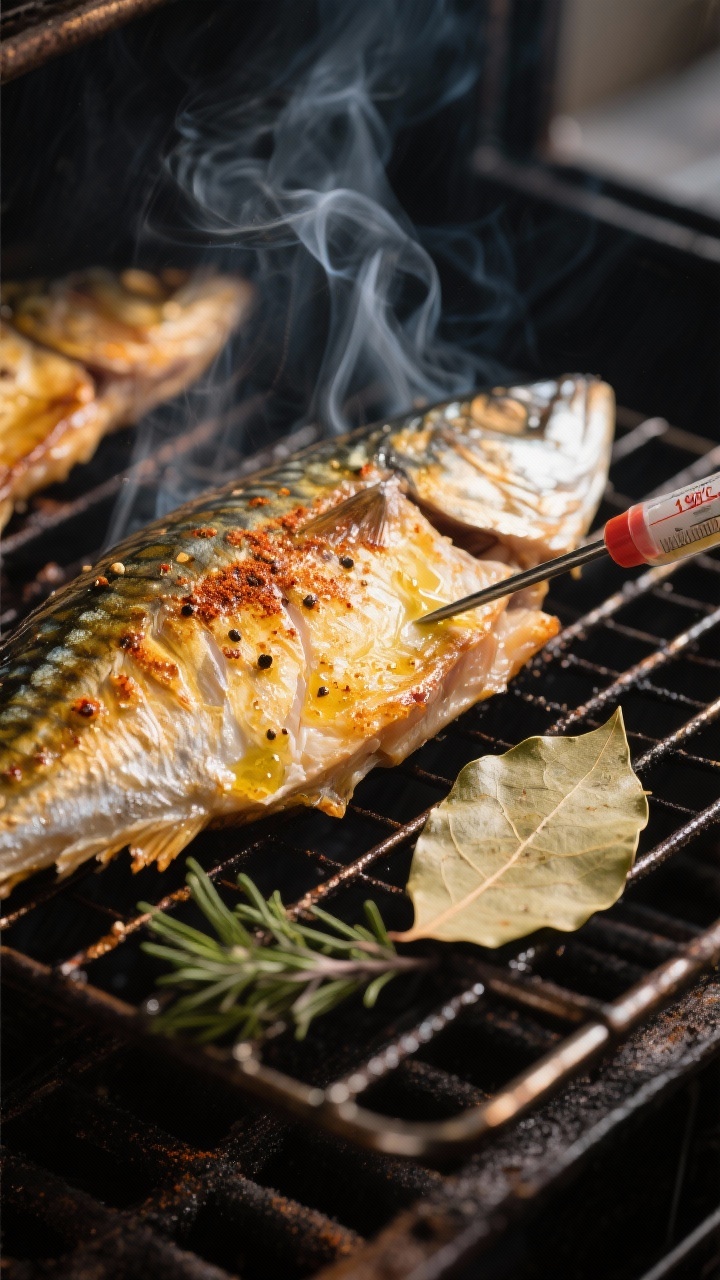
- Smoke the fish: Place the mackerel skin-side down on the grates or a wire rack. Smoke until the internal temperature reaches 145°F (63°C).
This usually takes 45–75 minutes depending on thickness and smoker consistency.
- Check for doneness: The flesh should turn opaque and flake easily, but still look moist. If using whole fish, the backbone should loosen cleanly when tugged.
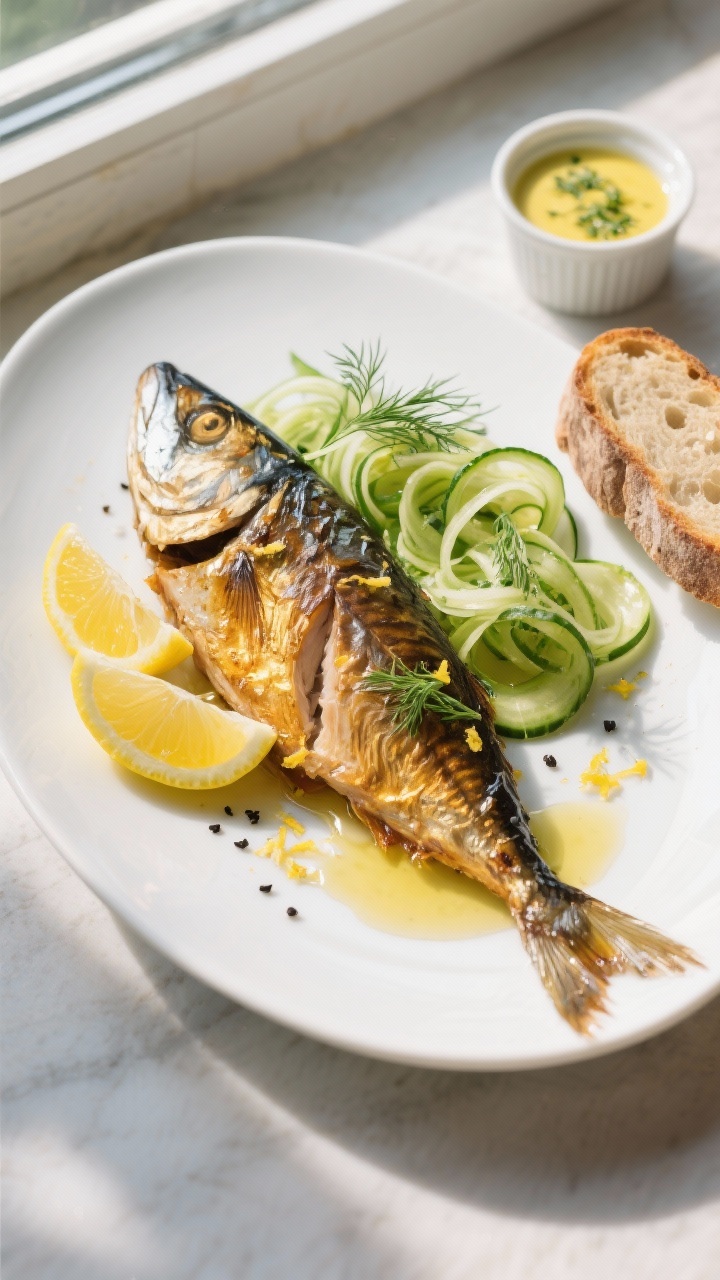
- Rest and serve: Let the fish rest for 5–10 minutes. Serve warm with lemon wedges and a simple side—crusty bread, cucumber salad, or roasted potatoes all work well.
Storage Instructions
- Refrigerator: Cool completely, then store in an airtight container for up to 3–4 days.
- Freezer: Flake or portion, wrap tightly, and freeze for up to 2 months.
Thaw overnight in the fridge.
- Reheating: Warm gently in a 275°F (135°C) oven for 10–12 minutes or enjoy cold. Avoid microwaving, which can overcook and intensify the smell.
- Leftover uses: Stir into pasta with lemon and capers, fold into mashed potatoes for fish cakes, or mix with yogurt, lemon, and herbs for a spread.
Why This Is Good for You
- Omega-3 fatty acids: Mackerel is rich in EPA and DHA, which support heart, brain, and eye health.
- High-quality protein: Satisfying and great for muscle repair and satiety.
- Vitamins and minerals: Notably vitamin D, B12, selenium, and iodine—nutrients many people are low in.
- Lower mercury choice: Compared to larger predatory fish, Atlantic and Pacific mackerel tend to have lower mercury levels.
Pitfalls to Watch Out For
- Oversalting: Brine time matters. Keep it under 90 minutes to avoid a too-salty result.
- Skipping the drying step: Without that brief fridge dry-out, smoke won’t cling as well and the skin can turn rubbery.
- Too much smoke: Mackerel is assertive, but heavy smoke or resinous wood can make it bitter.
Use clean-burning wood and steady temps.
- Overcooking: Past 145°F, the flesh dries out quickly. Use a thermometer for accuracy.
- Strong odors in storage: Store tightly sealed and keep away from odor-absorbing foods like butter.
Variations You Can Try
- Asian-inspired brine: Add soy sauce, ginger slices, and a touch of rice vinegar to the brine. Finish with sesame seeds and scallions.
- Herb and citrus: Tuck dill or thyme sprigs inside whole fish cavities and add orange zest to the brine for a softer citrus note.
- Spiced heat: Rub lightly with Aleppo pepper or chili flakes before smoking.
Balance with a yogurt-lemon sauce.
- Hot-smoked mackerel spread: Flake the smoked fish and mix with cream cheese or Greek yogurt, lemon juice, horseradish, and chives for a quick dip.
- Grill-smoker method: Use a charcoal or gas grill with a smoker box or foil packet of chips. Keep heat low on one side and fish on the cool side for gentle smoke.
FAQ
Can I use previously frozen mackerel?
Yes. Thaw it in the refrigerator overnight, pat very dry, and proceed.
Frozen fish can actually help with freshness if you can’t find great-quality fresh mackerel locally.
Do I need to remove the skin?
No. Keep the skin on—it protects the flesh during smoking and adds flavor. You can peel it off after cooking if you prefer.
What if I don’t have a smoker?
Use a grill with indirect heat and a packet of soaked wood chips.
Keep the temperature around 190°F and close the lid. You’ll get excellent results.
Which type of mackerel is best?
Atlantic or Pacific mackerel are great options. They’re oily, flavorful, and usually lower in mercury than king mackerel.
How can I tell if my fish is fresh?
Look for clear eyes, shiny skin, and a clean, ocean-like smell.
The flesh should feel firm and spring back when pressed.
What sauces pair well with smoked mackerel?
Try lemony yogurt, mustard-dill sauce, horseradish cream, or a simple vinaigrette with capers and parsley.
Can I cold-smoke mackerel instead?
Cold smoking is a different process that requires curing and precise temperature control for safety. If you’re new to smoking, stick with hot smoking as described here.
Is the brine essential?
It’s strongly recommended. The brine seasons the fish evenly and helps keep it moist, which is important for leaner portions or if your smoker runs hot.
Wrapping Up
Smoked mackerel is proof that simple techniques can deliver serious flavor.
With a quick brine, steady low heat, and the right wood, you get moist, smoky fish that shines on its own or elevates easy weeknight meals. Keep a batch in the fridge for salads, sandwiches, or an impromptu appetizer. Once you make it at home, you’ll wonder why you ever settled for store-bought.