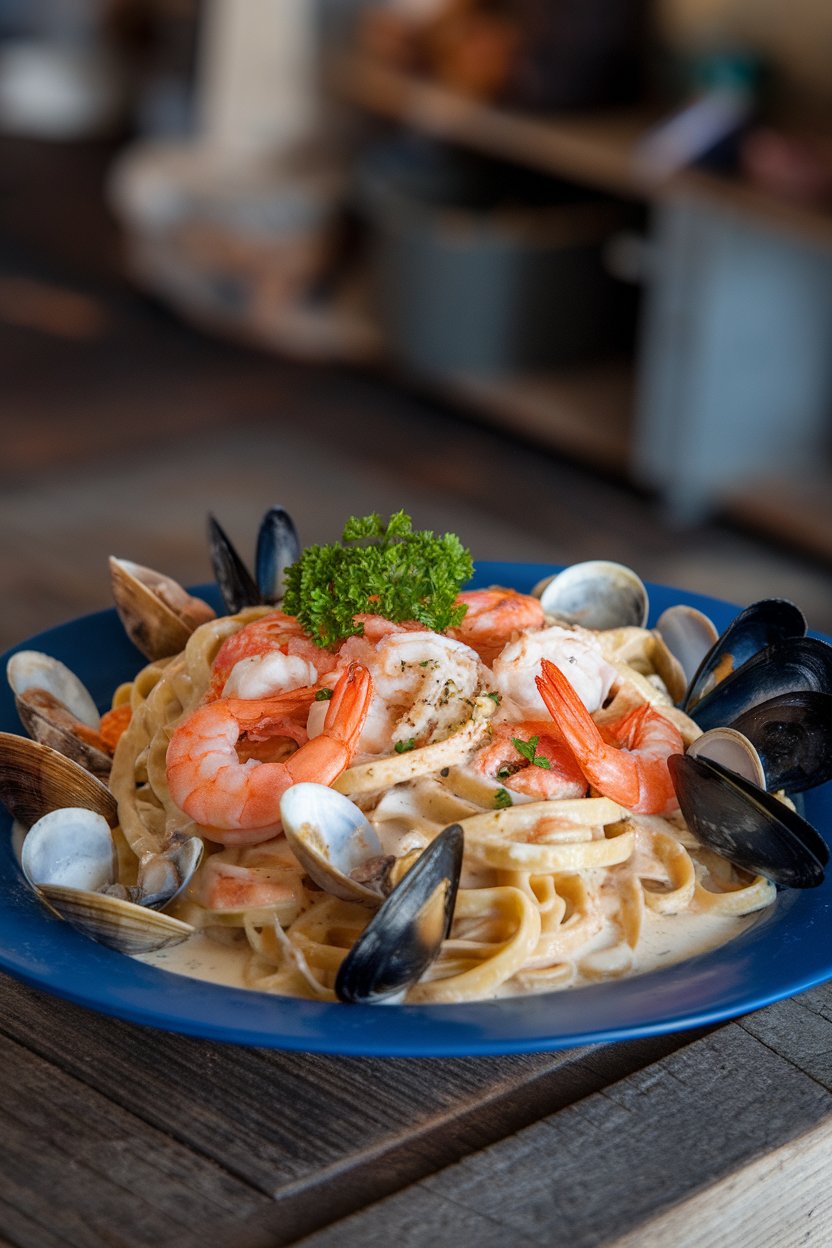
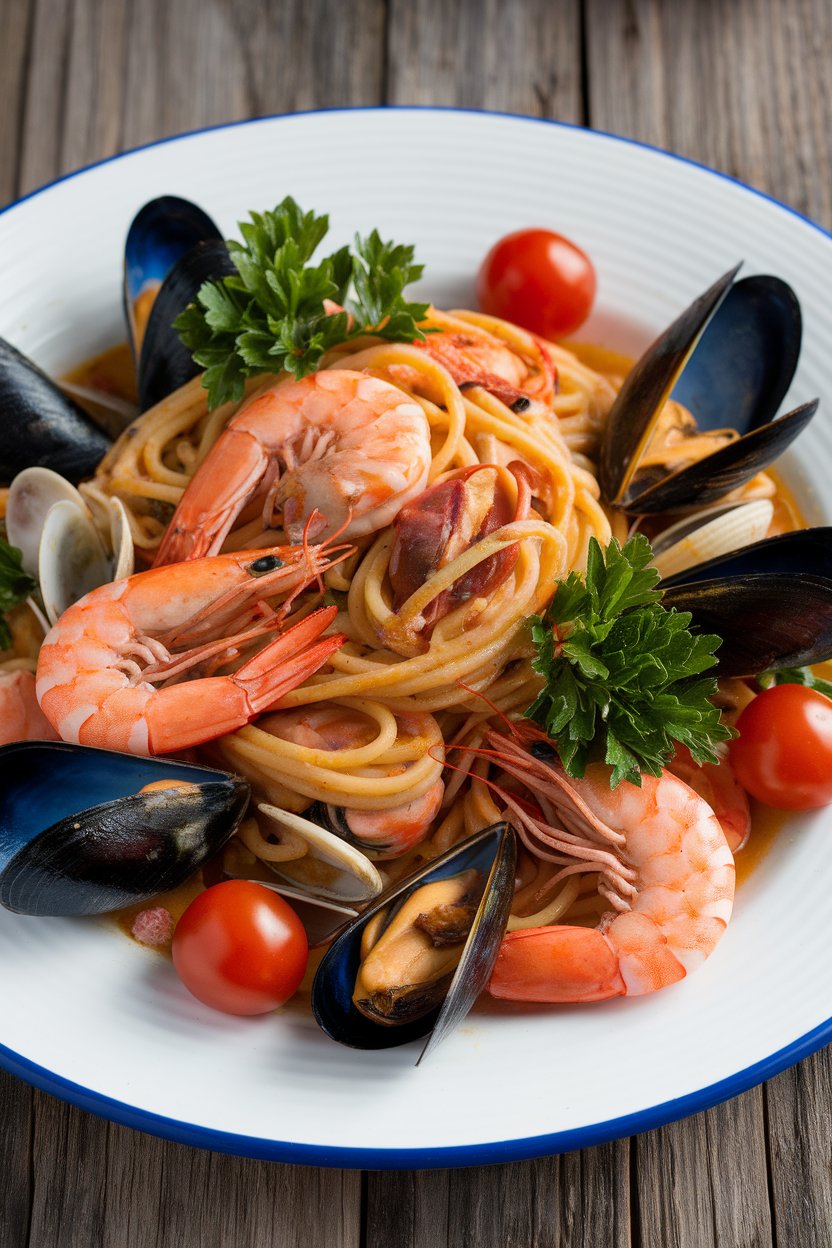
This is the kind of pasta that feels fancy but takes less time than you think. Tender shrimp, sweet scallops, and mussels simmer quickly in a garlicky white wine sauce, then tangle with silky linguine. The flavors are bright, clean, and balanced—not heavy or creamy.
It’s perfect for date night, a small dinner party, or a weeknight when you want something special without a lot of fuss.
What Makes This Recipe So Good
- Light and fresh: No heavy cream—just olive oil, garlic, white wine, and a splash of pasta water for a glossy sauce.
- Restaurant-style technique: Finishing the pasta in the pan creates a clingy, emulsified sauce that coats every strand.
- Flexible seafood: Use a mix of shrimp, scallops, mussels, or clams—whatever looks best at the market.
- Fast but impressive: Most of the work happens in under 30 minutes.
- Bright flavors: Lemon zest and fresh parsley lift the dish without overpowering the seafood.
What You’ll Need
- Linguine: 12 ounces (about 3/4 of a standard box).
- Shrimp: 8 ounces, peeled and deveined (medium or large).
- Sea scallops: 6–8 ounces, side muscle removed and patted dry.
- Mussels or clams: 1 pound, scrubbed and debearded if needed.
- Olive oil: 3 tablespoons, plus more if needed.
- Butter: 2 tablespoons, for richness and gloss.
- Garlic: 5–6 cloves, thinly sliced.
- Crushed red pepper flakes: 1/2 teaspoon (adjust to taste).
- Dry white wine: 1 cup (Pinot Grigio, Sauvignon Blanc, or an unoaked Chardonnay).
- Lemon: Zest of 1 lemon plus 1–2 tablespoons juice.
- Fresh parsley: 1/3 cup, finely chopped.
- Cherry tomatoes (optional): 1 cup, halved, for sweetness and color.
- Pasta cooking water: Reserve 1–1.5 cups.
- Salt and black pepper: To season.
Step-by-Step Instructions
- Prep and season the seafood: Pat shrimp and scallops very dry with paper towels. Season lightly with salt and pepper. Rinse and scrub mussels; discard any with cracked shells or that don’t close when tapped.
- Boil the pasta: Bring a large pot of well-salted water to a boil.Cook linguine until just shy of al dente (usually 1–2 minutes less than the package suggests). Reserve 1–1.5 cups pasta water before draining.
- Sear the scallops: Heat 1 tablespoon olive oil in a large, wide skillet over medium-high until shimmering. Add scallops and sear 1–2 minutes per side until golden with a lightly opaque center.Transfer to a plate.
- Cook the shrimp: Add another tablespoon of oil if needed. Sauté shrimp 1–2 minutes per side until just pink. Transfer to the plate with scallops.
- Build the sauce base: Lower heat to medium.Add remaining olive oil and butter. Stir in sliced garlic and red pepper flakes. Cook 30–60 seconds until fragrant, not browned.
- Deglaze with wine: Pour in the white wine and scrape up any browned bits.Simmer 2–3 minutes to reduce slightly.
- Steam the mussels: Add mussels to the skillet, cover, and cook 3–5 minutes until they open. Discard any that remain closed.
- Add pasta and emulsify: Toss the drained linguine into the skillet. Add 1/2–3/4 cup reserved pasta water.Toss over medium heat until the sauce turns silky and clings to the pasta.
- Return the seafood: Add shrimp and scallops back in, along with lemon zest, lemon juice, parsley, and cherry tomatoes if using. Toss gently 1–2 minutes to warm through.
- Adjust and serve: Taste and adjust salt, pepper, and lemon. If it looks tight, add a splash more pasta water.Finish with a drizzle of olive oil and extra parsley. Serve immediately.
How to Store
- Refrigerate: Store leftovers in an airtight container for up to 2 days. Seafood is delicate, so try to eat it sooner rather than later.
- Reheat gently: Warm in a skillet over low heat with a splash of water or broth, tossing just until heated.Avoid microwaving on high, which can make seafood rubbery.
- Freezing: Not recommended. The texture of the seafood will suffer.
Benefits of This Recipe
- Quick and doable: Minimal prep and under-30-minute cook time.
- Balanced nutrition: Lean protein from seafood, olive oil for healthy fats, and fresh herbs and lemon for brightness.
- Company-worthy: Looks and tastes like something you’d order at a nice restaurant.
- Customizable: Works with different seafood, pasta shapes, and levels of heat.
Common Mistakes to Avoid
- Overcooking seafood: Shrimp and scallops cook fast. Pull them as soon as they turn opaque and springy.
- Skipping the pasta water: That starchy liquid helps create a glossy, cohesive sauce.
- Boiling garlic: Burnt or browned garlic can taste bitter.Keep the heat moderate.
- Overcrowding the pan: Sear scallops and shrimp in batches for good color and tender texture.
- Using too little salt: Salt your pasta water well and taste the sauce at the end.
Alternatives
- Seafood swaps: Use calamari rings, firm white fish chunks (cod or halibut), clams, or crab. Adjust cook times to avoid overcooking.
- No alcohol: Substitute the wine with low-sodium seafood or chicken broth plus an extra tablespoon of lemon juice.
- Herb twists: Try basil, chives, or dill instead of parsley. A touch of tarragon adds a subtle anise note.
- Heat levels: Add more red pepper flakes or a pinch of Calabrian chili paste for a spicier kick.
- Pasta options: Spaghetti, bucatini, or fettuccine all work.For gluten-free, choose a sturdy GF spaghetti and avoid overcooking.
- Add-ins: A handful of baby spinach at the end or a few capers for briny bite.
FAQ
Can I use frozen seafood?
Yes. Thaw it fully in the fridge, then pat very dry. Excess moisture prevents good searing and can dilute the sauce.
What wine should I use?
A dry white like Pinot Grigio, Sauvignon Blanc, or an unoaked Chardonnay works best.
Avoid anything sweet.
Do I need to devein shrimp?
It’s recommended for a cleaner look and taste. Many stores sell shrimp already peeled and deveined to save time.
How salty should pasta water be?
It should taste like the sea—about 1–1.5 tablespoons kosher salt per 4 quarts of water. This seasons the pasta from the inside out.
Why finish the pasta in the pan?
Tossing pasta with the sauce and starchy water creates an emulsion that clings to the noodles.
It’s the secret to that restaurant sheen.
Can I make it ahead?
You can prep the seafood and chop garlic and herbs in advance, but cook the dish just before serving. The textures are best fresh.
What if my mussels don’t open?
Discard any that stay closed after cooking. That’s the general food safety rule for bivalves.
Is cheese okay with seafood pasta?
Traditionally, cheese is skipped, but you can add a light sprinkle of Parmesan if you enjoy it.
Keep it minimal to avoid overpowering the seafood.
Final Thoughts
This seafood linguine hits that sweet spot of simple and special. With good olive oil, fresh garlic, and a splash of wine, you get a bright, garlicky sauce that lets the seafood shine. Keep the heat gentle, finish the pasta in the pan, and taste as you go.
You’ll have a dish that looks restaurant-worthy but fits right into a cozy night at home.