This sausage and egg breakfast casserole is the kind of cozy, no-stress recipe that earns a permanent spot in your rotation. It’s easy to prep the night before, bakes up bubbling and golden, and feeds a crowd without fuss. Whether you’re hosting brunch, packing weekday leftovers, or fueling a busy holiday morning, this dish delivers.
It’s savory, satisfying, and endlessly flexible with what you have on hand.
Why This Recipe Works
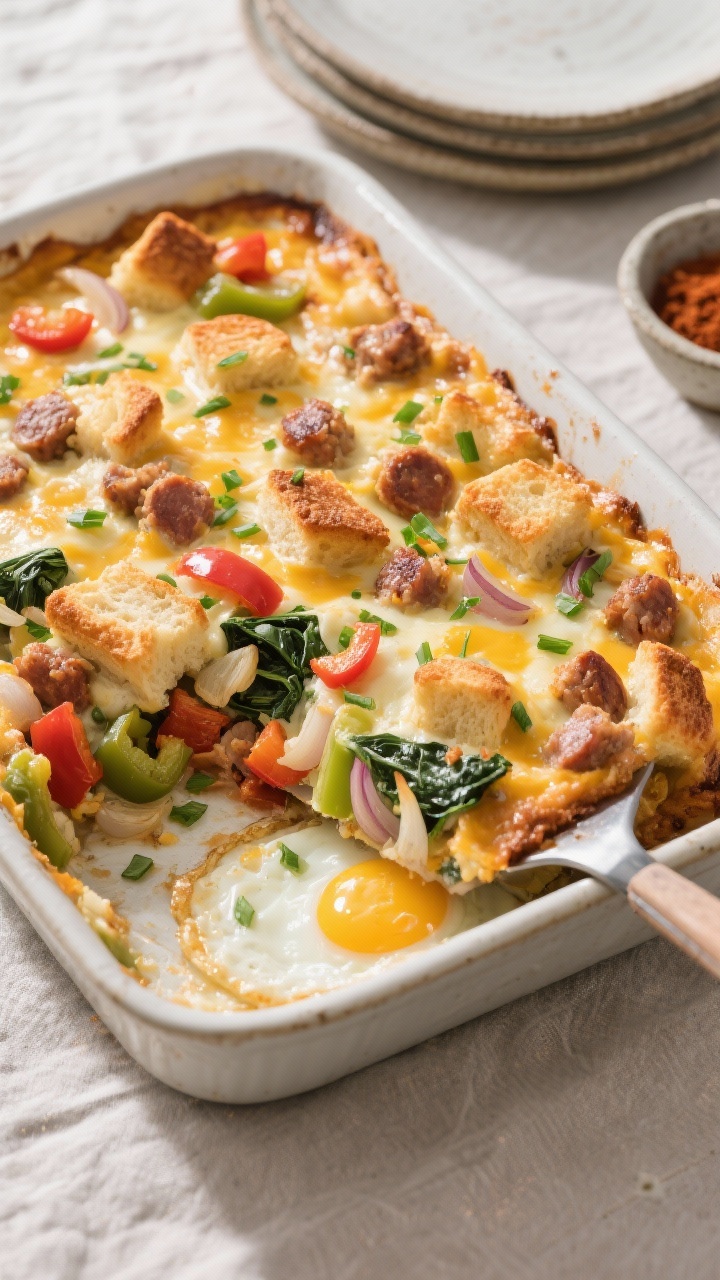
This casserole shines because it pairs simple pantry staples with smart make-ahead steps. The combination of sausage, eggs, milk, and bread creates a custardy base that bakes into a tender, hearty slice. Seasoned well and topped with cheese, it hits all the comfort notes without feeling heavy.
The overnight rest lets the bread absorb the egg mixture, so every bite is flavorful. Plus, it reheats beautifully for easy breakfasts all week.
Shopping List
- Breakfast sausage: 1 pound (mild or hot, bulk or links with casings removed)
- Eggs: 8 large
- Milk: 2 cups (whole or 2%; half-and-half for richer texture)
- Bread: 6 cups cubed (day-old French bread, Italian loaf, or sturdy sandwich bread)
- Cheese: 2 cups shredded (cheddar, Monterey Jack, or a blend)
- Vegetables (optional but recommended): 1 cup diced onion, 1 cup diced bell pepper, 1 cup baby spinach
- Butter or oil: 1 tablespoon for sautéing
- Seasonings: 1 teaspoon kosher salt, 1/2 teaspoon black pepper, 1/2 teaspoon garlic powder, 1/2 teaspoon smoked paprika
- Fresh herbs (optional): 2 tablespoons chopped parsley or chives
- Cooking spray or butter: For greasing the baking dish
Step-by-Step Instructions

- Prep the pan: Grease a 9×13-inch baking dish with cooking spray or butter. Set aside.
- Cook the sausage: In a large skillet over medium heat, cook the sausage, breaking it into crumbles, until browned and cooked through.
Drain excess fat and set aside.
- Sauté the veggies: In the same skillet, add a little butter or oil if needed. Sauté onions and peppers until softened, 4–5 minutes. Stir in spinach just until wilted.
Remove from heat.
- Cube the bread: Cut bread into bite-size cubes. Day-old bread works best because it absorbs the custard without turning mushy.
- Build the base: Add bread cubes to the prepared baking dish. Top evenly with sausage, sautéed vegetables, and 1 1/2 cups of the cheese.
- Whisk the custard: In a large bowl, whisk eggs, milk, salt, pepper, garlic powder, and smoked paprika until smooth and well combined.
- Pour and settle: Slowly pour the egg mixture over the bread, pressing gently with a spatula to help the liquid soak in.
Sprinkle with herbs if using.
- Chill (recommended): Cover tightly and refrigerate at least 1 hour, preferably overnight. This step improves texture and flavor.
- Preheat and top: When ready to bake, preheat the oven to 350°F (175°C). Uncover the dish and sprinkle the remaining 1/2 cup cheese over the top.
- Bake: Bake for 40–50 minutes, until the center is set, edges are golden, and a knife inserted in the middle comes out clean or with set custard.
If browning too quickly, tent loosely with foil.
- Rest and serve: Let the casserole rest for 10 minutes before slicing. Garnish with fresh herbs and serve warm.
Keeping It Fresh
Refrigerate: Cool leftovers completely, then cover and refrigerate for up to 4 days. Reheat individual portions in the microwave or warm the whole dish in a 300°F oven until hot.
Freeze: Wrap slices individually or the entire baked casserole tightly in plastic and foil.
Freeze for up to 2 months. Thaw overnight in the fridge, then reheat at 325°F until warmed through.
Make-ahead tips: Assemble up to 24 hours in advance and keep covered in the fridge. If baking straight from cold, add 5–10 minutes to the bake time.
Health Benefits
This casserole offers a balanced mix of protein, carbs, and fats to keep you satisfied. Eggs and sausage provide high-quality protein, which helps with fullness and steady energy.
Using vegetables adds fiber, vitamins, and antioxidants without complicating the recipe. You can lighten it up by choosing turkey sausage, reduced-fat milk, and part-skim cheese, and by increasing the veggie ratio. Swapping some bread for roasted sweet potatoes can add complex carbs and extra nutrients.
Common Mistakes to Avoid
- Using very soft bread: Fresh, squishy bread can turn soggy.
Aim for day-old or lightly toasted cubes for better structure.
- Skipping seasoning: Eggs need salt to shine. Taste your sausage and veggie mixture and season the custard properly.
- Overbaking: Dry eggs happen fast. Bake until just set; the center should no longer be liquid but still tender.
- Not resting after baking: A brief rest helps the casserole firm up for clean slices and better texture.
- Pouring off all sausage fat: Drain excess, but a little fat adds flavor.
Don’t let the mix go bone-dry.
Variations You Can Try
- Southwest: Use chorizo, pepper jack cheese, diced green chiles, and a touch of cumin. Serve with salsa and avocado.
- Mediterranean: Swap sausage for chicken sausage, add sun-dried tomatoes, spinach, feta, and oregano.
- Veggie-heavy: Skip sausage and add mushrooms, zucchini, broccoli florets, and extra spinach. Consider smoked paprika for depth.
- Everything bagel: Use torn everything bagels instead of bread, add scallions, and top with extra seasoning.
- Potato base: Replace half the bread with thawed hash browns for a heartier texture.
- Herb and gruyère: Use gruyère and fresh thyme for a savory, slightly nutty profile.
FAQ
Can I use gluten-free bread?
Yes.
Choose a sturdy gluten-free loaf and toast the cubes lightly to help them hold up. The texture will still be great after the overnight soak.
What kind of sausage works best?
Any breakfast sausage works—mild, hot, pork, or turkey. If using links, remove casings for even distribution.
Make sure to brown well for the best flavor.
Do I have to let it sit overnight?
No, but it helps. A one-hour rest is the minimum for good absorption. Overnight produces the most even texture and flavor.
How can I tell when it’s done?
The edges should be golden and the center set.
A knife or toothpick inserted near the center should come out without liquid egg. If using a thermometer, look for 165°F in the middle.
Can I assemble and freeze it unbaked?
It’s better to bake first, then freeze. Unbaked casseroles with raw eggs can separate after freezing.
Baking stabilizes the custard for a better thaw and reheat.
What cheeses melt best?
Cheddar, Monterey Jack, Colby, and mozzarella melt smoothly. For sharper flavor, mix cheddar with a bit of Parmesan or gruyère.
How do I prevent sogginess?
Use day-old bread, don’t overdo the milk, and let the casserole rest before slicing. If your bread is fresh, toast the cubes in a low oven for 10 minutes first.
Can I make this dairy-free?
Yes.
Use unsweetened almond or oat milk and a dairy-free cheese alternative, or skip the cheese and add extra veggies. The texture will still be satisfying.
What if I don’t eat pork?
Use turkey sausage, chicken sausage, or plant-based crumbles. Season with extra paprika, fennel, or chili flakes to boost flavor.
Can I add more veggies?
Absolutely.
Just sauté moisture-heavy veggies (like mushrooms or zucchini) first so they don’t water down the custard.
In Conclusion
This sausage and egg breakfast casserole is simple, hearty, and easy to fit into any schedule. With make-ahead convenience, it’s perfect for busy mornings or relaxed weekend brunches. Keep the base recipe handy and customize it with your favorite cheeses, veggies, and seasonings.
It’s a reliable, crowd-pleasing meal that makes mornings feel effortless.