Pan-seared tuna is one of those dishes that looks fancy but takes just a few minutes to make. With a hot skillet, a good piece of tuna, and a couple of pantry staples, you can pull off a dinner that feels straight out of a bistro menu. The outside gets a beautiful crust, while the inside stays tender and pink.
It’s fast, flavorful, and naturally good for you. Whether it’s a weeknight meal or a date-night dinner, this one never disappoints.
Why This Recipe Works
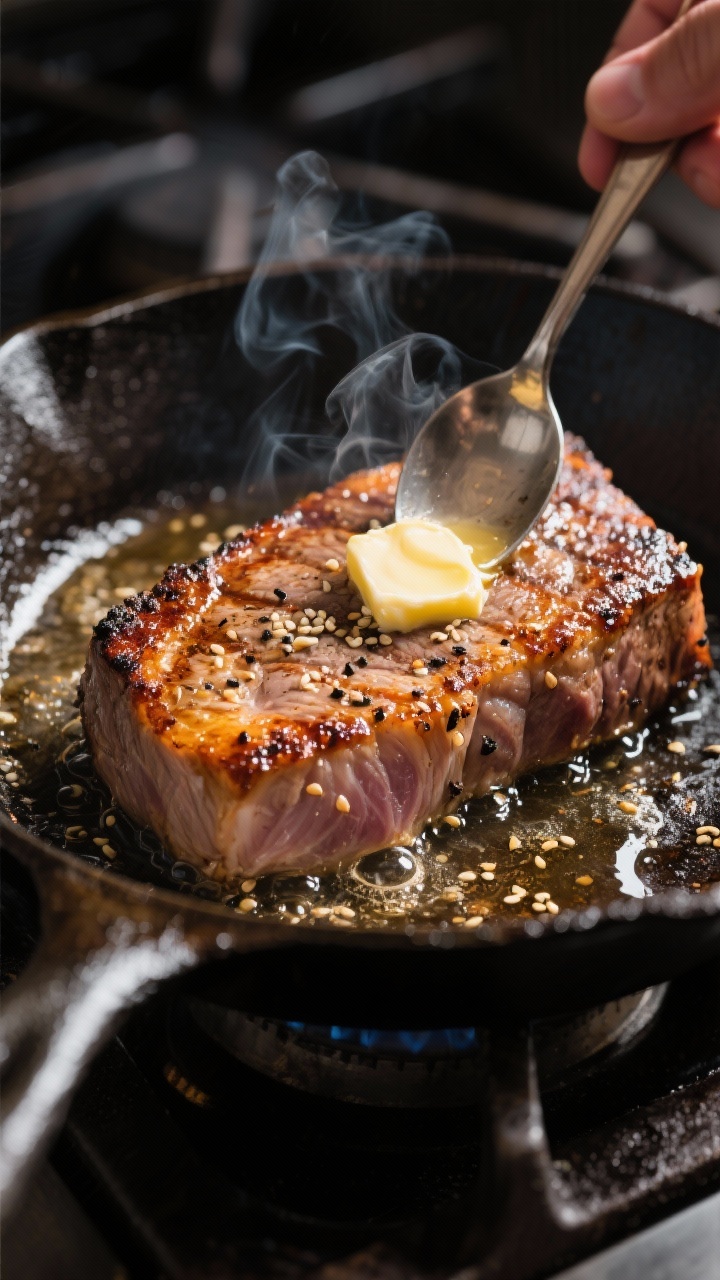
This method keeps things simple: high heat, quick sear, and minimal fuss. The fish gets a deeply caramelized crust from a quick sear, but stays juicy and medium-rare inside.
A light seasoning lets the tuna shine, while a splash of citrus and a touch of soy or sesame add brightness and depth. The key is using dry, thick-cut tuna steaks and not overcooking them. The result is clean, bold flavor with a satisfying texture.
Ingredients
- 2 tuna steaks (about 6–8 ounces each, 1 to 1¼ inches thick), preferably ahi/yellowfin or bigeye
- 1 tablespoon neutral high-heat oil (avocado, grapeseed, or canola)
- 1 tablespoon butter (optional, for extra richness)
- 1 teaspoon kosher salt
- ½ teaspoon freshly ground black pepper
- ½ teaspoon garlic powder (optional)
- 1 teaspoon toasted sesame oil (optional, for finishing)
- 1–2 teaspoons low-sodium soy sauce or tamari (optional, for finishing)
- 1 lemon or lime, cut into wedges
- 2 teaspoons sesame seeds (optional, for garnish)
- Fresh herbs for serving (chives, cilantro, or parsley), optional
Step-by-Step Instructions
- Choose good tuna. Look for high-quality tuna steaks that are firm, deep red, and smell clean.
If possible, buy sushi-grade or from a fishmonger you trust.
- Pat the tuna dry. Use paper towels to remove surface moisture. Dry fish sears better and gives you a crisp crust.
- Season simply. Sprinkle both sides with kosher salt, black pepper, and garlic powder if using. Press gently so the seasoning adheres.
- Preheat your pan. Set a heavy skillet (cast iron or stainless steel) over medium-high to high heat. Let it heat for 2–3 minutes until very hot.
- Add oil. Swirl in the neutral oil.
It should shimmer right away. If the oil smokes excessively, lower the heat slightly.
- Sear the first side. Lay the tuna steak in the pan away from you. Don’t move it.
Sear for about 60–90 seconds until a golden-brown crust forms at the edges.
- Flip and finish. Turn the steak and sear the second side for another 60–90 seconds. For thick steaks, quickly sear the edges for 10–15 seconds each if you like.
- Optional butter baste. Add butter in the last 30 seconds. Tilt the pan and spoon the melted butter over the tuna for extra flavor.
- Check doneness. For classic restaurant-style tuna, aim for rare to medium-rare: cool to warm pink center.
Internal temp is about 95–110°F (35–43°C) for rare, 110–120°F (43–49°C) for medium-rare. It cooks fast—don’t walk away.
- Rest briefly. Transfer to a cutting board and rest for 2 minutes. Finish with a light drizzle of sesame oil and soy/tamari if desired.
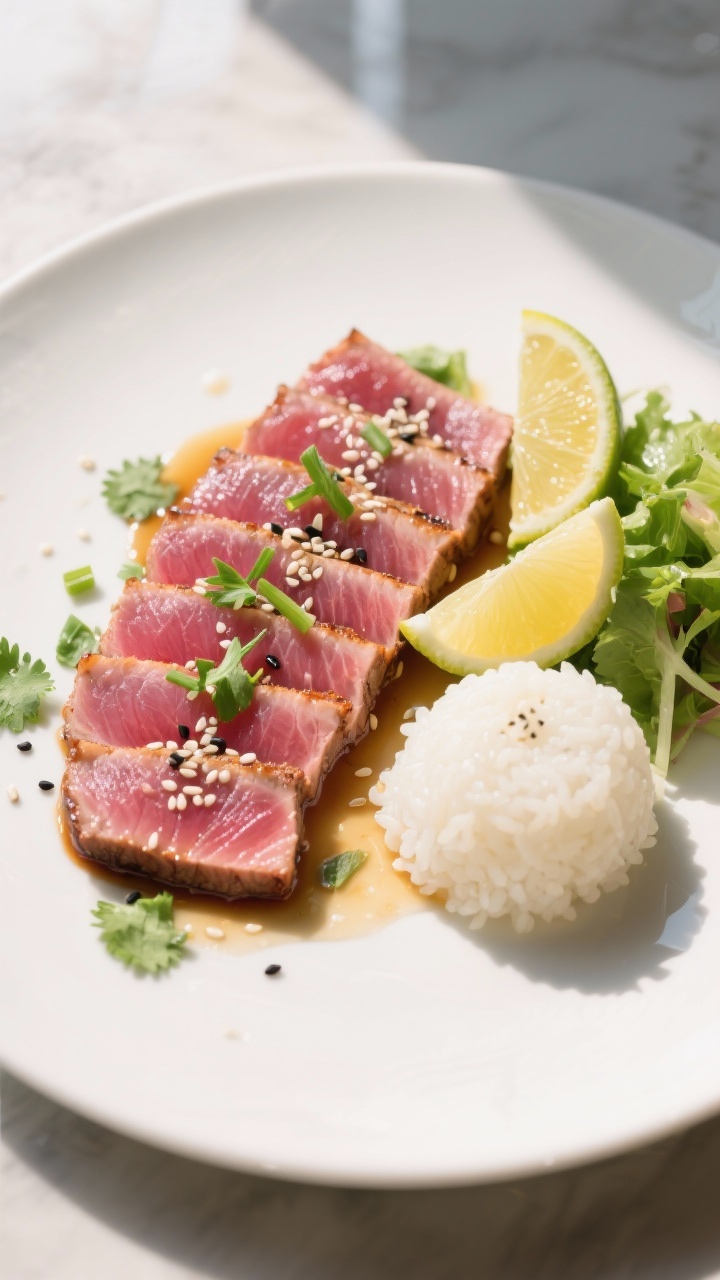
- Slice and serve. Slice against the grain into thick strips.
Squeeze lemon or lime over the top, sprinkle sesame seeds, and add herbs. Serve with a simple salad, rice, or sautéed greens.
Storage Instructions
- Serve immediately for best texture. Tuna is at its peak right after searing.
- If you must store, cool completely, then wrap tightly and refrigerate for up to 24 hours.
Avoid reheating—serve chilled or at room temperature.
- Great next day in salads, rice bowls, or wraps with a zippy dressing.
- Do not freeze cooked tuna steak; it will turn dry and mealy.
Why This is Good for You
Tuna is rich in lean protein, which keeps you full without weighing you down. It’s a strong source of omega-3 fatty acids that support heart and brain health. You also get important nutrients like vitamin D and selenium.
Paired with citrus and simple seasonings, this meal is naturally light and satisfying without heavy sauces or breading.
What Not to Do
- Don’t start with wet fish. Moisture prevents browning and leads to steaming instead of searing.
- Don’t overcook. Tuna goes from juicy to dry in a minute. Pull it early and let carryover heat finish the job.
- Don’t use low-heat oil. Butter alone burns fast. Use a high-heat oil for the sear and finish with butter if you like.
- Don’t overcrowd the pan. Sear in batches if needed.
Crowding drops the heat and sabotages the crust.
- Don’t skip resting. A brief rest helps juices redistribute and makes slicing cleaner.
Recipe Variations
- Black Pepper Crust: Coarsely crush black pepper and press it onto the tuna with salt before searing. Finish with lemon and a touch of butter.
- Sesame-Crusted: Mix white and black sesame seeds with a pinch of salt. Press onto all sides of the tuna and sear quickly.
Serve with soy and lime.
- Citrus-Garlic Marinade: Marinate tuna for 10–15 minutes in lemon juice, olive oil, minced garlic, and parsley. Pat dry before searing. Short marination keeps the texture firm.
- Spicy Chili-Lime: Rub with chili powder, smoked paprika, and lime zest.
Serve with lime wedges and cilantro.
- Miso-Ginger Glaze: Whisk white miso, grated ginger, a splash of soy, and a little honey. Brush on after searing for a glossy umami finish.
- Nicoise-Style Plate: Serve sliced tuna with green beans, cherry tomatoes, olives, boiled potatoes, and a mustardy vinaigrette.
FAQ
What’s the best tuna for searing?
Look for ahi (yellowfin) or bigeye tuna steaks that are at least 1 inch thick. They should be firm, moist but not wet, and a vibrant ruby color.
Ask for sushi-grade if you plan to keep it very rare.
How done should tuna be?
Most restaurants serve tuna rare to medium-rare so the center stays tender. If you prefer it more done, sear 30–60 seconds longer per side, but know it will be less juicy.
Do I need a cast-iron skillet?
No, but a heavy pan helps you get an even, high-heat sear. Stainless steel also works well.
Nonstick can be used in a pinch, but it won’t brown quite as deeply.
Can I cook it from frozen?
Thaw first for best results. Thaw in the fridge overnight or in a sealed bag under cold running water. Pat very dry before searing.
Is it safe to eat tuna rare?
When sourced from a reputable fishmonger and handled properly, seared-rare tuna is a common, safe preparation.
If you’re pregnant, immunocompromised, or unsure about sourcing, cook to medium and consult your healthcare provider.
What should I serve with it?
Keep it fresh and bright: a citrusy salad, sautéed greens, steamed rice, or garlicky mashed potatoes. A quick cucumber salad or mango salsa is great for contrast.
My tuna stuck to the pan—what went wrong?
The pan may not have been hot enough, or the fish was wet. Also, give it time to release naturally; once a crust forms, it will lift more easily.
How can I tell when to flip?
Watch the side of the steak: you’ll see the cooked layer rise about a quarter of the way up.
The edges will turn golden, and the fish will release easily when ready.
Can I make a sauce?
Yes. Deglaze the pan with a splash of soy sauce and lemon juice, whisk in a small knob of butter, and spoon over the tuna. Or serve with wasabi mayo or a ginger-scallion sauce.
How do I avoid a fishy smell?
Buy fresh tuna, cook it the day you purchase it, and keep your kitchen well-ventilated.
A quick squeeze of lemon after cooking also brightens the aroma.
Wrapping Up
Pan-seared tuna steak is a fast, satisfying meal that feels special without being complicated. With a hot pan, dry fish, and a light hand on timing, you’ll get a crisp crust and a tender center every time. Keep the flavors simple, add a squeeze of citrus, and dinner is done—restaurant quality, right at home.