Italian seafood pasta is one of those dishes that feels special but comes together surprisingly fast. Think silky strands of pasta coated in a light, savory sauce with briny clams, sweet shrimp, and tender calamari. It’s elegant without trying too hard, and it tastes like something you’d order at a coastal trattoria.
You don’t need fancy techniques or hard-to-find ingredients—just good seafood, quality olive oil, and a bit of timing. If you love fresh, clean flavors, this recipe will quickly become a go-to.
What Makes This Recipe So Good
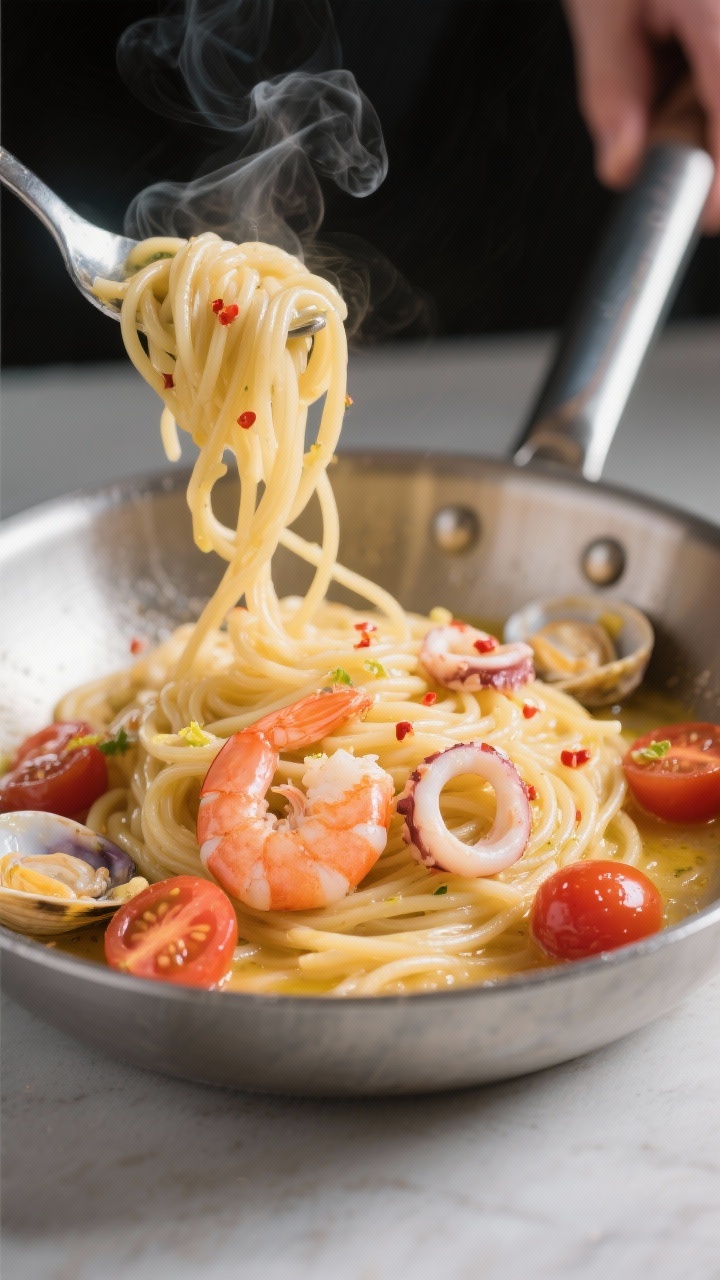
- Balanced flavors: Garlic, white wine, tomatoes, and fresh herbs let the seafood shine without overpowering it.
- Fast and impressive: From prep to plate in about 30 minutes, yet it looks and tastes restaurant-worthy.
- Light but satisfying: The sauce is brothy and glossy, not heavy, so you get rich flavor without feeling weighed down.
- Flexible seafood mix: Use what’s fresh and available—shrimp, clams, mussels, scallops, or calamari.
- Simple technique: A few well-timed steps deliver a professional result.
Ingredients
- 12 oz (340 g) long pasta, such as spaghetti or linguine
- 3 tbsp extra-virgin olive oil, plus more for finishing
- 4 cloves garlic, thinly sliced
- 1/2 tsp red pepper flakes (adjust to taste)
- 1/2 cup dry white wine (like Pinot Grigio or Sauvignon Blanc)
- 1 cup cherry tomatoes, halved, or 3/4 cup canned crushed tomatoes
- 1 lb (450 g) mixed seafood: peeled shrimp, cleaned calamari rings, and clams or mussels (scrubbed and debearded)
- 1/2 cup seafood or vegetable broth (optional but helpful if you like a saucier pasta)
- 1 lemon (zest and juice)
- 2 tbsp unsalted butter (for gloss and flavor)
- 1/4 cup chopped fresh parsley
- Kosher salt and freshly ground black pepper
Instructions
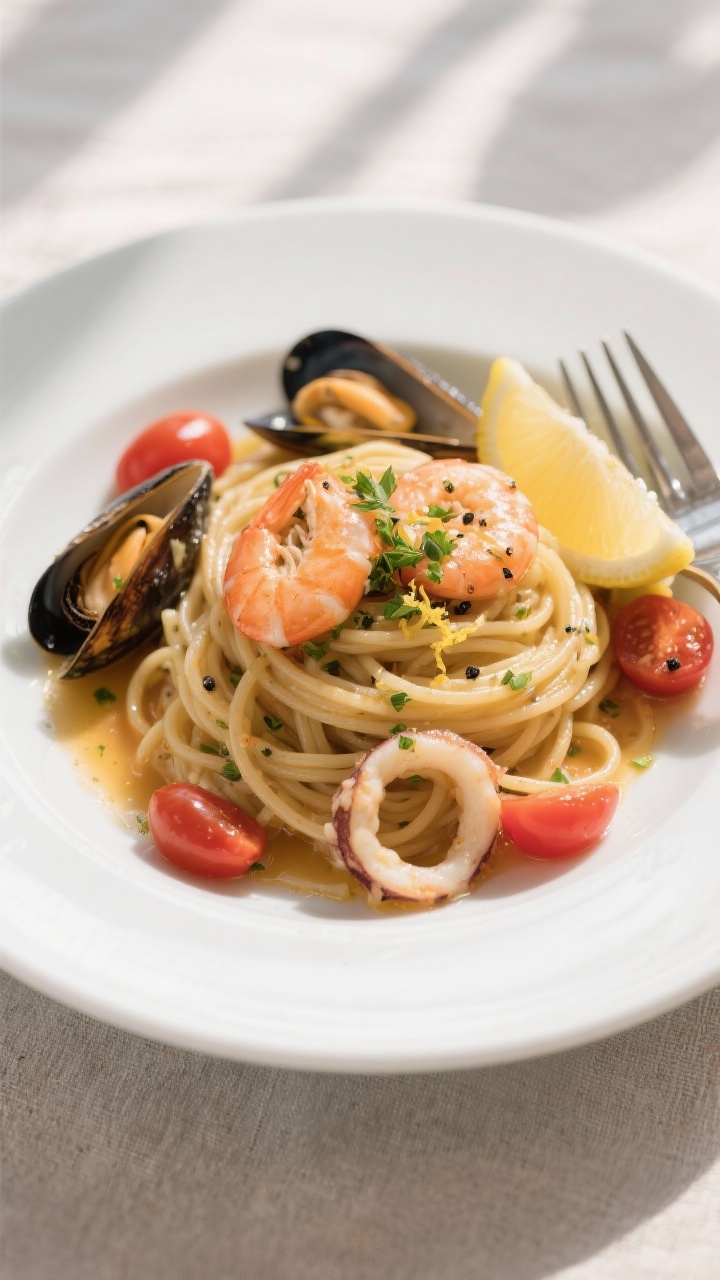
- Boil the pasta: Bring a large pot of well-salted water to a boil. Cook pasta until just shy of al dente.
Reserve 1 cup of pasta water, then drain.
- Start the base: In a wide skillet, warm olive oil over medium heat. Add garlic and red pepper flakes. Cook 30–60 seconds until fragrant, not browned.
- Deglaze: Pour in white wine and let it bubble for about 1–2 minutes to reduce slightly.
Add tomatoes and a pinch of salt. Simmer 2–3 minutes.
- Add clams/mussels: If using shellfish that need steaming, add them now with the broth. Cover and cook 3–5 minutes until they begin to open.
Discard any that stay closed.
- Add shrimp and calamari: Stir in shrimp and calamari. Cook 2–3 minutes until shrimp are pink and calamari turn opaque and tender. Avoid overcooking.
- Combine with pasta: Add drained pasta to the skillet.
Toss with the sauce, adding splashes of reserved pasta water as needed to loosen and coat.
- Finish: Off the heat, add butter, lemon zest, and a squeeze of lemon juice. Toss until glossy. Season with salt and pepper.
- Garnish and serve: Sprinkle with parsley and a drizzle of good olive oil.
Serve immediately.
Keeping It Fresh
- Buy the best seafood you can: Fresh seafood should smell like the ocean, not fishy. If it’s not available, high-quality frozen shrimp and calamari are great backups.
- Cook seafood last: Seafood cooks quickly. Add it toward the end to keep it tender and juicy.
- Use pasta water wisely: The starchy water helps bind the sauce to the pasta.
Add it gradually until the sauce clings.
- Serve right away: This dish is best hot, right after tossing, when the sauce is silky and the seafood is perfectly cooked.
Health Benefits
- Lean protein: Shrimp, clams, mussels, and calamari are high in protein and relatively low in fat.
- Mineral-rich: Shellfish provide iron, zinc, and selenium, plus B vitamins for energy metabolism.
- Omega-3s: Seafood offers heart-healthy omega-3 fatty acids that support brain and cardiovascular health.
- Lighter sauce: Olive oil and a splash of wine create a flavorful, lighter sauce compared to cream-based versions.
Common Mistakes to Avoid
- Overcooking seafood: It turns rubbery fast. Pull it as soon as it’s opaque and just cooked through.
- Skipping the pasta water: Without it, the sauce won’t emulsify properly, and the pasta may seem dry.
- Using too much tomato: A little adds sweetness and color, but you want a light, brothy sauce—not a heavy marinara.
- Under-salting the water: The pasta water should taste like the sea. It’s your first chance to season the dish.
- Not cleaning shellfish: Scrub shells and discard any cracked or open clams/mussels that don’t close when tapped.
Variations You Can Try
- All-shrimp version: Skip shellfish and use only shrimp for a simpler, kid-friendly option.
- Scallop upgrade: Sear dry-packed scallops in a separate pan for a golden crust, then add on top at the end.
- Tomato-free bianco: Leave out tomatoes for a pure white wine, garlic, and lemon sauce.
- Herb swap: Try basil, chives, or dill instead of parsley for a fresh twist.
- Spicy Calabrian style: Add a spoonful of Calabrian chili paste for deep heat and fruitiness.
- Whole-wheat or gluten-free pasta: Both work well—just watch cook times and save extra pasta water.
FAQ
Can I use frozen seafood?
Yes.
Thaw it overnight in the fridge or under cold running water, then pat dry. Frozen shrimp and calamari often taste great and cook evenly.
What if I don’t want to cook with wine?
Use more broth plus a teaspoon of white wine vinegar or a squeeze of lemon to add brightness. The flavor stays balanced and fresh.
How do I prevent gritty clams and mussels?
Soak them in cold salted water for 20–30 minutes to help purge sand, then scrub and rinse well.
Discard any that are cracked or stay open after tapping.
Which pasta shape works best?
Linguine and spaghetti are classics, but bucatini or tagliolini also work. The key is a long shape that twirls and holds the light sauce.
Can I make it ahead?
This dish is best cooked and served fresh. If needed, prep ingredients in advance—clean seafood, slice garlic, and chop herbs—so cooking is quick.
How spicy is it?
Mild to medium, depending on the red pepper flakes.
Start with less and adjust at the end.
What’s the best wine pairing?
A crisp, unoaked white like Pinot Grigio, Vermentino, or Sauvignon Blanc complements the citrusy, briny notes without overpowering them.
Final Thoughts
Italian seafood pasta proves that simple ingredients, handled with care, create the most memorable meals. With a light, garlicky sauce and perfectly cooked seafood, it’s elegant enough for guests and easy enough for a weeknight. Keep the timing tight, season with intention, and finish with lemon and good olive oil.
You’ll have a dish that tastes like a seaside vacation, right at your table.