If you love silky fish with a punchy, citrusy sauce, this halibut piccata delivers every time. It’s elegant enough for a date night but simple enough for a weeknight dinner. The sauce is buttery, lemony, and briny from capers, and it comes together in a few minutes.
With a quick sear on the fish and a pan sauce you whisk together right in the skillet, it feels restaurant-quality without much effort. Serve it over mashed potatoes, pasta, or a bed of greens and enjoy that bright finish.
What Makes This Special
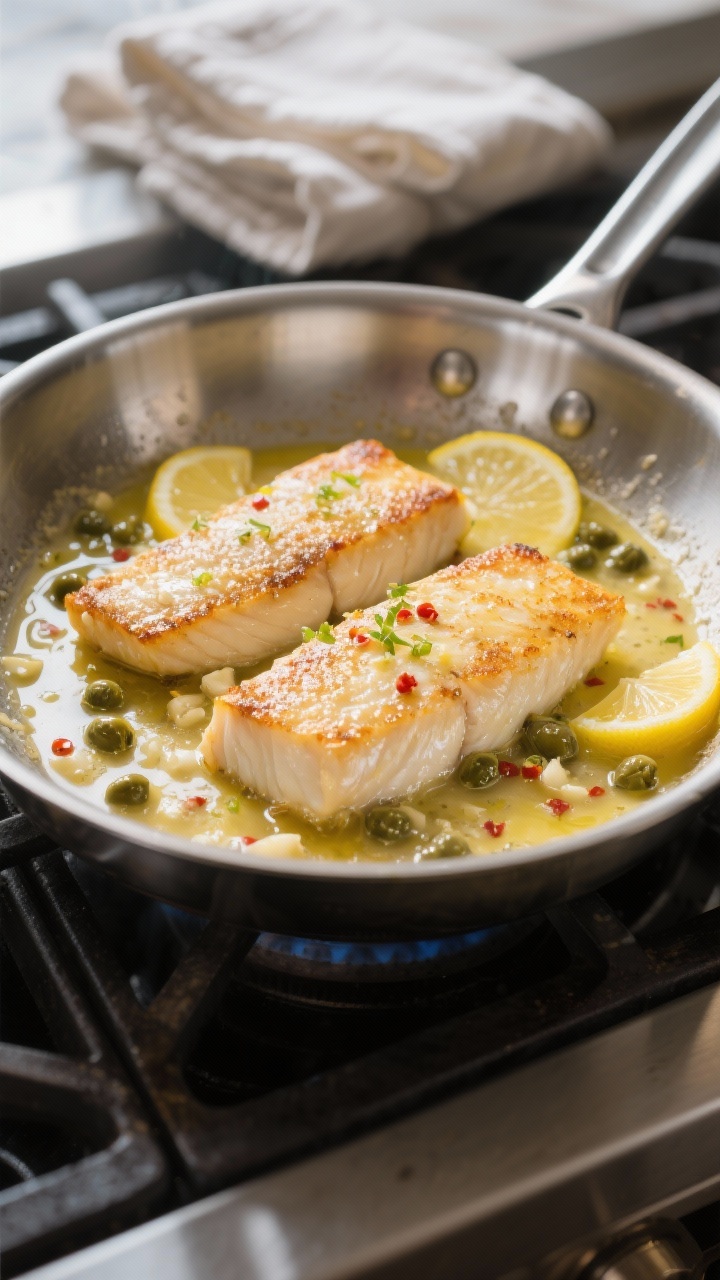
This dish balances richness and freshness in a way that never gets old. The halibut is meaty and mild, so it soaks up the sauce without getting lost.
The classic piccata combo—lemon, capers, butter, and wine—adds zip, silkiness, and a pop of brine. Best of all, it’s fast: you’ll go from prep to plate in about 25 minutes.
- Quick and impressive: Sear the fish, build the sauce, and you’re done.
- Bright flavors: Lemon and capers bring a lively contrast to buttery halibut.
- Restaurant-style technique: Pan sauce finished with cold butter for a glossy finish.
- Flexible sides: Pair with pasta, rice, sautéed spinach, or roasted potatoes.
What You’ll Need
- Halibut fillets: 4 fillets, about 6 ounces each, skinless if possible
- Kosher salt and black pepper: For seasoning
- All-purpose flour: 1/4 cup, for light dredging
- Olive oil: 2 tablespoons
- Unsalted butter: 4 tablespoons, divided
- Garlic: 2 cloves, minced
- Dry white wine: 1/2 cup (Pinot Grigio or Sauvignon Blanc)
- Low-sodium chicken broth or fish stock: 1/2 cup
- Lemon: Zest of 1 lemon and juice of 1–2 lemons (about 3–4 tablespoons)
- Capers: 2 tablespoons, drained and rinsed
- Fresh parsley: 2 tablespoons, finely chopped
- Optional: Red pepper flakes for a little heat
- Optional garnish: Thin lemon slices
Instructions
- Prep the fish: Pat the halibut dry on all sides. Season both sides with salt and pepper.
Lightly dredge in flour and shake off the excess so there’s only a thin coating.
- Heat the pan: Set a large skillet over medium-high heat. Add the olive oil and 1 tablespoon butter. When the butter foams and looks hot, you’re ready to sear.
- Sear the halibut: Add the fillets and cook undisturbed for 3–4 minutes until the bottom is golden and releases easily.
Flip and cook another 2–4 minutes, depending on thickness, until the fish is just opaque and flakes easily. Transfer to a plate and tent loosely with foil.
- Sauté the aromatics: Reduce heat to medium. Add the minced garlic and a pinch of red pepper flakes, if using.
Stir for 30 seconds until fragrant—don’t let the garlic brown.
- Deglaze: Pour in the white wine and scrape up any browned bits. Let it reduce by about half, 1–2 minutes.
- Build the sauce: Stir in the broth or fish stock, lemon zest, and lemon juice. Simmer 2–3 minutes to slightly thicken and concentrate the flavor.
- Finish with butter and capers: Reduce heat to low.
Whisk in the remaining 3 tablespoons of cold butter, one piece at a time, until the sauce turns glossy. Stir in the capers and half the parsley. Taste and adjust with more lemon, salt, or pepper as needed.
- Return the fish: Slide the halibut back into the pan to warm through for 30–60 seconds, spooning sauce over the top.
Don’t overcook.
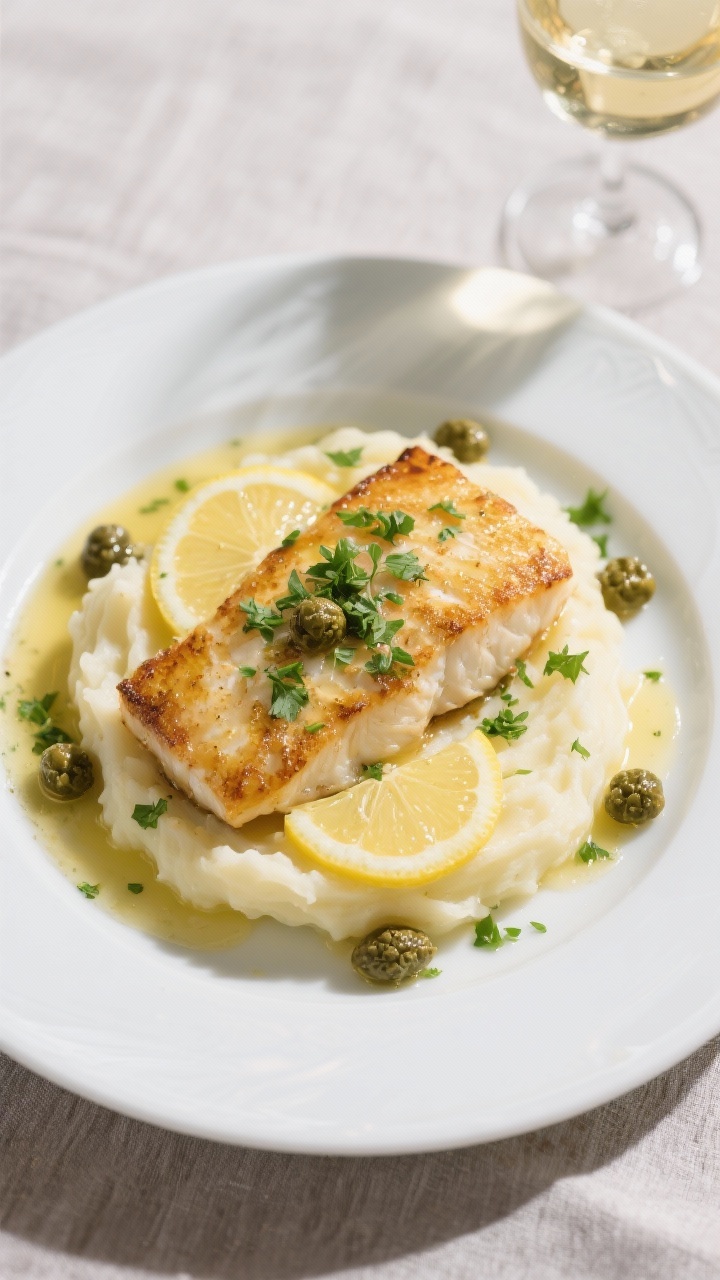
- Serve: Plate the halibut, spoon over extra sauce, and garnish with the remaining parsley and lemon slices if you like.
Storage Instructions
- Refrigerator: Store leftovers in an airtight container for up to 2 days.
- Reheating: Warm gently in a skillet over low heat with a splash of broth or water. Avoid microwaving on high, which can make the fish tough.
- Freezing: Not recommended. The sauce may break and the fish can become dry once thawed.
Health Benefits
Halibut is a lean, high-protein fish with omega-3 fatty acids that support heart and brain health.
It’s also a good source of selenium and B vitamins, which help with immune function and energy metabolism. Using olive oil and a modest amount of butter keeps the dish flavorful without going overboard. The lemon adds brightness and vitamin C without adding calories.
What Not to Do
- Don’t overcook the halibut: It goes from tender to dry quickly.
Pull it when it’s just opaque and flakes easily.
- Don’t skip drying the fillets: Moisture prevents a good sear and creates steaming instead of browning.
- Don’t burn the garlic: It turns bitter fast. Keep the heat moderate and move to the next step quickly.
- Don’t add butter over high heat: Finish the sauce off the boil so it emulsifies and stays silky.
- Don’t oversalt before tasting: Capers are naturally salty, and reductions concentrate flavor.
Variations You Can Try
- Swap the fish: Try cod, mahi-mahi, or sea bass. Thinner fillets will cook faster, so watch the timing.
- Piccata with cream: Stir in 2–3 tablespoons of heavy cream after reducing the wine for a lush sauce.
- Herb boost: Add fresh dill, chives, or tarragon along with the parsley for an aromatic twist.
- Olive twist: Add a handful of chopped green olives or Castelvetrano olives with the capers for extra brininess.
- Gluten-free: Skip the flour or use a 1:1 gluten-free blend.
You can also dust with fine rice flour for a delicate crust.
- Lemon-forward: Add thin lemon rounds to the pan during the sauce step to soften and infuse more citrus.
- No alcohol: Replace the wine with more broth and a teaspoon of white wine vinegar or extra lemon juice.
FAQ
How do I know when halibut is done?
Look for the fish to turn opaque and flake easily with a fork. An instant-read thermometer should read about 130–135°F in the thickest part. Remove from heat promptly to avoid dryness.
Can I make this ahead?
It’s best made fresh.
You can prep ingredients in advance—mince garlic, chop parsley, and measure liquids—but cook the fish and finish the sauce right before serving for the best texture.
What wine works best for the sauce?
Use a dry white wine you’d enjoy drinking. Pinot Grigio, Sauvignon Blanc, or a dry Chardonnay (unoaked if possible) all work well. Avoid sweet wines, which can throw off the balance.
Why dredge the fish in flour?
The light coating helps with browning and gives the sauce a touch of body as the flour mingles with the pan juices.
Keep it light so the crust doesn’t get gummy.
What should I serve with halibut piccata?
It’s great with angel hair pasta, buttery mashed potatoes, or simple rice. For vegetables, try sautéed spinach, asparagus, or roasted broccolini to soak up the sauce.
Can I use jarred lemon juice?
Fresh lemon juice has cleaner, brighter flavor. If you must use bottled, choose 100% lemon juice and adjust to taste, since it can be sharper or duller depending on the brand.
Is caper brine useful?
Yes, a teaspoon of the brine can enhance the sauce if you like it extra briny.
Add it cautiously and taste as you go to prevent oversalting.
In Conclusion
Halibut piccata is proof that simple ingredients can taste luxurious. With a quick sear and a bright, buttery sauce, you get a dish that feels special without being fussy. Keep the technique gentle, taste as you go, and serve it hot with plenty of sauce.
It’s the kind of meal you’ll make once and crave again and again.