When fish and chips look as good as they taste, the whole experience feels elevated. A few thoughtful plating choices can take this classic pub favorite from casual to restaurant-worthy. You don’t need special tools or fancy culinary training—just a little planning and a clean, modern approach.
In this guide, you’ll learn how to plate fish and chips so they look crisp, fresh, and irresistible.
What Makes This Recipe So Good
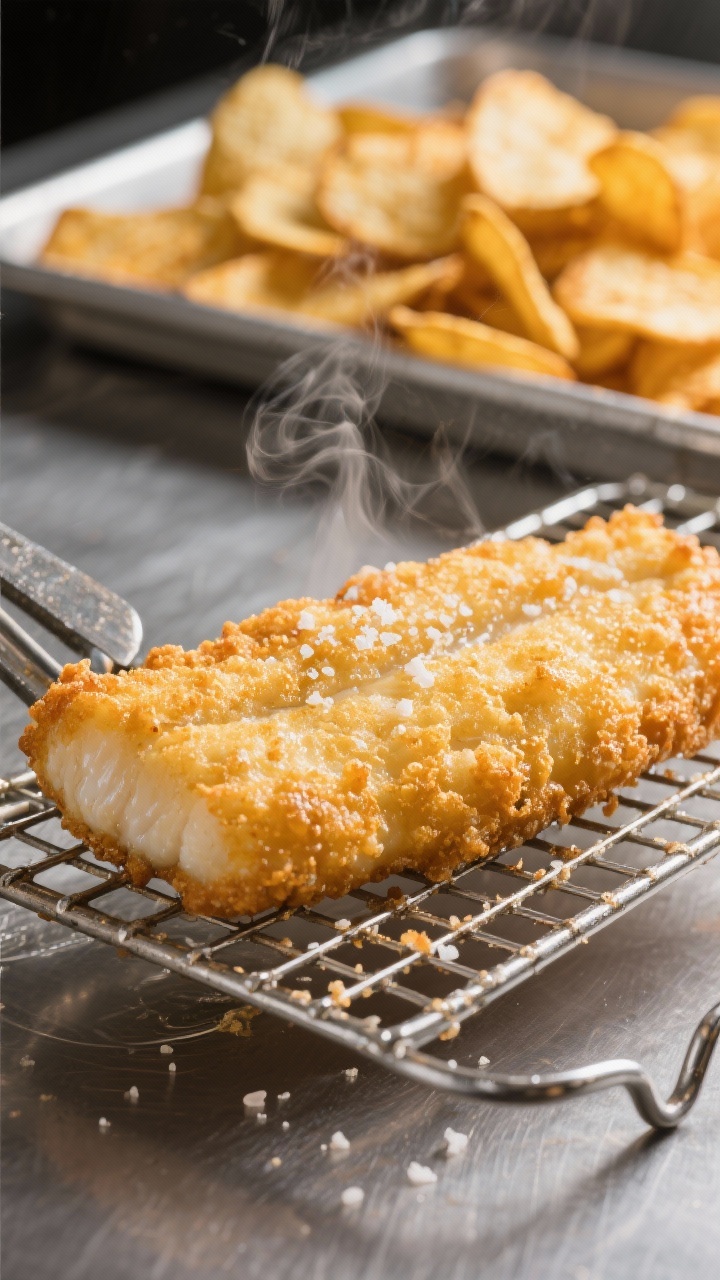
We’re focusing on presentation techniques that keep the fish crisp, the fries hot, and the plate neat. These ideas balance color, height, and texture for an eye-catching dish. Most tips are simple, quick, and easy to repeat for a home dinner or a small event.
No fuss—just smart, clean plating that feels like it came from a restaurant kitchen.
Shopping List
- White fish fillets (cod, haddock, or pollock)
- Potatoes for chips (Russet or Maris Piper)
- Flour, cornstarch, baking powder (for batter)
- Cold sparkling water or beer (for a light, crispy batter)
- Salt and black pepper
- Neutral frying oil (canola, peanut, or sunflower)
- Lemons (for wedges and zest)
- Fresh herbs (parsley, dill, or chives)
- Tartar sauce ingredients: mayonnaise, pickles or capers, lemon juice, dill, mustard
- Malt vinegar or vinegar reduction
- Optional garnishes: microgreens, pea puree, pickled onions, flaky sea salt
- Optional sides: mushy peas or minted peas, coleslaw
- Serving elements: parchment squares, small metal basket or ramekin, shallow wide plates or wooden boards
Step-by-Step Instructions
- Prep the fish and batter. Pat fish dry and season lightly with salt and pepper. Mix flour, cornstarch, and baking powder, then whisk in very cold beer or sparkling water until just combined. Keep the batter chilled.
Dry fish = crisp crust.
- Cut and par-cook chips. Slice potatoes into thick batons. Rinse and blanch in salted water until just tender. Drain and dry thoroughly.
Par-cooking helps achieve that classic soft interior and golden exterior.
- Double-fry the chips. Fry first at a lower temperature until pale and puffed, then drain. Fry again at a higher heat before serving to get them deeply golden and crunchy. Season immediately with salt.
- Fry the fish last. Dredge fillets lightly in seasoned flour, dip into batter, and fry in hot oil until crisp and cooked through.
Rest on a rack, not paper towels, to keep the crust from steaming and going soggy.
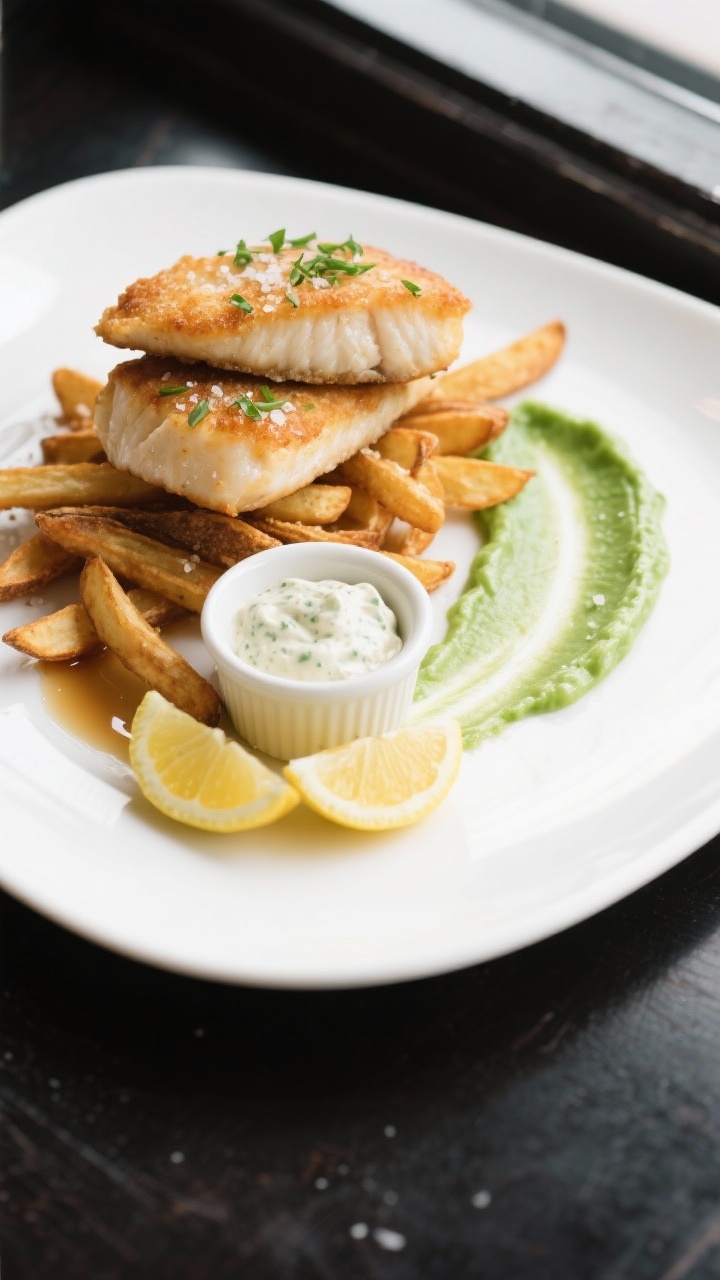
- Set up your plate. Choose a wide, shallow plate or a clean wooden board for a gastropub look. Wipe the rim and keep the surface spotless. If you love the chip-shop vibe, add a parchment square or a small metal basket for chips.
- Create height with the fish. Place one fillet slightly off-center and lean a second piece gently against it.
This adds dimension and focus without looking crowded.
- Stack the chips neatly. Place chips in a small bundle, a tidy stack, or in a mini basket. Keep them contained rather than scattered to emphasize crispness and order. A sprinkle of flaky salt on top looks great.
- Add a bright element. A spoonful of pea puree or a small mound of minted peas adds color and freshness.
Keep it tidy—no smears unless they’re clean and intentional.
- Position the sauce with care. Serve tartar sauce in a small ramekin or a neat quenelle. Avoid puddling directly on the plate, which can soften the chips or fish.
- Use citrus smartly. Add a lemon wedge or two, cut cleanly and placed at the front for easy reach. A light zest over the fish right before serving adds aroma without extra moisture.
- Garnish lightly. A few leaves of parsley, chives, or microgreens give a fresh finish.
Keep garnishes small and relevant. Avoid overloading the plate.
- Finish with contrast. A tiny drizzle of malt vinegar reduction around the plate edge or a pinch of black pepper on the chips adds polish. Keep lines clean and deliberate.
- Serve immediately. Fish and chips are best hot and crisp.
Plate quickly, keep portions tight, and get them to the table without delay.
How to Store
Fish and chips are at their best fresh. If you have leftovers, store fish and chips separately in airtight containers in the fridge for up to 2 days. Reheat on a wire rack in a hot oven or air fryer until crisp.
Avoid microwaving, which makes the batter soggy and chips limp. Keep sauces chilled and covered.
Health Benefits
- Lean protein: White fish is high in protein and low in fat, supporting muscle repair and satiety.
- Omega-3s: Some species like haddock and cod offer modest omega-3s for heart and brain health.
- Portion control: Thoughtful plating encourages balanced serving sizes and mindful eating.
- Fresh herbs and citrus: Bright flavors reduce the need for heavy sauces while adding antioxidants and vitamins.
- Better frying choices: Using high-heat oils and draining on a rack reduces excess oil on the plate.
What Not to Do
- Don’t drown the plate in sauce. It looks messy and softens crisp elements.
- Don’t pile everything flat. Without height, the dish looks heavy and uninspiring.
- Don’t skip the rack. Resting fried items on paper towels traps steam and kills crunch.
- Don’t over-garnish. Too many herbs or microgreens make the plate look busy and fussy.
- Don’t forget color. All-beige food needs a green or citrus accent to look appetizing.
- Don’t smudge the rim. Keep plate edges pristine for a professional finish.
Variations You Can Try
- Pub-Modern: Serve fish on pea puree with a stack of triple-cooked chips, lemon wedge, and dill tartar in a ramekin.
- Coastal Board: Present on a wooden board with parchment, a basket of chips, pickled red onions, and malt vinegar in a small bottle.
- Light and Fresh: Swap tartar for yogurt-dill sauce, add a lemony slaw, and use a thinner batter for a lighter crust.
- Panko Crunch: Use a panko coating instead of batter and pair with roasted potato wedges and herb aioli.
- Gluten-Free: Use rice flour and cornstarch for the batter and check all condiments. Plate with micro herbs and a citrus wedge.
- Spiced Twist: Add paprika and garlic to the batter, serve with harissa mayo, and garnish with parsley and charred lemon.
FAQ
How do I keep the fish crispy after plating?
Rest it on a wire rack and plate at the last moment.
Keep sauces in ramekins and avoid placing fish directly on wet elements like pea puree. Serve immediately.
What’s the best plate for fish and chips?
A wide, shallow white plate or a clean wooden board works well. You want enough space to build height and keep components separate, with room for a ramekin and lemon wedge.
Can I plate fish and chips for a crowd?
Yes—pre-portion sauces in small cups, use baskets for chips, and keep fish on racks in a warm oven.
Assemble quickly and consistently using a simple layout you can repeat.
What can I use instead of tartar sauce?
Try lemon-garlic aioli, yogurt-dill sauce, or caper-lemon vinaigrette. Keep it thick enough to hold shape on the plate.
How do I add color without complicating the dish?
Use pea puree or minted peas, fresh herbs, and bright lemon. Even a few pickled onion petals add a pop of pink and a nice tang.
What oil temperature should I use?
For the first fry on chips, aim for about 325°F (163°C).
For the second fry and the fish, go around 350–365°F (177–185°C) to get that golden, crisp finish.
Final Thoughts
Restaurant-style plating comes down to clean lines, smart height, and a pop of color. Keep the fish crisp, the chips tidy, and the sauces contained. With a few simple touches—like a lemon wedge, pea puree, and a sprinkle of flaky salt—you’ll serve fish and chips that look as good as they taste.
Consistency is key, so pick a layout you love and repeat it with confidence.