Fresh sardines don’t need much to taste amazing. A quick coating, a hot pan, and a squeeze of lemon turn them into a crunchy, salty snack that feels like a seaside treat. This recipe is simple, fast, and beginner-friendly, with just a handful of ingredients.
Whether you serve them as an appetizer, a casual dinner, or a game-day bite, they deliver big flavor without fuss. If you love crispy, golden food, these will hit the spot.
Why This Recipe Works
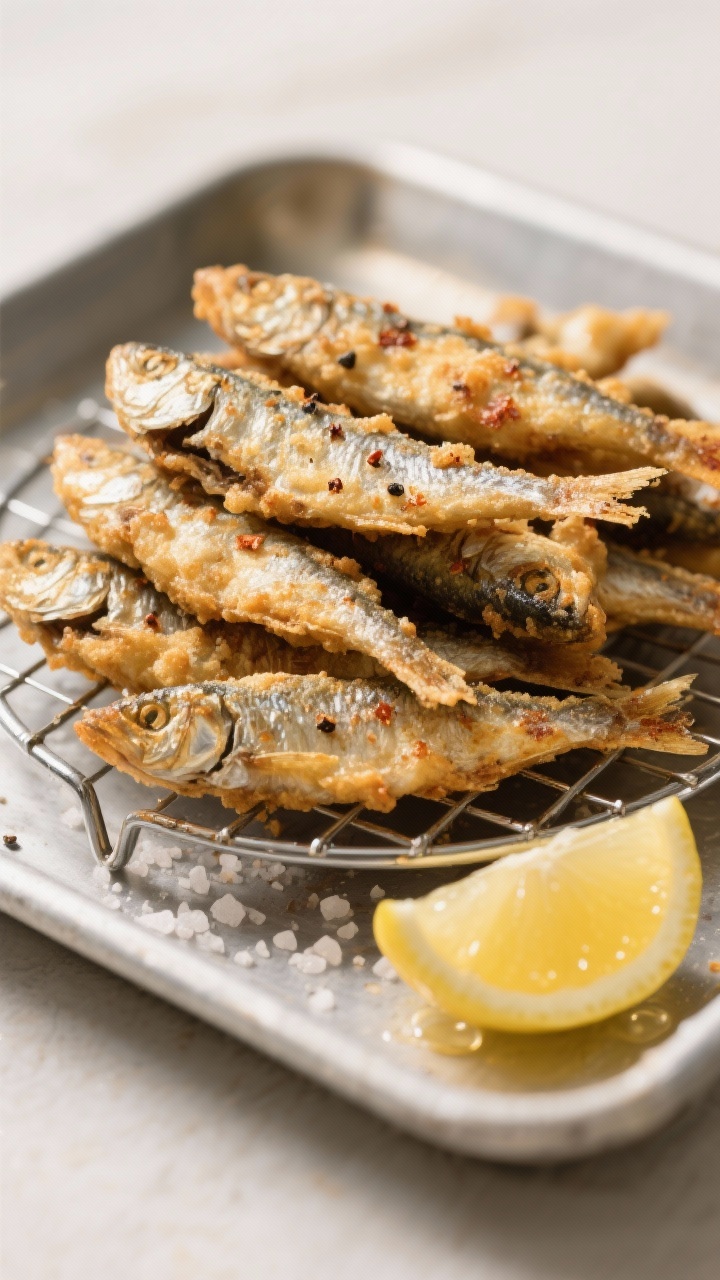
- Light coating, big crunch: A thin flour-cornstarch blend crisps up fast and doesn’t feel heavy.
- High-heat fry: Hot oil (350–375°F/175–190°C) seals in moisture and keeps the fish tender inside.
- Simple seasoning: Salt, pepper, and lemon let the sardines shine, while optional spices add character.
- Quick cook time: Small fish cook in minutes, making this a great weeknight option.
- Versatile serving: Eat them with lemon, aioli, or hot sauce; tuck into sandwiches; or top a salad.
Ingredients
- 1 to 1.5 pounds fresh sardines, cleaned (scaled, gutted; heads on or off)
- 1/2 cup all-purpose flour
- 1/4 cup cornstarch (or rice flour for extra crispiness)
- 1 teaspoon fine sea salt, plus more to finish
- 1/2 teaspoon black pepper
- 1/2 teaspoon garlic powder (optional)
- 1/2 teaspoon smoked paprika or chili powder (optional)
- Neutral oil for frying (such as canola, peanut, or sunflower; about 1–1.5 inches deep in pan)
- Lemon wedges, for serving
- Fresh parsley or dill, chopped (optional)
- Aioli, tartar sauce, or hot sauce (optional, for dipping)
How to Make It
- Prep the sardines: Rinse quickly under cold water, then pat completely dry with paper towels. Dry fish crisp better and splatter less.
- Mix the coating: In a shallow bowl, combine flour, cornstarch, salt, pepper, and any optional spices.
Stir well to distribute seasoning.
- Dredge lightly: Toss sardines in the flour mixture to coat. Shake off excess; you want a thin, even layer.
- Heat the oil: In a wide skillet or Dutch oven, heat 1–1.5 inches of oil to 350–375°F (175–190°C). Use a thermometer if you can.
- Fry in batches: Add sardines without crowding.
Fry 2–3 minutes per side, until golden and crisp. Flip gently with tongs.
- Drain and season: Transfer to a wire rack or paper towels. Sprinkle with a pinch of salt while hot.
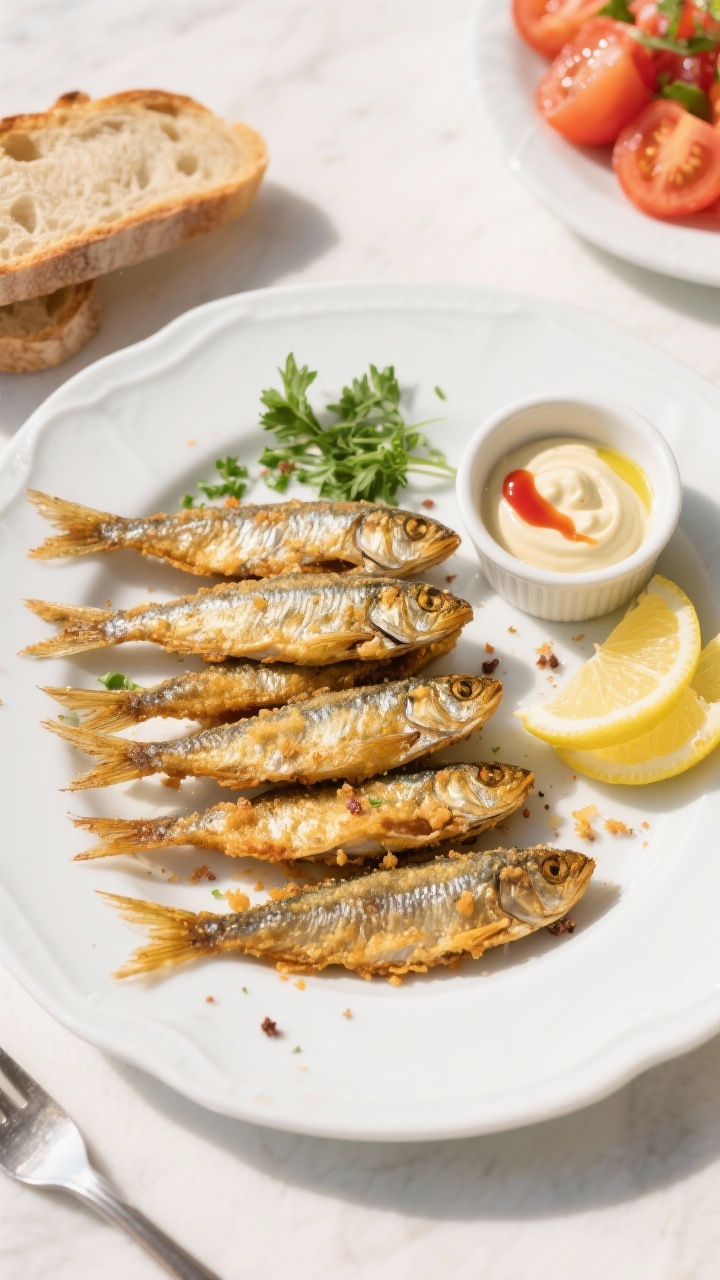
- Finish and serve: Squeeze over fresh lemon juice.
Garnish with herbs if you like. Serve hot with your favorite dip.
Storage Instructions
- Fridge: Keep leftovers in an airtight container for up to 2 days. Line the container with a paper towel to absorb moisture.
- Reheating: For crispiness, reheat in a 375°F (190°C) oven or air fryer for 6–8 minutes.
Avoid the microwave—it softens the crust.
- Freezing: Best enjoyed fresh, but you can freeze cooled sardines on a tray, then transfer to a bag for up to 1 month. Reheat from frozen in a hot oven or air fryer.
Why This is Good for You
- Rich in omega-3s: Sardines provide EPA and DHA, which support heart and brain health.
- High-quality protein: You get a satisfying meal with minimal ingredients.
- Natural source of calcium and vitamin D: If you eat the bones (they’re soft in small sardines), you add extra nutrients.
- Lower in mercury: Sardines are small and fast-growing, making them one of the safer seafood choices.
What Not to Do
- Don’t skip drying the fish: Moisture prevents browning and causes dangerous splatter.
- Don’t overcrowd the pan: It drops the oil temperature, leading to soggy, greasy sardines.
- Don’t fry in low heat: You’ll get pale, limp results. Keep oil in the 350–375°F range.
- Don’t over-season the coating: Heavy spices can mask the clean, briny flavor of sardines.
- Don’t walk away: They cook fast.
A minute too long and they’ll dry out.
Alternatives
- Gluten-free: Use rice flour and cornstarch (or potato starch). The crust will be extra crisp.
- No-cornstarch option: Use straight flour, or swap with rice flour for crunch.
- Spice profiles: Try lemon pepper, Old Bay, za’atar, or a pinch of cayenne for heat.
- Oven-baked version: Coat sardines lightly with oil, then dredge in seasoned flour. Bake at 425°F (220°C) on a rack for 10–14 minutes, flipping once.
- Air fryer: Lightly oil the sardines and basket.
Air fry at 390°F (200°C) for 8–12 minutes, turning halfway.
- Sauces to pair: Garlic-lemon aioli, herby yogurt sauce, romesco, or a squeeze of harissa mayo.
FAQ
Do I need to remove the heads and bones?
Most small sardines can be eaten whole after frying. If you prefer, ask your fishmonger to remove heads and butterfly the fish. The central bone pulls out easily once cooked.
Can I use canned sardines?
Not for this method.
Canned sardines are already cooked and packed in oil or water. They won’t crisp up the same way. Save them for toast, salads, or pasta.
What’s the best oil for frying?
Use a neutral, high-heat oil like canola, peanut, sunflower, or refined avocado oil.
Olive oil can work in a pinch, but it smokes sooner and can get pricey for deep frying.
How do I know the oil is hot enough without a thermometer?
Dip a wooden chopstick into the oil—steady bubbles mean it’s ready. Or drop in a pinch of coating; it should sizzle immediately and brown in about a minute.
How can I reduce the smell of frying fish at home?
Open windows, run the vent, and fry with a splatter screen. After cooking, simmer a small pot of water with lemon slices and a few cloves to freshen the air.
What should I serve with crispy sardines?
They’re great with lemon wedges, crusty bread, a simple tomato salad, or a quick slaw.
Add olives and a glass of something cold for a relaxed, Mediterranean-style plate.
Can I make these with larger sardines?
Yes, but increase cooking time slightly and consider butterflying them so they cook evenly. Check for doneness by flaking near the spine—flesh should be opaque and moist.
Why is my coating falling off?
The fish was likely too wet or the oil too cool. Pat the sardines dry, dust lightly, and make sure the oil is hot before frying.
Don’t move them too much in the first minute.
Final Thoughts
Crispy fried sardines deliver big flavor with minimal effort. With a hot pan, a light coating, and fresh lemon, you get a golden, crunchy bite that feels special and comforting at once. Keep the steps simple, don’t overcrowd the pan, and serve them right away.
Once you make them at home, you’ll wonder why you didn’t start sooner.