Catfish tacos bring together crunchy, golden fish and bright, zesty toppings in the best way. They’re quick enough for a weeknight but fun enough for a weekend hangout. With a few pantry spices and a hot skillet, you can make something that tastes restaurant-level without the fuss.
The catfish fries up fast, the garnish stays crisp, and everything lands in a warm tortilla. It’s simple cooking that feels special, and that’s the sweet spot.
Why This Recipe Works
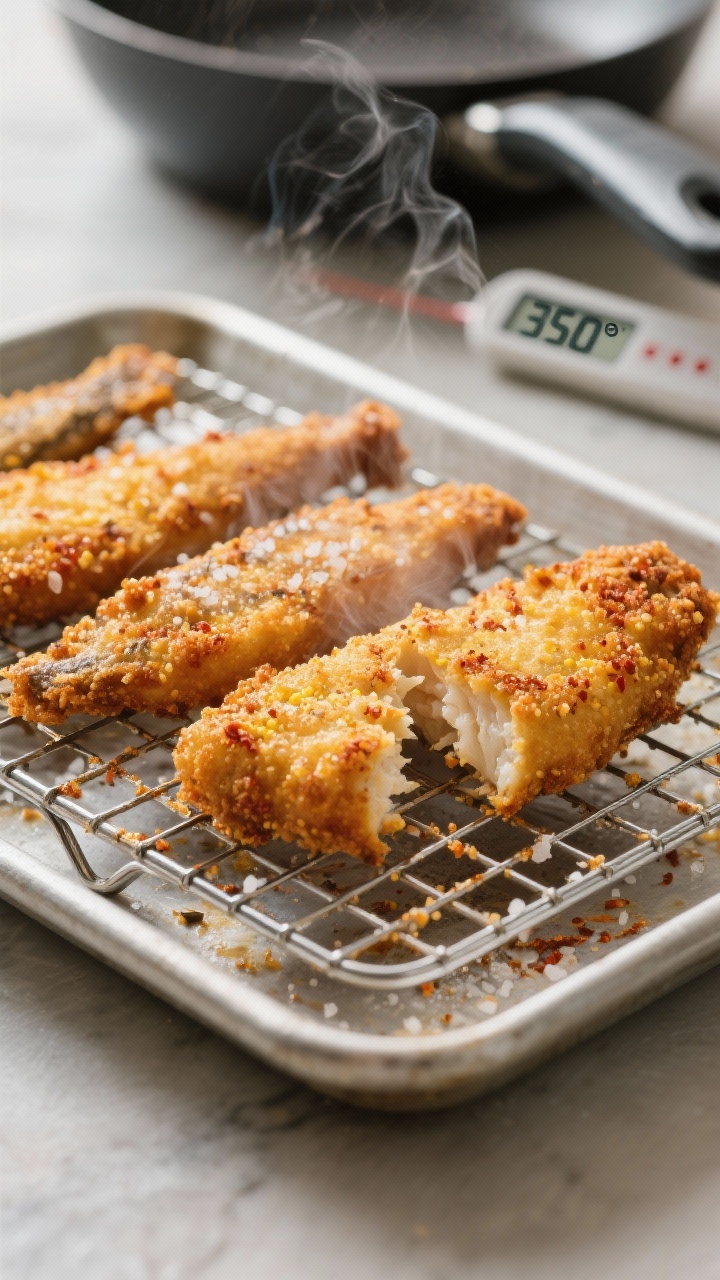
Catfish has a mild flavor and firm texture that holds up well to a crispy coating. It fries quickly, staying juicy inside while getting a satisfying crunch outside.
The warm spices and cornmeal crust deliver that classic Southern-style snap, perfect for tacos. The fresh toppings—like limey cabbage slaw, pico de gallo, and creamy sauce—balance the richness. They add brightness, crunch, and a little heat.
Together, you get contrast in every bite: hot and cold, crunchy and creamy, savory and refreshing.
What You’ll Need
- Catfish fillets: 1 to 1.5 pounds, cut into strips.
- Corn tortillas: 10–12, warmed.
- Cornmeal: 3/4 cup (fine or medium grind).
- All-purpose flour: 1/2 cup.
- Spices for crust: 2 teaspoons paprika, 1 teaspoon garlic powder, 1 teaspoon onion powder, 1 teaspoon ground cumin, 1/2 teaspoon chili powder, 1/2 teaspoon cayenne (optional), 1 teaspoon kosher salt, 1/2 teaspoon black pepper.
- Eggs: 2 large, beaten (for dredging), or use buttermilk.
- Oil for frying: Neutral oil like canola, peanut, or vegetable oil.
- Cabbage slaw: 3 cups shredded green or red cabbage, juice of 1 lime, pinch of salt, 1 tablespoon olive oil.
- Pico de gallo or salsa: 1 cup (store-bought or homemade).
- Crema or sauce: 1/2 cup Mexican crema or sour cream mixed with 1–2 tablespoons lime juice and hot sauce to taste.
- Fresh toppings: Avocado slices, chopped cilantro, sliced radishes, and extra lime wedges.
Instructions
- Prep the fish. Pat the catfish dry with paper towels and cut into 1-inch-wide strips. Dry fish gets crispier and helps the coating stick.
- Mix the crust. In a bowl, combine the cornmeal, flour, paprika, garlic powder, onion powder, cumin, chili powder, cayenne (if using), salt, and pepper. Taste a pinch of the mixture to check seasoning.
- Set up dredging. Place the beaten eggs in a shallow bowl.
Keep the cornmeal mixture in a separate shallow dish. Line a plate with parchment for the coated fish.
- Coat the catfish. Dip each strip into the egg, let excess drip off, then press into the cornmeal mixture to coat. Shake off excess and set aside.
Let coated fish rest 5 minutes to help the crust adhere.
- Make the slaw. Toss cabbage with lime juice, a pinch of salt, and olive oil. Let it sit to soften slightly while you cook the fish.
- Heat the oil. Pour 1/2 inch of oil into a large skillet. Heat over medium-high until shimmering and about 350°F.
If you don’t have a thermometer, a pinch of coating should sizzle on contact.
- Fry in batches. Add fish strips without crowding. Fry 2–3 minutes per side until deeply golden and crisp. The fish should flake easily and register 145°F internally.
Transfer to a wire rack or paper towels. Sprinkle with a little salt while hot.
- Warm the tortillas. Toast tortillas in a dry skillet for 20–30 seconds per side, or wrap in foil and warm in a low oven until pliable.
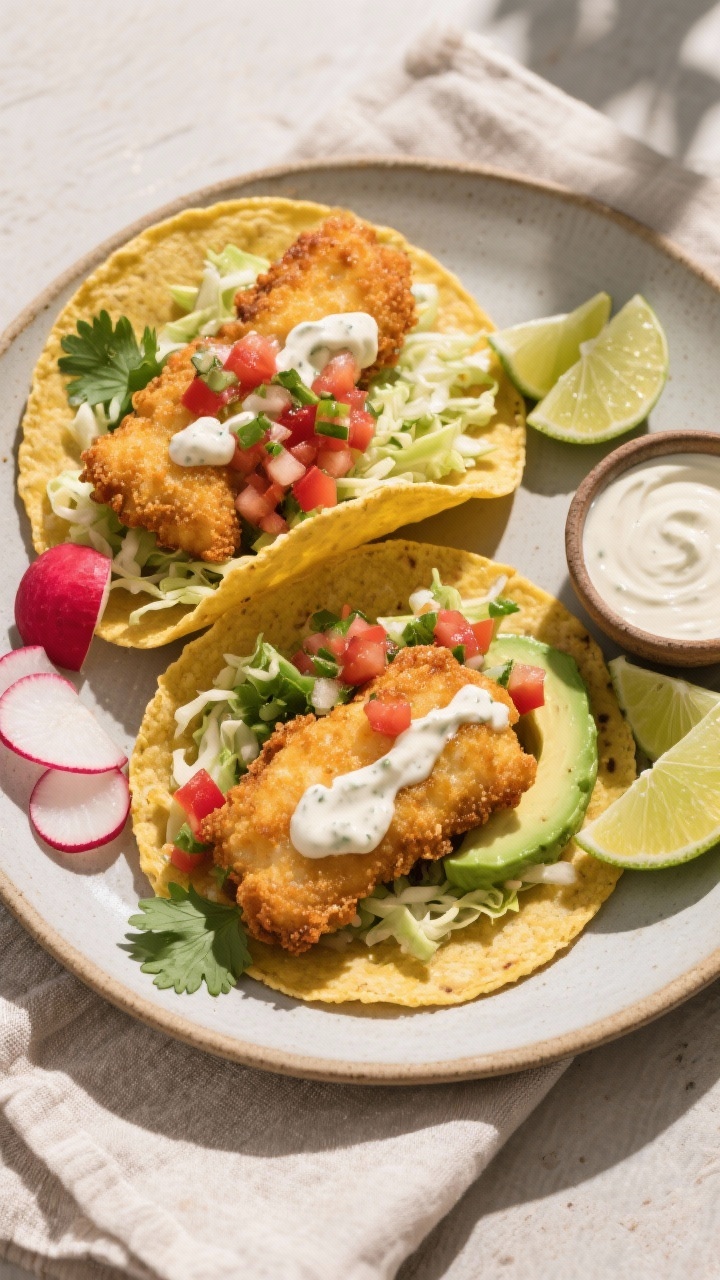
- Build the tacos. Spread a little crema on each tortilla. Add a few pieces of crispy catfish, a handful of limey slaw, a spoon of pico, and any extras like avocado, radish, and cilantro.
Finish with a squeeze of lime.
- Serve immediately. Crispy fish is best right away. Keep extra fish on a rack in a warm oven if needed between batches.
Keeping It Fresh
Fresh toppings bring the whole taco to life. Use a crisp cabbage and squeeze fresh lime over everything just before serving.
Add a little raw onion or jalapeño if you like more bite. For the fish, don’t fry too far in advance. If you must prep ahead, keep the coated fish chilled on a sheet pan, uncovered, for up to an hour.
This actually helps the crust dry slightly and crisp better. When ready, fry and serve right away. Leftover fish can be reheated in a hot oven or air fryer, but it won’t be quite as crunchy as fresh.
Benefits of This Recipe
- Fast and weeknight-friendly: From start to finish, you’re looking at about 30–40 minutes.
- Budget-conscious: Catfish is usually more affordable than other fish, and the ingredients are simple.
- Balanced flavors: Crunchy, creamy, and zesty elements keep each bite interesting.
- Customizable: Spice levels and toppings are easy to adjust for different tastes.
- Great for groups: Set out toppings and let everyone build their own tacos.
What Not to Do
- Don’t skip drying the fish. Excess moisture makes the coating slide off and the crust soggy.
- Don’t crowd the pan. Too many pieces lower the oil temperature and lead to greasy fish.
Fry in batches.
- Don’t use low heat. Warm oil won’t crisp the coating. Aim for a steady sizzle and around 350°F.
- Don’t overdress the slaw early. Too much liquid can make your tacos watery. Keep it light and toss close to serving.
- Don’t forget to season after frying. A pinch of salt on the hot fish brightens the flavor.
Alternatives
- Different fish: Swap catfish for tilapia, cod, pollock, or haddock.
Choose firm, mild fish for best results.
- Baked instead of fried: Coat the strips, place on an oiled rack over a sheet pan, mist with oil, and bake at 425°F for 12–15 minutes, flipping once. Broil at the end for extra color.
- Gluten-free: Use all cornmeal or a gluten-free flour blend. Check tortillas to ensure they’re 100% corn.
- Dairy-free: Skip the crema and use a dairy-free yogurt or mayo-based lime sauce.
- Extra heat: Add chipotle powder to the coating, or serve with a spicy salsa or pickled jalapeños.
- Toppings swap: Try mango salsa, quick-pickled red onions, or a cabbage-carrot slaw with vinegar.
FAQ
How do I keep the crust from falling off?
Pat the fish dry, dredge in egg, press firmly into the cornmeal mixture, and let it rest for a few minutes before frying.
Fry in hot oil and avoid flipping too early.
Can I use frozen catfish?
Yes. Thaw fully in the fridge, then pat very dry. Any ice crystals or excess moisture will fight the crust and reduce crispiness.
What oil is best for frying?
Use a neutral, high-smoke-point oil like canola, peanut, or vegetable oil.
Avoid olive oil for deep frying because it can burn and add strong flavor.
How can I tell when the fish is done?
The coating should be deep golden, and the fish should flake easily with a fork. Internal temperature should reach 145°F.
Can I make the fish ahead?
You can coat the fish and refrigerate it for up to an hour before frying. Cooked fish is best fresh, but you can re-crisp it in a 425°F oven or air fryer for a few minutes.
What’s a quick sauce to drizzle on top?
Mix crema or sour cream with lime juice, a pinch of salt, and your favorite hot sauce.
For something smoky, add a little adobo from canned chipotles.
Corn or flour tortillas?
Corn tortillas give the most authentic flavor and a nice chew. If you prefer flour, warm them well so they’re soft and flexible.
How do I avoid greasy fish?
Keep the oil hot, don’t crowd the pan, and drain the fish on a rack. If the oil temp drops, wait a minute between batches for it to recover.
Wrapping Up
Crispy catfish tacos are the kind of meal that makes weeknights feel memorable.
The steps are simple, the ingredients are easy, and the flavor payoff is big. Keep the fish hot, the toppings fresh, and the limes close by. With a little crunch and a lot of brightness, these tacos tend to disappear fast—so plan on seconds.