Foil packet dinners are a camper’s best friend. You toss everything into foil, seal it up, and let the fire do the work. No pots to scrub, no juggling multiple pans, and cleanup is a breeze.
Plus, the flavors get locked in, so every bite tastes smoky, juicy, and satisfying. Whether you’re feeding a crowd or cooking for two, these packets make dinner simple and fun.
Why This Recipe Works
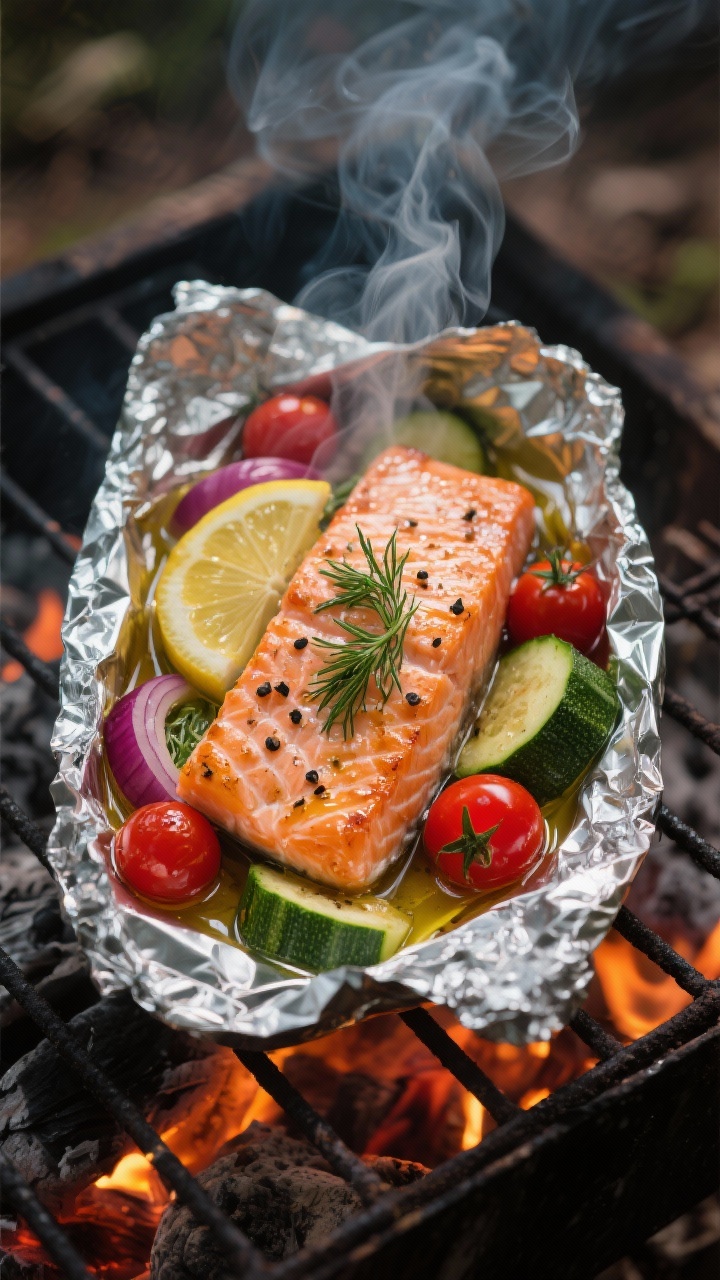
- Minimal cleanup: Everything cooks inside the foil, so there’s barely a mess to manage.
- Even, flavorful cooking: The sealed packet steams and roasts your ingredients, keeping them tender and tasty.
- Customizable for everyone: Picky eater? No problem.
Build individual packets with different proteins, veggies, and seasonings.
- Campfire-ready: Works over coals, on a grill grate, or even in an oven if the weather turns.
- Prep ahead friendly: Assemble at home, keep chilled, and toss on the fire when you’re hungry.
Ingredients
Use this as a base recipe for four foil packets. Mix and match as you like.
- Protein (choose one or mix):
- 1 lb boneless, skinless chicken thighs, cubed
- 1 lb smoked sausage, sliced
- 1 lb salmon fillet, cut into 4 portions
- 1 lb extra-firm tofu, pressed and cubed
- 1 lb lean ground beef or turkey, formed into 4 patties
- Vegetables (about 5–6 cups total):
- 1 lb baby potatoes, halved or thinly sliced
- 1 red bell pepper, sliced
- 1 zucchini, sliced
- 1 red onion, sliced
- 1 cup cherry tomatoes
- 1 cup mushrooms, halved
- 1 ear corn, kernels sliced off (or 1 cup frozen corn)
- 1 cup green beans, trimmed
- Fats and seasonings:
- 3–4 tbsp olive oil or melted butter
- 2 tsp salt, divided
- 1 tsp black pepper
- 2 tsp garlic powder or 3 minced garlic cloves
- 2 tsp smoked paprika
- 1 tsp dried Italian seasoning or thyme
- Optional: 1 lemon, sliced; fresh herbs like parsley or dill
- Optional sauces: 1/4 cup BBQ sauce, teriyaki, or pesto
- Extras:
- Heavy-duty aluminum foil (very important)
- Nonstick spray
- Optional: shredded cheese for topping
Step-by-Step Instructions
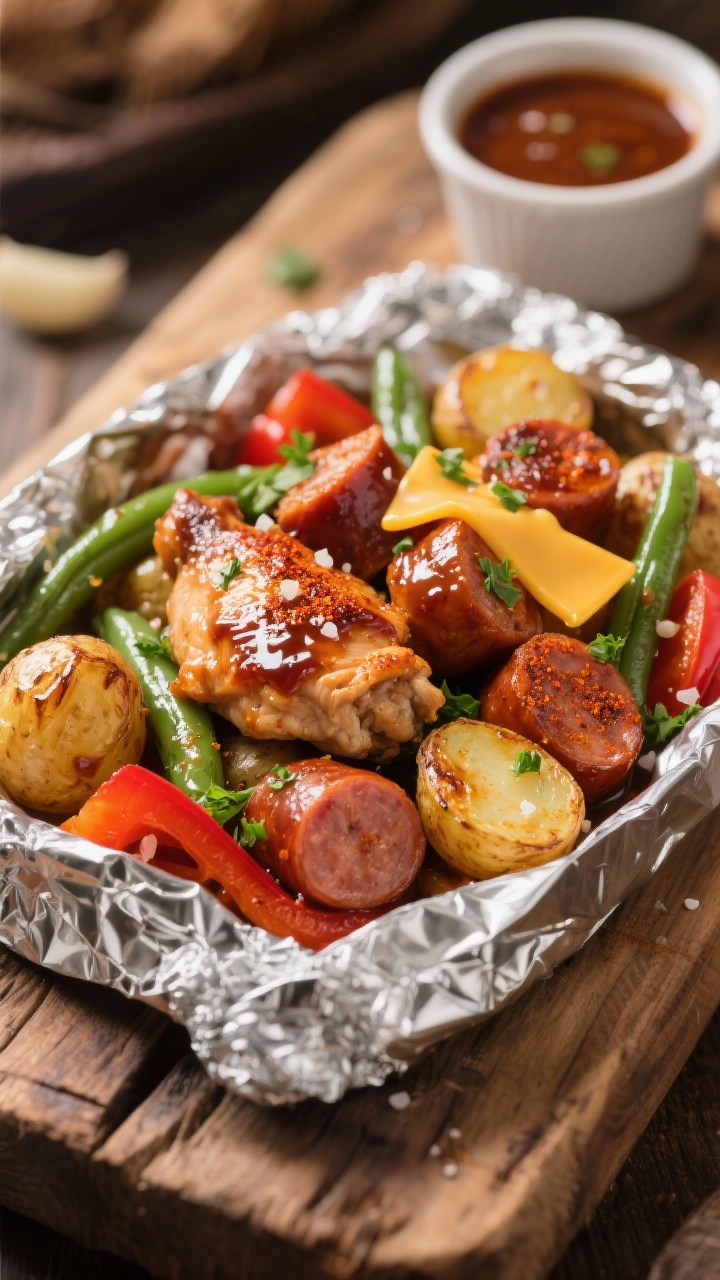
- Prep your fire. Build a campfire and let it burn down until you have a solid bed of glowing coals. You want medium heat, not roaring flames.
- Cut and layer your foil. Tear 8 sheets of heavy-duty foil, each about 12–14 inches long.
Double up to make 4 sturdy packets. Lightly spray the top sheet with nonstick spray.
- Assemble the packets. Divide potatoes and hardy veggies (like onions, peppers, green beans) among the packets. Add your protein on top.
Finish with softer veggies (zucchini, tomatoes, mushrooms) so they don’t overcook.
- Season generously. Drizzle each packet with 1 tbsp oil or butter. Sprinkle salt, pepper, garlic, paprika, and herbs evenly. Add lemon slices for fish or a spoon of BBQ/teriyaki for chicken or sausage.
Toss gently with your hands or a spoon.
- Seal tightly. Bring the long sides of the foil together and fold over a few times to seal. Crimp the ends closed. Leave a little room inside so steam can circulate.
- Cook over coals. Place packets directly on hot coals or on a grill grate set over the fire.
Rotate and flip halfway through for even cooking.
- Timing guide:
- Chicken thighs/sausage with potatoes: 20–25 minutes
- Salmon with tender veggies: 12–15 minutes
- Tofu with mixed veggies: 15–20 minutes
- Burger patties with veggies: 15–18 minutes
- Check doneness safely. Open one packet carefully (watch the steam). Chicken should be 165°F internally. Salmon should flake easily.
Potatoes should be fork-tender.
- Finish and serve. Top with fresh herbs or cheese, if using. Eat right from the foil or pour onto plates. Add hot sauce, a squeeze of lemon, or extra BBQ to taste.
How to Store
- Prep-ahead: Assemble uncooked packets up to 24 hours in advance.
Keep chilled in a cooler with plenty of ice. Store raw meats separately if you prefer to build packets at camp.
- Leftovers: Cool quickly, then move to airtight containers or reseal packets. Keep in a cooler below 40°F and eat within 2–3 days.
- Reheat: Warm packets over gentle coals or a camp stove until hot, about 8–10 minutes.
Add a splash of water or broth to prevent drying out.
Health Benefits
- Lean proteins: Chicken, fish, tofu, and turkey provide high-quality protein with less saturated fat.
- Vegetable-forward: You can pack in several servings of fiber-rich veggies, which support digestion and satiety.
- Controlled fats and sodium: You season everything yourself, so it’s easy to keep salt moderate and use heart-healthy oils.
- Nutrient retention: The sealed packet helps preserve moisture and heat-sensitive vitamins compared to open-fire grilling.
Pitfalls to Watch Out For
- Too much heat: Flames scorch the foil and burn food. Aim for hot coals, not fire.
- Thin foil: Regular foil tears easily. Use heavy-duty foil and double-layer it.
- Underseasoning: Potatoes and proteins need salt.
Taste a veggie piece mid-cook if possible and adjust next time.
- Overcrowding: Bulky packets cook unevenly. Make more packets instead of stuffing them.
- Mismatched cook times: Hard veggies go under proteins; tender veggies go on top. Cut potatoes small so they finish on time.
Alternatives
- Flavor profiles:
- Southwest: Chili powder, cumin, corn, black beans, lime, and chicken or beef.
- Mediterranean: Lemon, oregano, cherry tomatoes, olives, red onion, and salmon or tofu.
- BBQ Ranch: Smoked paprika, BBQ sauce, potatoes, peppers, and sausage or chicken.
- Teriyaki: Teriyaki sauce, broccoli, mushrooms, snap peas, and salmon or tofu.
- Starch swaps: Use sweet potatoes, cauliflower florets, or pre-cooked rice or quinoa added in the last few minutes.
- Dairy-free or gluten-free: Easy to adapt—skip cheese and choose sauces without gluten.
- Oven method: Bake at 400°F at home for similar timing if you want a no-fuss weeknight dinner.
FAQ
Can I use regular foil instead of heavy-duty?
Heavy-duty foil is best because it resists tearing and protects against hot spots.
If you only have regular foil, use three layers and handle gently with tongs.
Do I need to par-cook potatoes?
Not if you slice them thin or use small baby potatoes halved. If you prefer larger chunks, microwave or parboil for 3–5 minutes first to ensure they finish with the protein.
How do I prevent sticking?
Use nonstick spray or brush the foil with oil. Also, place wetter ingredients like onions or lemon slices under delicate proteins like fish.
What if my fire is too hot?
Move packets to the edge of the coals or raise them on a grill grate.
You can also double the bottom layer of foil for extra insulation.
Can I make vegetarian or vegan packets?
Absolutely. Tofu, chickpeas, or plant-based sausages work great. Add hearty veggies and a bold sauce, and watch cook times since tofu often finishes faster than chicken.
How do I know when salmon is done?
Salmon is done when it flakes easily with a fork and looks opaque, usually in 12–15 minutes.
Avoid overcooking to keep it juicy.
Is it safe to prep packets in advance?
Yes, up to 24 hours ahead. Keep them cold in a well-iced cooler, and store raw meat separately from ready-to-eat foods to prevent cross-contamination.
Wrapping Up
Campfire foil packets make outdoor cooking simple, tasty, and mess-free. Build your own combos, season boldly, and let the coals do the rest.
With a few smart tips and sturdy foil, you’ll get tender veggies and juicy proteins every time. Pack a few sauces, some fresh herbs, and you’ve got an easy dinner that feels special at the campsite or at home.