If you’re craving classic Southern comfort, crispy fried catfish delivers every time. The crust shatters with each bite, while the fish inside stays tender and flaky. It’s simple, satisfying, and surprisingly quick to make at home.
You don’t need fancy equipment or hard-to-find ingredients—just a few smart techniques and a good skillet. Perfect for weeknights, backyard gatherings, or a casual weekend feast.
What Makes This Special
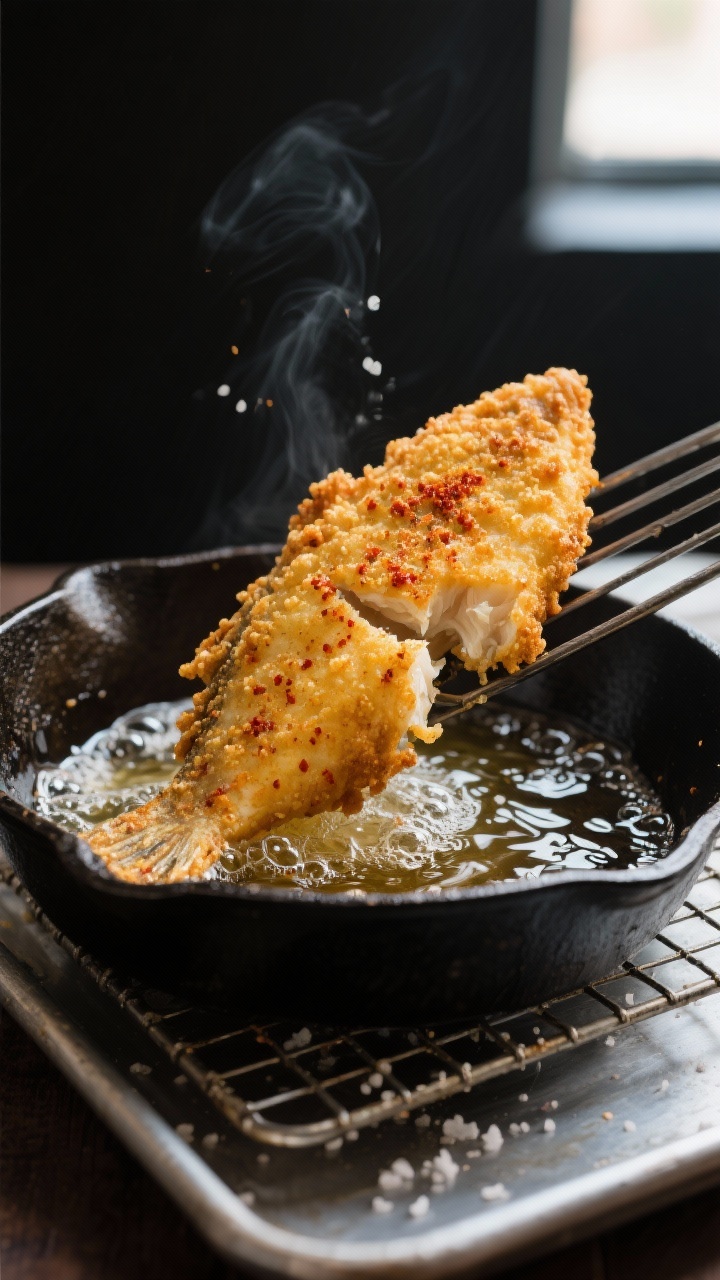
Southern-style fried catfish shines because it’s all about texture and flavor balance. The cornmeal crust brings a light, crisp crunch without feeling heavy.
A brief buttermilk soak seasons the fish and keeps it moist. And the spice blend adds warmth without overpowering the catfish’s mild taste.
Another key is cooking at the right oil temperature. This gives you a golden crust that seals in the juices.
With the right steps, you’ll get restaurant-quality results at home, every time.
Ingredients
- 1½ to 2 pounds catfish fillets, skinless
- 1 cup buttermilk (or whole milk with 1 tablespoon lemon juice or vinegar as a substitute)
- 1 large egg
- 1 tablespoon hot sauce (optional, but recommended)
- 1½ cups fine yellow cornmeal
- ½ cup all-purpose flour
- 2 teaspoons kosher salt, divided
- 1 teaspoon black pepper
- 1 teaspoon garlic powder
- 1 teaspoon onion powder
- 1 teaspoon smoked paprika (or regular paprika)
- ½ teaspoon cayenne pepper (adjust to taste)
- Neutral oil for frying (peanut, canola, or vegetable oil)
- Lemon wedges, for serving
- Fresh parsley or green onions, chopped (optional garnish)
Instructions
- Prep the fish: Pat the catfish fillets dry with paper towels. Sprinkle with 1 teaspoon of the salt and a few grinds of black pepper. Set aside while you prepare the dredge.
- Make the buttermilk soak: In a shallow bowl, whisk together the buttermilk, egg, and hot sauce.
This mixture helps the coating cling and keeps the fish tender.
- Mix the coating: In a separate bowl, combine cornmeal, flour, remaining 1 teaspoon salt, black pepper, garlic powder, onion powder, paprika, and cayenne. Stir well so the spices are evenly distributed.
- Heat the oil: Pour 1 to 1½ inches of oil into a heavy skillet or Dutch oven. Heat to 350–365°F.
Use a thermometer if you have one; it makes a big difference.
- Coat the fillets: Dip each piece of catfish into the buttermilk mixture, letting the excess drip off. Press into the cornmeal mixture to coat both sides thoroughly. Shake off any loose crumbs for an even crust.
- Fry in batches: Carefully add fillets to the hot oil without crowding the pan.
Fry for 3–5 minutes per side, depending on thickness, until deep golden and crispy. The fish should flake easily with a fork.
- Drain and season: Transfer to a wire rack set over a baking sheet or to a paper towel–lined plate. Sprinkle lightly with salt while hot to enhance the crunch and flavor.
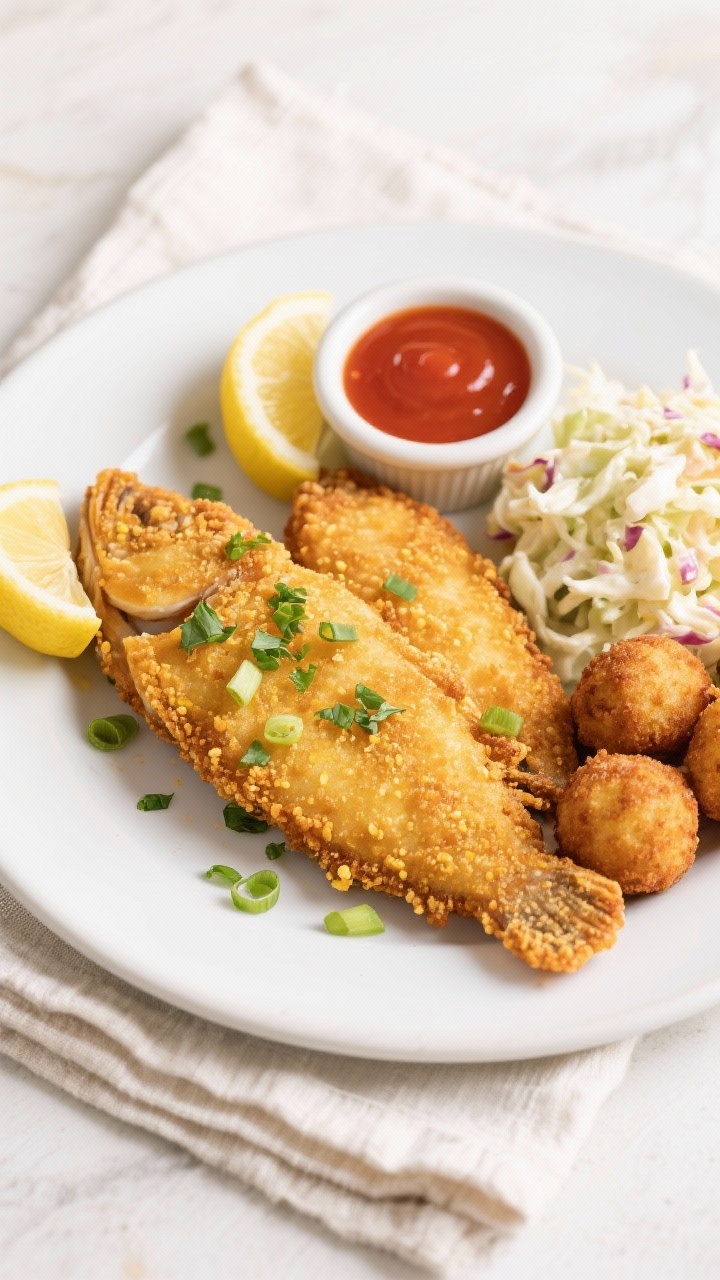
- Serve: Plate with lemon wedges and a sprinkle of parsley or green onions.
Great with coleslaw, hushpuppies, or a simple green salad.
How to Store
Fried catfish is best eaten fresh, but leftovers can still be great. Let the fillets cool completely before storing so they don’t steam and soften. Place in an airtight container with paper towels between layers and refrigerate for up to 2 days.
To reheat, use a 375°F oven or air fryer for 6–10 minutes until hot and crisp.
Avoid the microwave—it makes the crust soggy. If freezing, wrap tightly and freeze for up to 1 month; reheat straight from frozen in a hot oven or air fryer.
Why This is Good for You
- Lean protein: Catfish is a solid source of protein with a relatively low fat content.
- Omega-3s and nutrients: It provides essential fatty acids, B vitamins, and minerals like selenium and phosphorus.
- Balanced approach: While it’s fried, the thin cornmeal crust and proper oil temperature minimize greasiness.
- Customizable spice: You control the salt and heat, tailoring it to your needs.
What Not to Do
- Don’t skip drying the fish. Moisture prevents the coating from sticking and leads to soggy crust.
- Don’t crowd the pan. Too many fillets drop the oil temperature and make greasy results.
- Don’t guess the oil temperature. Use a thermometer or test with a pinch of cornmeal—it should sizzle immediately.
- Don’t over-season the buttermilk and forget the coating. Most of the flavor should be in the dry mix.
- Don’t walk away. Catfish cooks fast.
Keep an eye on color and adjust heat as needed.
Recipe Variations
- Cornmeal-only crust: Skip the flour for an ultra-crispy, gluten-light crunch.
- Gluten-free: Use all cornmeal or a gluten-free flour blend. Make sure your cornmeal is certified gluten-free if needed.
- Cajun twist: Swap the seasoning for 1–2 tablespoons of Cajun seasoning and add extra cayenne for heat.
- Herbed crust: Add 1 tablespoon dried thyme or parsley to the coating for a fresh, savory note.
- Air fryer method: Lightly mist coated fillets with oil and cook at 400°F for 10–12 minutes, flipping halfway, until crisp and cooked through.
- Fish swap: Try the same method with tilapia, whiting, or snapper. Adjust cooking time based on thickness.
FAQ
How do I know when the oil is ready?
The oil should be 350–365°F.
If you don’t have a thermometer, drop in a pinch of the cornmeal mix—if it sizzles and floats within a second or two, you’re set. If it browns instantly, the oil is too hot.
Why did my coating fall off?
Usually it’s moisture or handling. Pat the fish dry before dipping, let excess buttermilk drip off, and press the fillet into the coating.
Move it gently in the pan and avoid flipping more than once.
Can I use corn flour instead of cornmeal?
Corn flour is too fine and won’t give you the same crunch. If needed, use a mix of cornmeal and a bit of flour for structure, but keep cornmeal as the main component.
Is farm-raised or wild catfish better?
Both work. Farm-raised catfish is mild and consistent, which is great for frying.
Wild catfish can have a stronger flavor. If using wild, give it a quick buttermilk soak to tame any strong notes.
What oil should I use for frying?
Choose a neutral, high-heat oil like peanut, canola, or vegetable oil. Peanut oil delivers great flavor and browning, but any of these will work well.
What sides go best with fried catfish?
Classic sides include coleslaw, hushpuppies, cornbread, collard greens, mac and cheese, baked beans, or a simple tomato-cucumber salad.
Don’t forget lemon wedges and hot sauce.
Can I make this ahead?
Coat the fish right before frying for best results. You can mix the dry coating and the buttermilk soak a few hours in advance and keep them chilled. Fry just before serving to keep the crust crisp.
In Conclusion
Southern-style fried catfish is a simple recipe that rewards a few careful steps.
With a buttermilk dip, a well-seasoned cornmeal crust, and steady oil temperature, you’ll get a crisp exterior and a flaky, tender center. Serve it hot with lemon and your favorite sides, and you’ve got a meal that feels like home. Once you master the basics, tweak the spices and try variations to make it your own.