There’s something satisfying about a plate of crisp, golden fish that shatters when you bite into it. Beer-battered cod hits all the right notes—light, airy batter, juicy flakes of fish, and that pub-style crunch you can hear. You don’t need a deep fryer or a chef’s touch to get it right at home.
With a cold beer, a hot pan, and a few smart tricks, you’ll have fish that rivals your favorite pub. Serve it with fries, a squeeze of lemon, and tartar sauce, and you’re set.
Why This Recipe Works
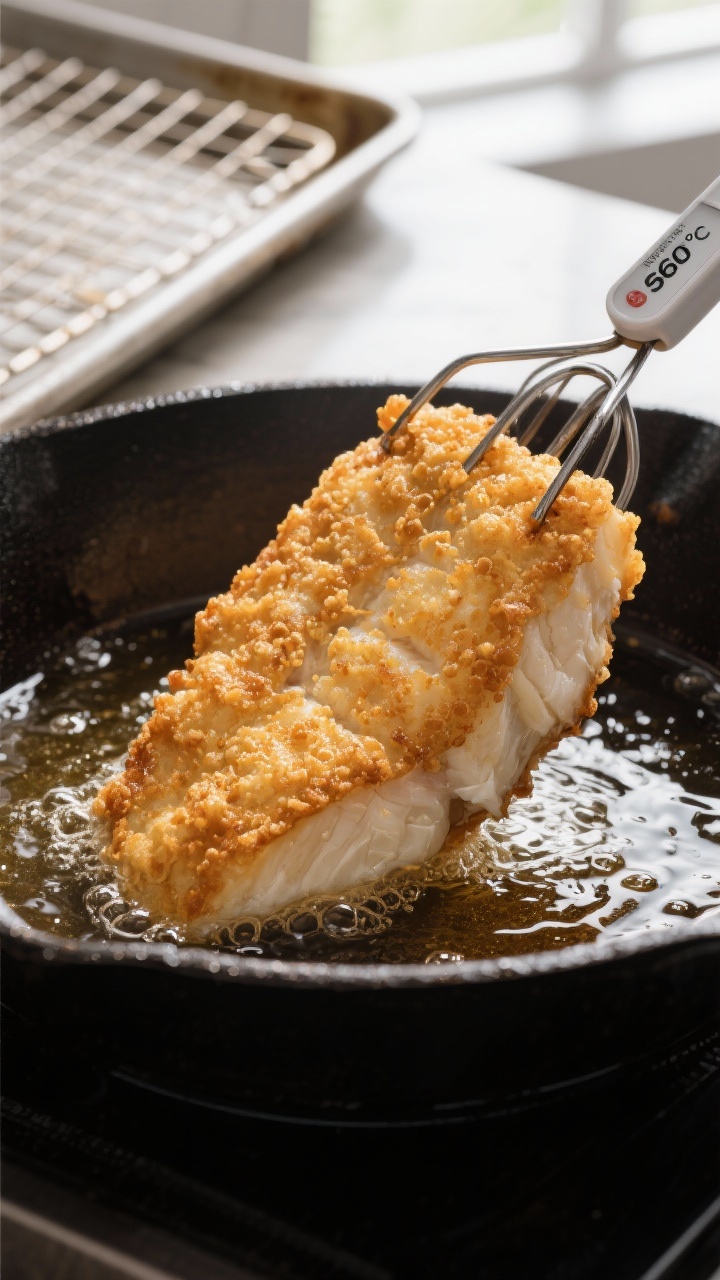
- Cold beer + leavening = airy batter: The carbonation and cold temperature create tiny bubbles that puff up in hot oil, giving you a light, crisp crust.
- Cornstarch boosts crispness: A mix of flour and cornstarch prevents a heavy, bready coating and keeps the batter snappy.
- Dry fish, hot oil: Patting the cod dry helps the batter stick, while the right oil temperature prevents greasiness.
- Minimal mixing: A slightly lumpy batter means less gluten development, which keeps the crust delicate.
- Quick fry time: Cod cooks fast, so the fish stays moist inside while the exterior turns golden and crunchy.
Shopping List
- Cod fillets (1.5 to 2 pounds, skinless; cut into portions)
- All-purpose flour (1 cup for batter, plus extra for dredging)
- Cornstarch (1/2 cup)
- Baking powder (1 teaspoon)
- Kosher salt (plus more for seasoning)
- Black pepper
- Garlic powder (optional, for subtle flavor)
- Paprika (optional, for color)
- Beer (12 ounces; a cold pale ale or lager works best)
- Neutral oil for frying (canola, vegetable, or peanut oil)
- Lemons (for serving)
- Tartar sauce (store-bought or homemade)
- Malt vinegar (classic pub-style finish, optional)
Instructions
- Prep the fish: Pat the cod dry with paper towels. Cut into even pieces, about 4–6 inches long.
Season both sides with salt and pepper. Refrigerate while you prep the batter so it stays cold.
- Heat the oil: In a deep, heavy pot or a high-sided skillet, add 2–3 inches of oil. Heat to 350–365°F (175–185°C).
Keep a thermometer handy to maintain temperature.
- Make the batter: In a bowl, whisk 1 cup flour, 1/2 cup cornstarch, 1 teaspoon baking powder, 1 teaspoon salt, 1/2 teaspoon black pepper, and a pinch of paprika and garlic powder if using. Pour in the cold beer gradually, whisking just until combined. The batter should be the consistency of heavy cream—slightly lumpy is okay.
Keep it cold.
- Set up dredging: Place 1/2 cup of flour in a shallow dish. This dry coat helps the batter cling to the fish.
- Dredge and dip: Working one piece at a time, dust the fish lightly in flour. Shake off excess.
Dip into the beer batter, letting extra drip back into the bowl. You want an even, thin coating.
- Fry in batches: Gently lower the fish into the hot oil. Don’t overcrowd—leave space between pieces.
Fry 4–6 minutes, turning once, until deep golden and crisp and the internal temperature hits 145°F (63°C). The fish should flake easily.
- Drain and season: Transfer to a wire rack set over a sheet pan. Sprinkle with a pinch of salt while hot for extra flavor and crunch.
- Keep warm: If cooking multiple batches, keep finished pieces in a 250°F (120°C) oven on the rack to stay crisp.
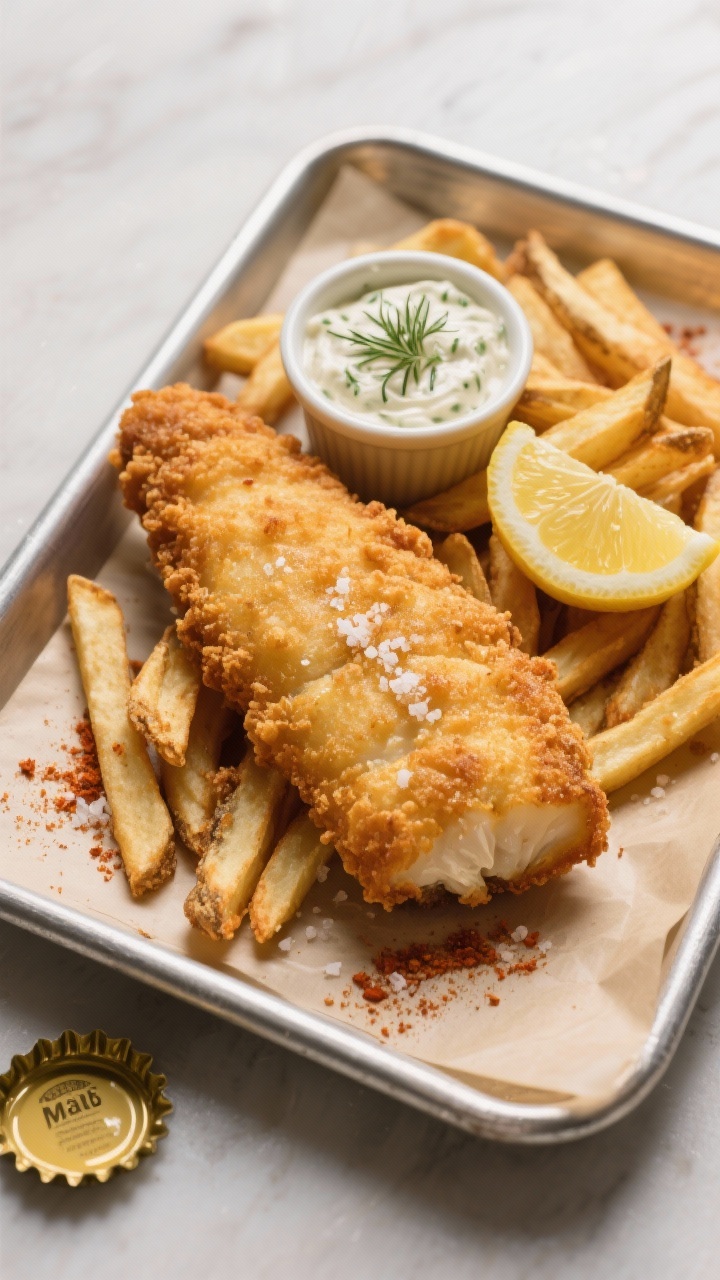
- Serve: Plate with lemon wedges, tartar sauce, and malt vinegar.
Add fries or a simple slaw for a complete pub-style meal.
How to Store
- Refrigerate: Cool completely on a rack. Store in an airtight container for up to 2 days. Place a paper towel under the fish to absorb moisture.
- Reheat: For best crispness, use a 400°F (205°C) oven or air fryer for 8–12 minutes, flipping once.
Avoid microwaving; it softens the crust.
- Freeze: Freeze single layers on a sheet pan until solid, then transfer to a freezer bag for up to 2 months. Reheat from frozen at 425°F (220°C) until hot and crisp.
Why This is Good for You
- Lean protein: Cod is low in fat and high in protein, which helps with satiety and muscle repair.
- Micronutrients: It provides B vitamins, selenium, and phosphorus that support energy and overall health.
- Smart fats: Using a neutral oil with a high smoke point helps avoid off flavors and keeps the fry clean and consistent.
- Balanced meal: Pair with a crunchy slaw and lemon for brightness, and you’ve got a satisfying plate without feeling heavy.
Pitfalls to Watch Out For
- Wet fish: If the fillets aren’t dry, the batter slides off and won’t crisp well.
- Oil too cool: Below 350°F, the batter absorbs oil and turns greasy. Keep the heat steady between batches.
- Overmixing batter: Smooth batter equals more gluten and a tough crust.
Stop as soon as it comes together.
- Overcrowding the pan: Too many pieces drop the oil temperature and lead to soggy results.
- Thick batter: A heavy coat won’t cook through. Thin with a splash of beer if needed.
Recipe Variations
- Gluten-free: Use a 1:1 gluten-free flour blend and gluten-free beer. Add an extra tablespoon of cornstarch if you want more crunch.
- No-beer batter: Substitute sparkling water or club soda.
Keep it very cold for the best bubbles.
- IPA twist: Use a hoppy IPA for a subtle bitterness and deeper flavor. Great with a squeeze of lemon.
- Spiced batter: Add 1/2 teaspoon each of smoked paprika, onion powder, and cayenne for a gentle kick.
- Fish tacos: Fry smaller pieces and tuck into warm tortillas with cabbage slaw, lime crema, and radishes.
- Oven-finish technique: Fry until light golden, then finish in a 375°F (190°C) oven for 5–7 minutes to ensure thick pieces cook through without over-browning.
FAQ
What’s the best beer to use?
A cold pale ale or lager works best. They offer light flavor and good carbonation, which keeps the batter airy without overpowering the fish.
Avoid very sweet or heavy beers unless you want a stronger flavor.
Can I use another type of fish?
Yes. Haddock, pollock, and halibut all fry well. Choose firm, flaky white fish and cut into similar sizes for even cooking.
How do I know the oil is hot enough without a thermometer?
Dip a chopstick or the end of a wooden spoon into the oil—steady, lively bubbles mean you’re close to the right temperature.
A tiny drop of batter should sizzle and float within a second or two.
Why is my batter falling off?
The fish may have been too wet, or the oil too cool. Pat the fish dry, lightly dredge with flour, and make sure the oil stays between 350–365°F. Also avoid moving the fillets too early; let the crust set for a minute before turning.
How do I keep it crispy after frying?
Drain on a wire rack, not paper towels, and keep pieces warm in a low oven.
Sprinkle a little salt immediately after frying to draw out excess surface moisture and enhance crunch.
Is the alcohol cooked off?
Most of the alcohol in the batter cooks off during frying due to the high heat and thin coating. If you prefer to avoid alcohol altogether, use sparkling water or club soda.
Can I make the batter ahead of time?
It’s best mixed right before frying. If you need to prep, whisk the dry ingredients in advance and chill the beer.
Combine just before cooking to keep the batter bubbly and light.
What oil should I use?
Use a neutral, high-smoke-point oil like canola, vegetable, or peanut oil. Avoid olive oil, which can smoke and add strong flavor.
Do I need a deep fryer?
No. A heavy pot or deep skillet works fine.
Just use enough oil to submerge the fish at least halfway and maintain temperature as you fry in batches.
In Conclusion
Beer-battered cod is a simple pleasure that feels special. With cold beer, hot oil, and a quick hand, you get tender fish wrapped in a crackling, golden shell. Keep your batter light, your oil steady, and your portions even.
Serve with lemon, tartar sauce, and something crunchy on the side, and you’ve got pub-style fish at home—no reservation required.