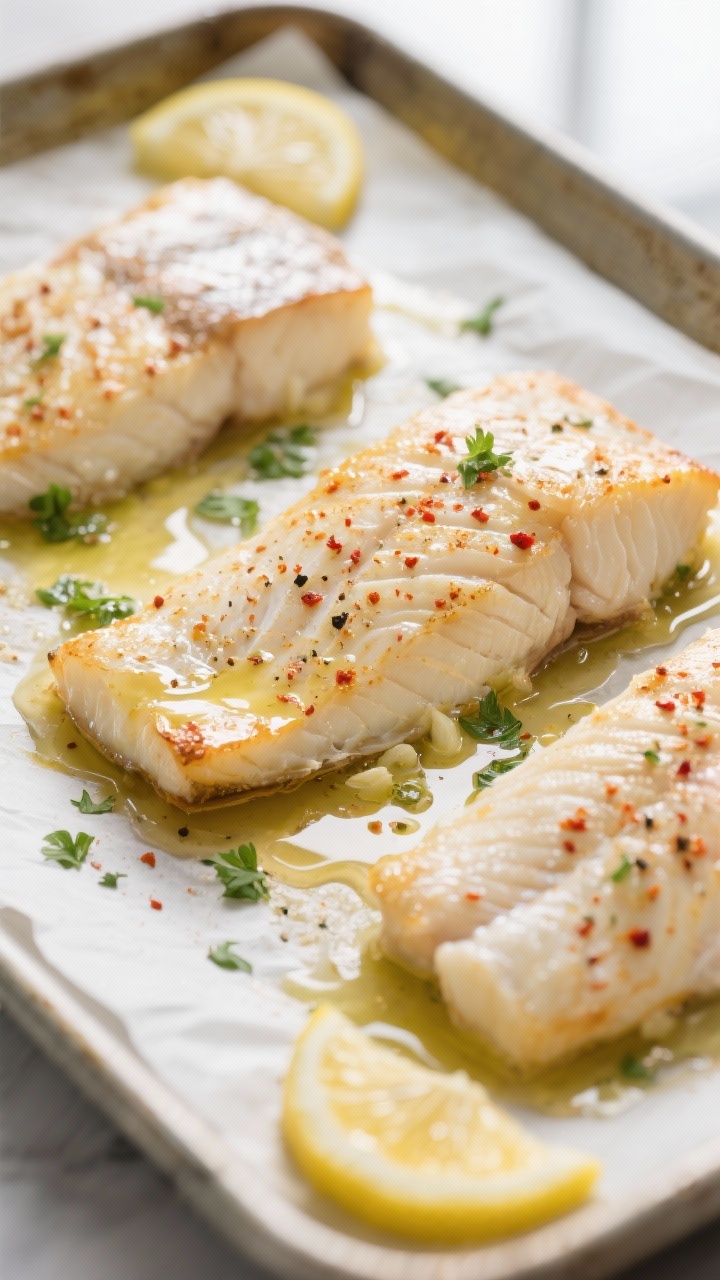
Cod is one of those weeknight heroes: mild, tender, and ready in under 30 minutes. This Alaskan baked cod keeps things simple while delivering bright, clean flavors. You’ll get lightly seasoned fish with a lemon-garlic butter that soaks into every flaky bite.
No special equipment, no tricky techniques—just a reliable recipe that tastes restaurant-good. Serve it with a quick salad or roasted veggies and you’ve got a complete, feel-good dinner.
What Makes This Recipe So Good
- Fast and fuss-free: From start to finish, you’re looking at about 20–25 minutes. Perfect for busy nights.
- Clean, bright flavors: Lemon, garlic, and parsley let the cod shine without overpowering its natural sweetness.
- Healthy but satisfying: Light on oil and big on protein, with a touch of butter for richness.
- Flexible: Works with fresh or frozen Alaskan cod.
You can also swap in other white fish if needed.
- Minimal cleanup: One pan, simple prep, and no splattering like pan-frying.
What You’ll Need
- 1.5 to 2 pounds Alaskan cod fillets (about 4 pieces; fresh or fully thawed)
- 2 tablespoons olive oil
- 2 tablespoons unsalted butter, melted (or use more olive oil)
- 2–3 cloves garlic, finely minced
- 1 large lemon (zest and juice)
- 1 teaspoon kosher salt (plus more to taste)
- 1/2 teaspoon black pepper
- 1/2 teaspoon paprika (sweet or smoked)
- 1/4 teaspoon red pepper flakes (optional, for mild heat)
- 2 tablespoons fresh parsley, chopped (plus extra for garnish)
- Lemon wedges, for serving
Instructions
- Preheat the oven. Set it to 400°F (200°C). Line a baking sheet with parchment or lightly oil a baking dish large enough to hold the fillets in a single layer.
- Pat the cod dry. Use paper towels to remove surface moisture. This helps the seasoning stick and keeps the fish from steaming.
- Make the lemon-garlic mixture. In a small bowl, combine olive oil, melted butter, minced garlic, lemon zest, 1 tablespoon lemon juice, salt, pepper, paprika, and red pepper flakes (if using).
Stir in the parsley.
- Season the fish. Place cod on the prepared pan. Spoon or brush the mixture evenly over the fillets, coating the tops and sides. If your fillets are thick, use a little extra salt.
- Bake. Cook for 10–14 minutes, depending on thickness.
Cod is done when it flakes easily with a fork and reaches an internal temperature of 145°F (63°C) at the thickest part.
- Optional broil. For a slightly golden top, switch to broil for the last 1–2 minutes. Watch closely to prevent burning.
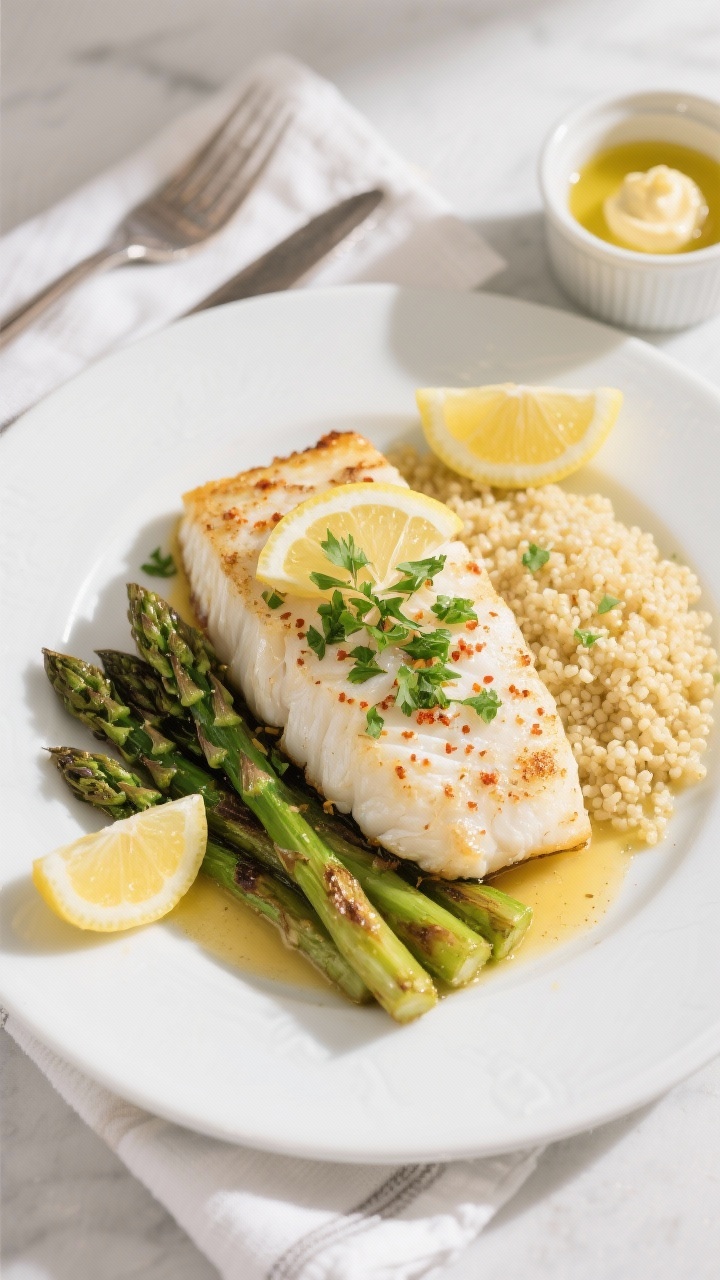
- Finish and serve. Squeeze a little extra lemon over the fish, sprinkle more parsley, and serve with lemon wedges. Pair with roasted asparagus, sautéed greens, or simple rice.
How to Store
- Refrigerate: Store leftovers in an airtight container for up to 2 days.
Cod is best enjoyed fresh, but it reheats well if you don’t overdo it.
- Reheat gently: Warm in a 275°F (135°C) oven for 8–10 minutes or microwave at 50% power in short bursts. Add a splash of lemon to refresh the flavor.
- Freeze: You can freeze baked cod for up to 2 months, but texture may soften. Wrap tightly and thaw overnight in the fridge before reheating.
Why This Is Good for You
- Lean protein: Cod is high in protein and naturally low in fat, helping you feel full without heaviness.
- Nutrient-rich: It offers B vitamins, selenium, and phosphorus to support energy and immune function.
- Heart-friendly: While cod isn’t as fatty as salmon, it still contains omega-3s and pairs nicely with olive oil, a healthy fat.
- Light and clean: Baking keeps calories in check and avoids extra oil from frying.
What Not to Do
- Don’t overbake. Dry cod turns tough and stringy.
Start checking at 10 minutes, especially for thinner fillets.
- Don’t skip drying the fish. Excess moisture prevents browning and dilutes flavor.
- Don’t drown it in lemon juice before baking. Too much acid early on can make the texture mushy. A little in the sauce is great; add more after baking.
- Don’t crowd the pan. Give each piece space so it bakes evenly.
- Don’t forget to season both the fish and the sauce. Cod is mild and needs a confident but balanced hand with salt and aromatics.
Alternatives
- No butter: Use all olive oil for a dairy-free version. Add a pinch more salt and a dash of extra lemon for brightness.
- Herb swap: Try dill, chives, or basil instead of parsley.
A blend of parsley and dill is classic with cod.
- Spice variations: Replace paprika with Old Bay, Italian seasoning, or a touch of cumin and coriander for a warmer profile.
- Breadcrumb topping: Mix 1/3 cup panko with 1 tablespoon olive oil, a pinch of salt, and a little lemon zest. Sprinkle over the fish before baking for a light crunch.
- Vegetable bed: Bake the cod on thinly sliced zucchini, bell peppers, or fennel. Drizzle the veggies with a little oil and salt before adding the fish.
- Other fish: This method works with halibut, haddock, pollock, or tilapia.
Adjust time for thickness.
FAQ
Can I use frozen cod?
Yes. Thaw it fully in the fridge overnight or under cold running water in a sealed bag. Pat it very dry before seasoning to avoid watery results.
How do I know when cod is done?
It should flake easily with a fork and look opaque throughout.
An instant-read thermometer should read 145°F (63°C) in the thickest part.
What sides go well with baked cod?
Try roasted asparagus, green beans, lemony couscous, brown rice, or a simple arugula salad with olive oil and vinegar. Crusty bread is great for soaking up the juices.
Can I make this ahead?
You can mix the sauce and prep the pan ahead of time. For best texture, season and bake the fish right before serving.
Is parchment paper necessary?
Not required, but helpful.
It prevents sticking and makes cleanup easy. If you skip it, lightly oil the baking dish.
What if my fillets are uneven?
Fold the thin tail ends under to even out thickness. This helps everything cook at the same rate.
How can I add more flavor without more butter?
Boost the aromatics: extra lemon zest, a bit more garlic, fresh herbs, or a sprinkle of capers after baking for briny pop.
In Conclusion
This Alaskan baked cod recipe proves that simple ingredients can deliver big flavor.
With lemon, garlic, and fresh herbs, you get a clean, vibrant dish that’s healthy and easy to make any night of the week. Keep an eye on the cooking time, finish with fresh lemon and parsley, and enjoy a tender, flaky dinner that always hits the spot. Whether you’re feeding the family or cooking for one, this is a go-to recipe you’ll come back to again and again.