There’s something soothing about a steamy bowl of seafood chowder on a cold day. It’s hearty, silky, and packed with tender fish, sweet shrimp, and soft potatoes. This version keeps things classic but approachable, with simple steps and big flavor.
You don’t need fancy techniques—just good ingredients, gentle heat, and a little patience. Make it for a weeknight dinner or a casual weekend meal, and watch it become a favorite.
What Makes This Recipe So Good
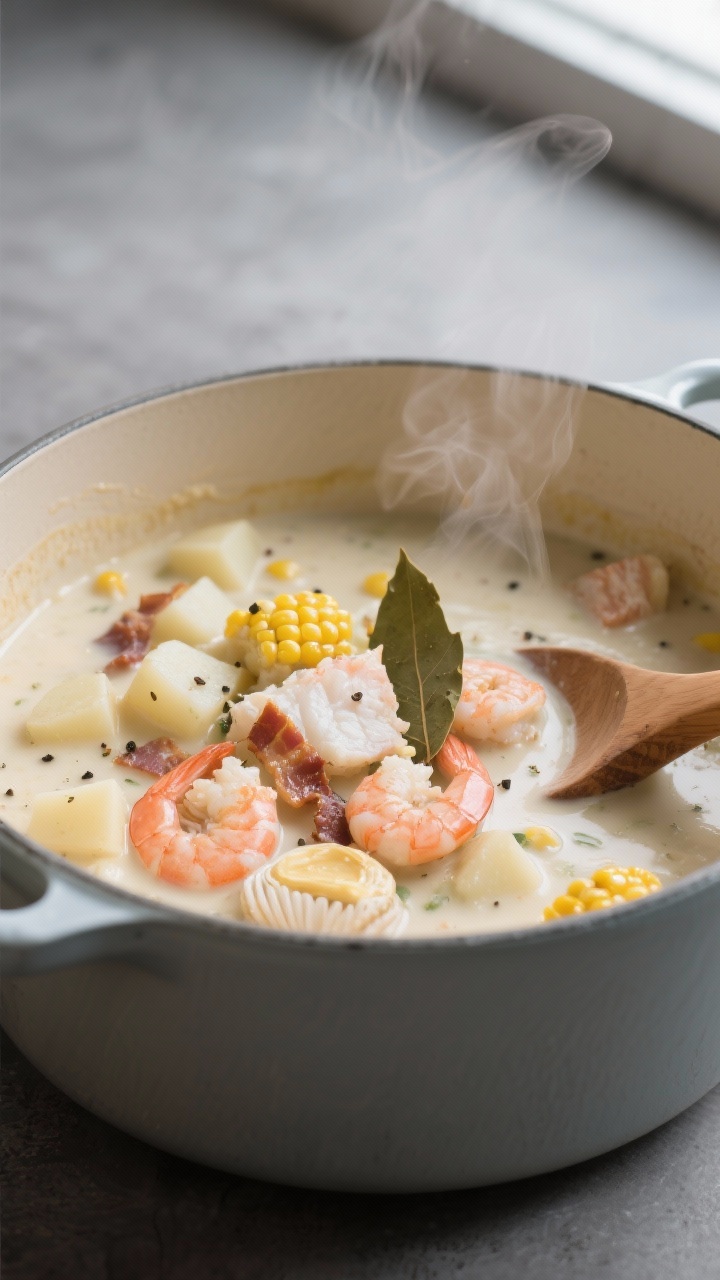
- Balanced creaminess: The base is rich and velvety without being heavy, thanks to a blend of cream and broth.
- Layered flavor: Bacon, aromatics, and a touch of seafood stock build a savory foundation that tastes slow-simmered.
- Tender seafood: Gentle poaching keeps shrimp, fish, and clams tender—not rubbery.
- Flexible ingredients: Use whatever seafood you have on hand—cod, salmon, shrimp, scallops, or clams all work.
- Comfort in a bowl: Potatoes, corn, and herbs make it cozy and filling without fuss.
Ingredients
- 4 slices thick-cut bacon, chopped
- 2 tablespoons unsalted butter
- 1 medium yellow onion, finely chopped
- 2 celery stalks, finely chopped
- 2 carrots, diced
- 3 garlic cloves, minced
- 2 tablespoons all-purpose flour
- 1 cup dry white wine (optional, or use more broth)
- 3 cups seafood stock or low-sodium chicken broth
- 1 bay leaf
- 1 teaspoon Old Bay seasoning (or paprika + a pinch of celery salt)
- 1 pound potatoes (Yukon gold or red), peeled and cut into 1/2-inch cubes
- 1 cup corn kernels (fresh or frozen)
- 3/4 pound firm white fish (cod, halibut, or haddock), cut into bite-size pieces
- 1/2 pound shrimp, peeled and deveined
- 1/2 pound sea scallops or mussels/clams (optional), cleaned
- 1 cup heavy cream
- 1/2 cup whole milk (or more stock for a lighter version)
- 2 tablespoons chopped fresh parsley
- 1 tablespoon fresh dill or chives, chopped (optional)
- 1–2 teaspoons lemon juice
- Salt and freshly ground black pepper, to taste
- Crusty bread, for serving
Step-by-Step Instructions
- Crisp the bacon. Add chopped bacon to a large pot or Dutch oven over medium heat. Cook until browned and crisp, 5–7 minutes.
Use a slotted spoon to transfer bacon to a plate, leaving about 1–2 tablespoons of fat in the pot.
- Sauté the aromatics. Add butter to the pot. Stir in onion, celery, and carrots. Cook, stirring occasionally, until softened and fragrant, about 6–8 minutes.
Add garlic and cook 30 seconds more.
- Make a light roux. Sprinkle flour over the vegetables and stir to coat. Cook for 1 minute to remove the raw flour taste.
- Deglaze and simmer. Pour in the white wine, scraping up any browned bits. Let it simmer for 2 minutes.
Add seafood stock, bay leaf, Old Bay, and potatoes. Bring to a gentle boil, then lower to a simmer. Cook until potatoes are just tender, about 10–12 minutes.
- Add corn and seafood. Stir in corn.
Nestle in the fish, shrimp, and scallops (or mussels/clams). Keep the heat at a gentle simmer. Cook 4–6 minutes, until the fish flakes easily and shrimp are pink and opaque.
Avoid boiling, which can make seafood tough.
- Finish with cream. Reduce heat to low. Stir in heavy cream and milk. Warm through for 2–3 minutes without boiling.
Season generously with salt and pepper. Add lemon juice to brighten the flavors.
- Garnish and serve. Remove bay leaf. Stir in parsley and dill or chives.
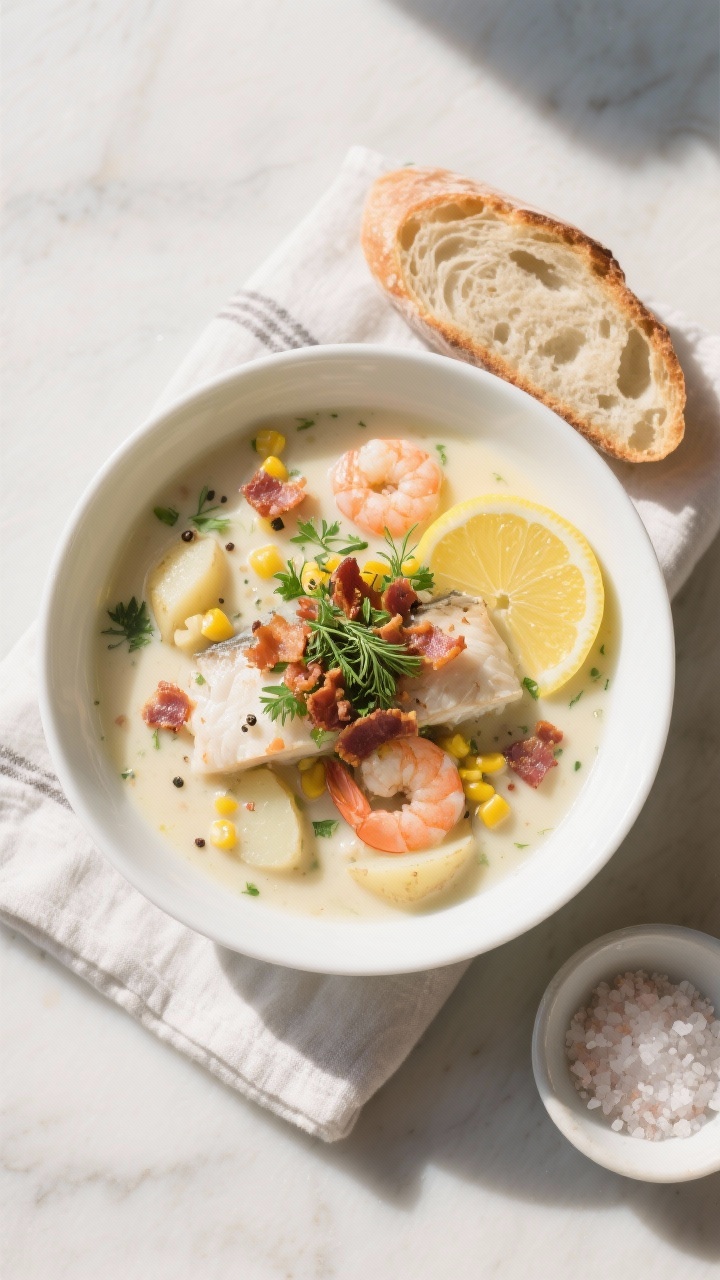
Ladle into bowls, sprinkle with the reserved bacon, and serve with crusty bread.
Storage Instructions
- Refrigerator: Cool completely, then store in an airtight container for up to 2 days. Seafood is delicate, so plan to eat leftovers soon.
- Reheating: Warm gently over low heat on the stovetop. Do not boil.
Add a splash of broth or milk if it thickens too much.
- Freezing: Not recommended. Creamy soups with potatoes can separate and turn grainy after thawing, and seafood can become rubbery.
Health Benefits
- Lean protein: Fish and shrimp provide high-quality protein that supports muscle repair and satiety.
- Omega-3 fats: Fatty fish like salmon or halibut supply omega-3s, which support heart and brain health.
- Minerals: Shellfish are rich in zinc, iodine, and selenium, important for immune and thyroid function.
- Vegetable goodness: Onions, carrots, celery, potatoes, and corn add fiber, vitamins, and natural sweetness.
- Customizable richness: You can lighten the cream with more broth or milk to reduce saturated fat while keeping flavor.
Common Mistakes to Avoid
- Boiling the seafood: High heat makes shrimp rubbery and fish dry. Keep the soup at a gentle simmer.
- Overcooking potatoes: They should be tender but not falling apart.
Test with a fork before adding seafood.
- Adding cream too early: Boiling dairy can cause curdling. Lower the heat first, then stir in cream.
- Underseasoning: Chowder needs a good pinch of salt and pepper, plus acid from lemon to balance the richness.
- Skipping the aromatics: Onion, celery, and carrots create the base flavor. Don’t rush this step.
Alternatives
- Dairy-light version: Swap half the cream for extra stock or use evaporated milk for a creamy feel with less fat.
- Gluten-free: Skip the flour and thicken with 1 tablespoon cornstarch mixed with cold milk; add at the end and simmer briefly.
- Smoky twist: Use smoked paprika and a dash of Worcestershire for deeper flavor.
- Herb variations: Try thyme and bay for a classic New England vibe, or tarragon for a delicate anise note.
- Seafood swaps: Use salmon, pollock, or haddock for fish; add canned clams with their juice; or include small scallops for sweetness.
- Vegetable add-ins: Leeks, fennel, or peas add freshness.
Keep the cut size small so they cook evenly.
- Spice it up: A pinch of cayenne or a few dashes of hot sauce brighten the creaminess without overpowering.
FAQ
Can I make this ahead of time?
Yes, but for the best texture, cook the base (through the potatoes) a day ahead. Add the seafood and cream when reheating so it stays tender and fresh.
What if I don’t have seafood stock?
Chicken broth works well. For extra seafood flavor, add a splash of bottled clam juice or the liquid from canned clams.
How do I prevent the chowder from curdling?
Keep the heat low after adding cream and avoid boiling.
Temper the cream by stirring in a ladle of hot broth before adding it to the pot.
Which fish holds up best?
Firm white fish like cod, haddock, or halibut keeps its shape. Salmon also works and adds richness, but cut it into larger chunks to avoid flaking apart too quickly.
Can I make it without bacon?
Absolutely. Use 1–2 tablespoons of olive oil or butter to sauté the vegetables.
Add a pinch of smoked paprika for subtle smoky notes.
How do I thicken the chowder more?
Simmer uncovered a few extra minutes before adding seafood, or mash a few potato cubes into the broth. You can also stir in a cornstarch slurry at the end.
Is it safe to reheat seafood chowder?
Yes, as long as you reheat gently until hot but not boiling. Eat leftovers within 2 days for best quality.
In Conclusion
This creamy seafood chowder is comfort food done right—simple to make, full of flavor, and adaptable to whatever seafood you have.
With a silky broth, tender potatoes, and a bright finish of herbs and lemon, it’s the kind of meal that turns an ordinary night into something special. Keep the heat gentle, season well, and don’t overthink it. A warm bowl and crusty bread are all you need.