Paella is one of those dishes that brings people to the table fast. It’s colorful, fragrant, and full of flavor, with tender rice and juicy seafood in every bite. You don’t need a plane ticket to taste the real thing—you just need a pan, a handful of good ingredients, and a little patience.
This version stays true to Spanish roots while keeping the process simple enough for a weeknight or a relaxed weekend. Whether you’re cooking for two or hosting friends, this paella feels festive without being fussy.
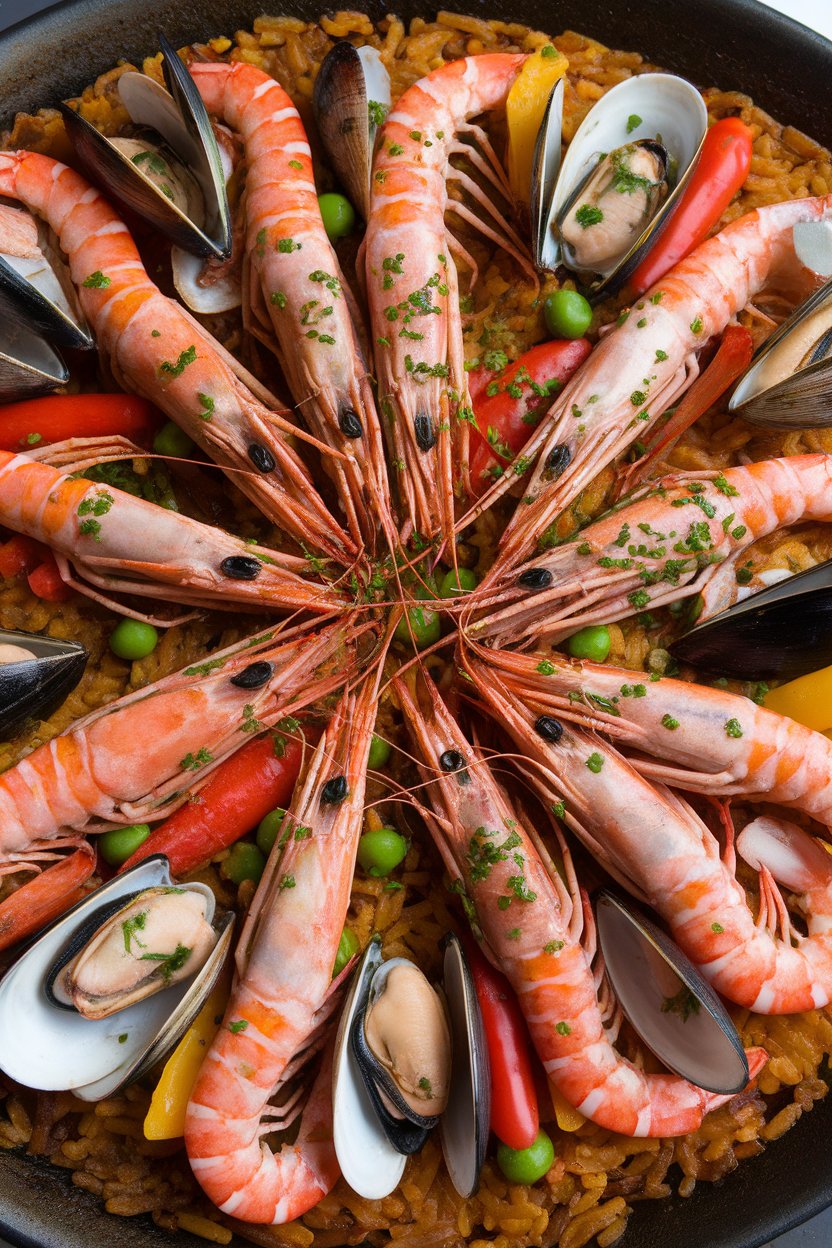
Why This Recipe Works
- Short-grain rice absorbs flavor beautifully. Bomba or Calasparra rice soaks up saffron broth without turning mushy, giving you distinct, tender grains.
- A proper sofrito builds deep flavor. Slowly cooked onion, garlic, and tomatoes form a sweet, savory base that makes the whole dish sing.
- Even heat and minimal stirring create socarrat. That prized crispy layer at the bottom forms when the rice cooks undisturbed over steady heat.
- Simple seafood mix, cooked gently. Mussels, shrimp, and calamari cook quickly and stay tender when added at the right time.
- Saffron and smoked paprika deliver authenticity. These classic Spanish spices add color, aroma, and a subtle smokiness that defines real paella.
Shopping List
- Short-grain paella rice: Bomba or Calasparra (about 1 1/2 cups)
- Seafood: 1 lb large shrimp (peeled and deveined), 1 lb mussels (scrubbed and debearded), 1/2 lb calamari rings (or sliced tubes)
- Stock: 4–5 cups seafood or fish stock (low-sodium), warmed
- Saffron threads: A generous pinch
- Smoked paprika: 1–2 teaspoons
- Tomatoes: 2 ripe tomatoes, grated or finely chopped (or 1 cup canned crushed tomatoes)
- Onion: 1 small yellow onion, finely chopped
- Garlic: 4–5 cloves, minced
- Bell pepper: 1 red bell pepper, thinly sliced
- Olive oil: Extra-virgin
- White wine: 1/2 cup (optional but recommended)
- Peas: 1/2 cup (frozen is fine)
- Lemon: 1–2, cut into wedges
- Parsley: Fresh, chopped
- Salt and black pepper: To taste
- Optional add-ins: Clams, small scallops, or a few pieces of firm white fish
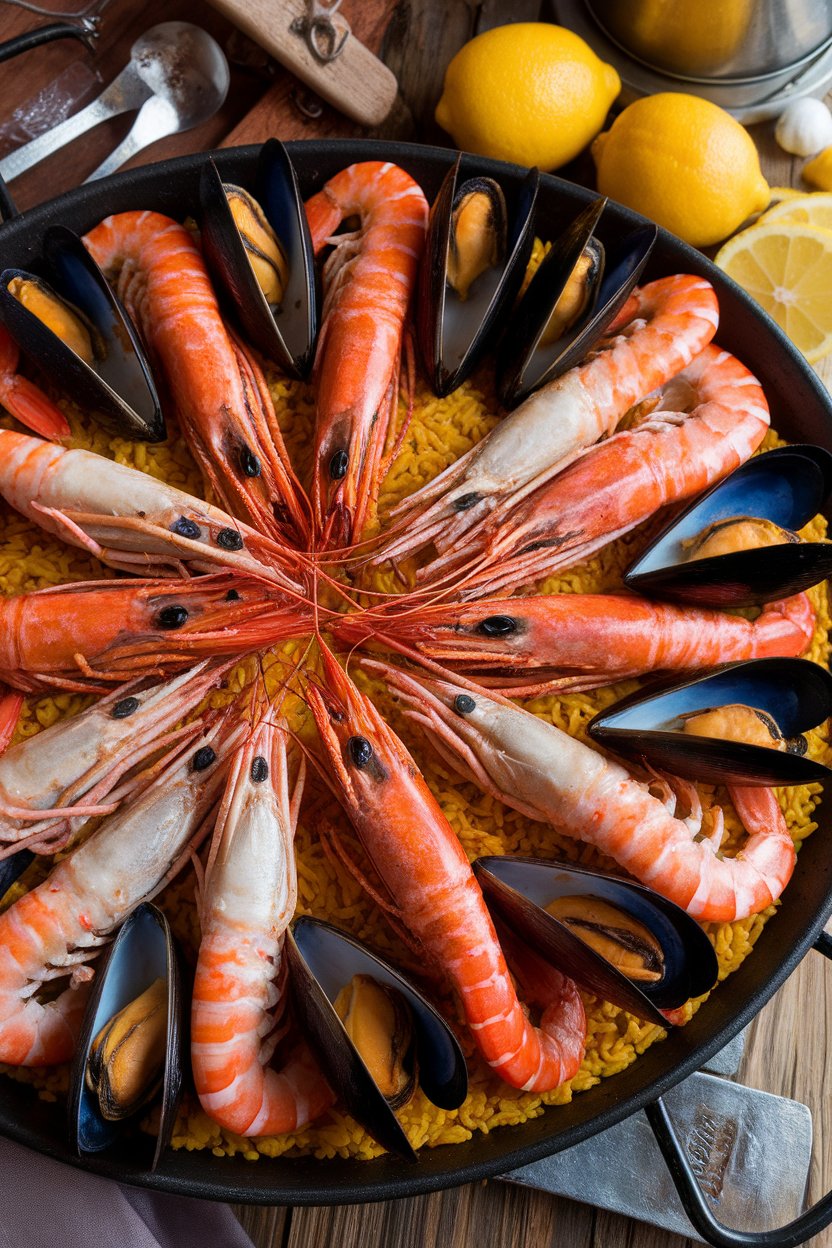
How to Make It
- Warm the stock with saffron. Heat your seafood stock in a saucepan. Add saffron threads and keep it at a bare simmer so it’s hot when you need it.
- Prep your seafood. Rinse mussels, discarding any that are cracked or stay open after tapping.Pat shrimp and calamari dry. Season lightly with salt and pepper.
- Choose the right pan. Use a 12- to 15-inch paella pan if you have one. A wide, shallow skillet works too.The goal is an even layer of rice, not a deep pile.
- Build the sofrito. Add olive oil to the pan over medium heat. Cook onion and bell pepper with a pinch of salt until soft and sweet, about 6–8 minutes. Stir in garlic and smoked paprika for 30 seconds.
- Add tomatoes. Stir in grated or crushed tomatoes.Cook until thick and jammy, 5–7 minutes. This concentrates flavor.
- Deglaze. Pour in white wine and let it bubble for a minute, scraping the pan. This adds brightness and lifts the fond.
- Toast the rice. Stir in the rice until every grain is coated and glossy, 1–2 minutes.This helps the texture and flavor.
- Add the stock. Pour in hot saffron stock to cover the rice by about 1/2 inch (usually 4 cups to start). Season with salt. Stir to evenly distribute, then do not stir again.
- Simmer steadily. Cook over medium heat so the surface gently bubbles.Rotate the pan occasionally for even cooking. Add more hot stock if the rice dries out before it’s tender.
- Add seafood at the right time. After about 10 minutes, nestle mussels hinge-side down and scatter shrimp and calamari on top. Press lightly into the rice.Continue cooking until mussels open and shrimp turn pink, about 8–10 minutes.
- Finish with peas and char. Sprinkle on peas. When the liquid is mostly absorbed and you hear a faint crackle, increase heat for 60–90 seconds to develop socarrat (the crispy bottom).
- Rest and garnish. Remove from heat. Cover loosely with a clean towel and rest 5 minutes.Top with parsley and arrange lemon wedges around the pan.
- Taste and serve. Add a final drizzle of olive oil and a squeeze of lemon. Serve straight from the pan.
Keeping It Fresh
- Use the freshest seafood you can find. It should smell like the ocean, not fishy. Keep it chilled and cook the same day if possible.
- Store leftovers promptly. Cool quickly and refrigerate in a shallow container for up to 2 days.Reheat gently on the stovetop with a splash of stock.
- Freeze with care. Rice freezes better than delicate seafood. If freezing, expect the seafood texture to soften. Use within 1 month.
- Re-crisp the bottom. For next-day paella, warm in a nonstick skillet to rebuild a little crust without overcooking the seafood.
Benefits of This Recipe
- Balanced and satisfying. You get protein, complex carbs, and veggies in one pan.
- Entertaining-friendly. It serves a crowd and looks impressive without complex plating.
- Flexible. Works with mixed seafood or a simpler combo based on what’s fresh.
- Authentic flavor, accessible method. Classic techniques, simplified steps, and easy-to-find ingredients.
- Minimal cleanup. One pan, one pot for stock, and you’re done.
What Not to Do
- Don’t use long-grain rice. It won’t absorb liquid correctly and will taste off for paella.
- Don’t stir after adding stock. Stirring releases starch and prevents the crust from forming.
- Don’t overload with seafood. Too much traps steam and turns the rice soggy.Keep a single layer.
- Don’t skimp on saffron. A small pinch makes a big difference in aroma and color.
- Don’t rush the heat. High heat early on burns the bottom before the rice cooks. Keep it steady, then boost at the end for socarrat.
Recipe Variations
- Mixed Paella: Add a few pieces of Spanish chorizo or chicken thighs seared at the start for a heartier dish.
- All-Shellfish: Skip calamari and use shrimp, mussels, clams, and small scallops for a briny, elegant version.
- Weeknight Shortcut: Use quality jarred roasted red peppers and canned tomatoes to save time on prep.
- Herb-Lemon Paella: Finish with grated lemon zest and extra parsley for a brighter profile.
- Smokier Style: Add a touch more smoked paprika or a small pinch of hot pimentón for gentle heat.
FAQ
Can I make paella without a paella pan?
Yes. Use the widest, shallow skillet you own.
The key is an even layer of rice—aim for about 3/4 inch deep so the grains cook evenly.
What can I use instead of Bomba rice?
Calasparra is great, or look for any short-grain paella rice. In a pinch, Arborio works, but watch the texture and avoid stirring so it doesn’t get creamy.
How do I know when the rice is done?
Taste a few grains. They should be tender with a slight bite, not chalky.
Most of the liquid will be absorbed, and you’ll hear gentle crackling at the bottom.
What if my mussels don’t open?
Discard any mussels that stay closed after cooking. Don’t force them open—they weren’t alive and aren’t safe to eat.
Can I make it ahead?
You can make the sofrito and warm the stock in advance. Cook the rice and seafood just before serving for the best texture and flavor.
Is saffron essential?
For authentic flavor, yes.
If you must substitute, a pinch of turmeric can mimic color but not the aroma. Use sparingly to avoid bitterness.
How do I get socarrat without burning?
When the rice is nearly done and liquid is absorbed, increase heat for about a minute. Listen for light crackling and sniff for toasty (not burnt) aromas.
Then pull it off the heat.
Can I use frozen seafood?
Absolutely. Thaw completely, pat dry, and cook gently to avoid excess liquid and rubbery texture.
How many people does this serve?
A 12- to 15-inch pan with the amounts listed serves 4–6, depending on appetite and sides.
What should I serve with paella?
Keep it simple: a crisp green salad, crusty bread, and lemon wedges. A chilled Spanish white or light rosé pairs nicely.
In Conclusion
Spanish seafood paella is all about thoughtful layers—good stock, a solid sofrito, and patient cooking.
With the right rice and a steady hand, you’ll get tender grains, juicy seafood, and that irresistible crispy bottom. Keep the flavors clean, let the saffron and paprika shine, and serve it straight from the pan. It’s a relaxed, generous dish that tastes like a celebration every time.