Risotto has a reputation for being fussy, but this seafood version proves it can be relaxed, comforting, and impressive all at once. Think silky rice, tender bites of shrimp and scallops, and a briny whisper of the sea in every spoonful. It’s the kind of dish that makes a Tuesday feel special or turns date night into something memorable.
With the right technique and a little patience, you’ll get restaurant-level results at home. No fancy tools, just steady stirring and a few smart choices.
Why This Recipe Works
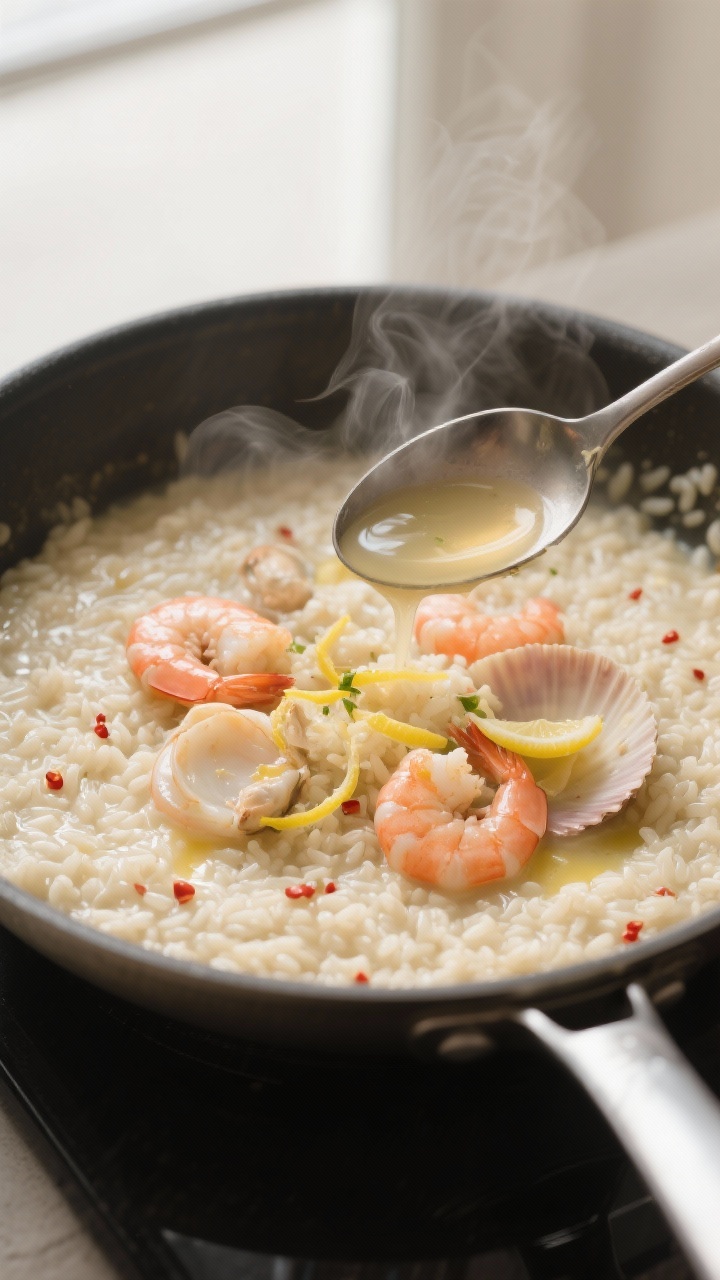
This recipe layers flavor from the start: gentle sautéed aromatics, a quick toast of the rice, and a splash of wine to brighten everything up. Warm stock is added gradually to build creaminess without any actual cream.
Seafood cooks at the end to stay tender and juicy, never rubbery. A final swirl of butter and lemon brings balance, so the dish tastes rich but never heavy. The method is simple, and the results are consistently great.
What You’ll Need
- Arborio or Carnaroli rice (1 1/2 cups) – short-grain rice that releases starch and gives a creamy texture.
- Seafood mix (about 1 pound) – a combination of shrimp, scallops, and calamari; or choose your favorite.
- Fish or seafood stock (5–6 cups), kept warm – chicken or vegetable stock works in a pinch.
- Dry white wine (1/2 cup) – Sauvignon Blanc or Pinot Grigio.
- Shallot (1 large), finely chopped – or 1/2 small onion.
- Garlic (2–3 cloves), minced
- Olive oil (2 tablespoons)
- Unsalted butter (3 tablespoons), divided
- Parmesan cheese (1/2 cup), finely grated – optional but classic.
- Lemon (1), zested and juiced
- Fresh parsley (2 tablespoons), chopped
- Red pepper flakes (a pinch) – optional for gentle heat.
- Salt and freshly ground black pepper
Step-by-Step Instructions
- Prep the seafood. Pat shrimp, scallops, and calamari dry.
Season lightly with salt and pepper. Keep chilled while you start the risotto.
- Warm the stock. In a small pot, bring your stock to a gentle simmer, then keep it on low. Warm stock helps the rice cook evenly.
- Sauté aromatics. In a wide, heavy pan, heat olive oil and 1 tablespoon butter over medium heat.
Add shallot and a pinch of salt; cook until translucent, 2–3 minutes. Stir in garlic for 30 seconds.
- Toast the rice. Add the rice and stir to coat. Cook 1–2 minutes until edges look slightly translucent and you smell a nutty aroma.
This step builds flavor and texture.
- Deglaze with wine. Pour in the white wine. Stir until almost fully absorbed. The acidity brightens the dish and balances richness.
- Add stock gradually. Add a ladle of warm stock and stir gently, keeping the mixture at a steady simmer.
When the liquid is mostly absorbed, add another ladle. Continue for 15–18 minutes, stirring often but not constantly.
- Check the rice. Taste a grain. It should be soft around the edges with a slight bite in the center.
If still too firm, continue adding stock in small amounts.
- Cook the seafood. When the rice is close to done (about 3–5 minutes away), stir in the seafood. Cook gently until shrimp are pink and scallops are just opaque, 2–4 minutes. Avoid overcooking.
- Finish the risotto. Remove from heat.
Stir in remaining 2 tablespoons butter, Parmesan (if using), lemon zest, and a squeeze of lemon juice. Adjust salt, pepper, and heat with red pepper flakes if desired.
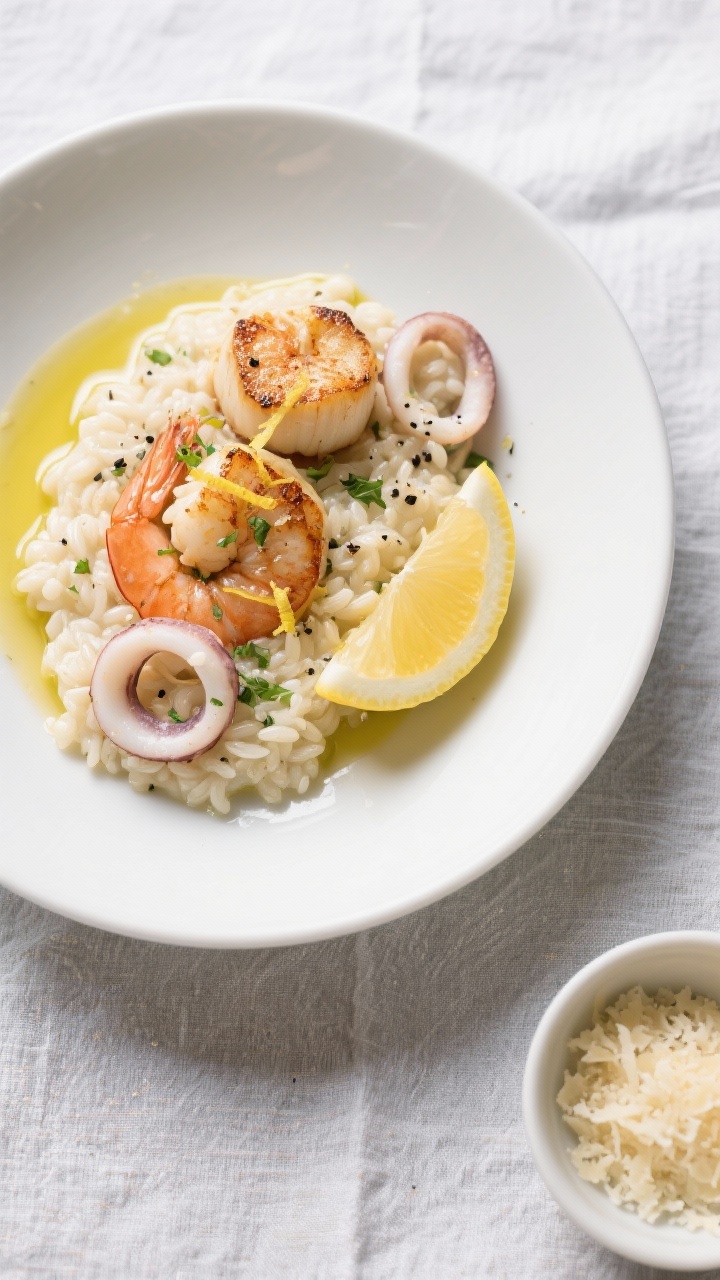
- Rest and serve. Let the risotto sit for 1 minute. It should be creamy and slightly loose, spreading softly on the plate.
Garnish with parsley and extra Parmesan. Serve immediately.
How to Store
- Refrigerator: Cool quickly and store in an airtight container for up to 2 days. Seafood is delicate, so don’t push it longer.
- Reheat: Warm gently on the stove with a splash of stock or water to loosen.
Stir over low heat until creamy again. Avoid microwaving on high, which can toughen the seafood.
- Freezing: Not recommended. The texture of both rice and seafood suffers after thawing.
Benefits of This Recipe
- Restaurant quality at home: The technique yields a silky, glossy risotto with tender seafood.
- Balanced flavor: Lemon and wine cut through richness, so it tastes fresh, not heavy.
- Flexible: Works with different seafood varieties and stocks you already have.
- Comforting yet elegant: Perfect for a cozy dinner or special occasion without much fuss.
- Nutrient-rich: Seafood offers lean protein, while the portioned rice keeps things satisfying.
Common Mistakes to Avoid
- Using cold stock: It shocks the rice and slows cooking.
Keep it warm.
- Rinsing the rice: You want the starch for creaminess. Don’t wash it away.
- Overcooking the seafood: Add it near the end and cook just until opaque.
- Letting the risotto get too thick: Aim for a slightly loose consistency that flows on the plate.
- Over-stirring or under-stirring: Stir often to release starch, but not nonstop. Gentle, regular movement is enough.
- Skipping the final seasoning: Lemon, butter, and salt at the end make the flavors pop.
Recipe Variations
- Saffron Seafood Risotto: Steep a pinch of saffron in warm stock for 5 minutes.
Add to the risotto for a golden color and floral depth.
- Tomato-Basil Twist: Stir in 1/2 cup of crushed tomatoes midway and finish with fresh basil. It adds brightness and a touch of sweetness.
- Lobster Upgrade: Swap part of the seafood for lobster meat. Use lobster shells to make or boost the stock for extra flavor.
- Herb and Lemon: Skip Parmesan and double down on parsley, chives, and lemon for a lighter, dairy-minimal finish.
- Spicy Calabrian: Add a teaspoon of Calabrian chili paste with the aromatics for heat and complexity.
FAQ
Which rice is best for seafood risotto?
Arborio is widely available and works well, but Carnaroli is often preferred for its firmer texture and ability to stay al dente.
Avoid long-grain rice, which won’t get creamy.
Do I need seafood stock?
It’s ideal for a deeper ocean flavor, but chicken or vegetable stock works. If using a neutral stock, add a splash of clam juice to boost the seafood character.
Can I make it without wine?
Yes. Replace the wine with extra warm stock plus a teaspoon of lemon juice for acidity.
Add the lemon gradually and taste as you go.
How do I avoid rubbery scallops and shrimp?
Add them at the end and cook just until opaque—usually 2–4 minutes. Pat them dry before cooking to avoid steaming, and don’t let the pan get too hot.
Is Parmesan traditional with seafood?
Opinions vary. A little Parmesan can round out the dish without overpowering the seafood.
If you prefer a purist approach, skip it and finish with extra lemon and olive oil.
Can I prepare any part ahead of time?
Yes. Chop aromatics and measure ingredients in advance. You can also parcook the risotto to about 75% done, spread it on a tray to cool, then finish with stock and seafood right before serving.
What should the final texture look like?
The risotto should relax on the plate, not sit in a stiff mound.
Think creamy and slightly loose, with each grain distinct but bound together by a glossy sauce.
What wine pairs well with seafood risotto?
Choose a crisp white like Sauvignon Blanc, Pinot Grigio, or Vermentino. Their acidity keeps the dish lively and complements the seafood.
Wrapping Up
Seafood risotto is all about balance—silky rice, bright acidity, and tender, well-cooked seafood. With warm stock, steady stirring, and a careful finish, it’s straightforward and rewarding.
Use this as your base, then tweak the seafood mix and flavors to fit your mood and pantry. The result is a creamy, elegant dish that feels special every time you make it.