This lemon cod fish recipe brings clean, fresh flavors to your table with almost no fuss. It’s light, fragrant, and ready in under 30 minutes, making it perfect for busy weeknights or relaxed weekends. The lemon and garlic wake up the mild cod, while a touch of butter adds a silky finish.
You’ll get tender, flaky fish without heavy sauces or complicated steps. It’s the kind of dish that feels restaurant-worthy but is simple enough for anyone to cook.
What Makes This Special
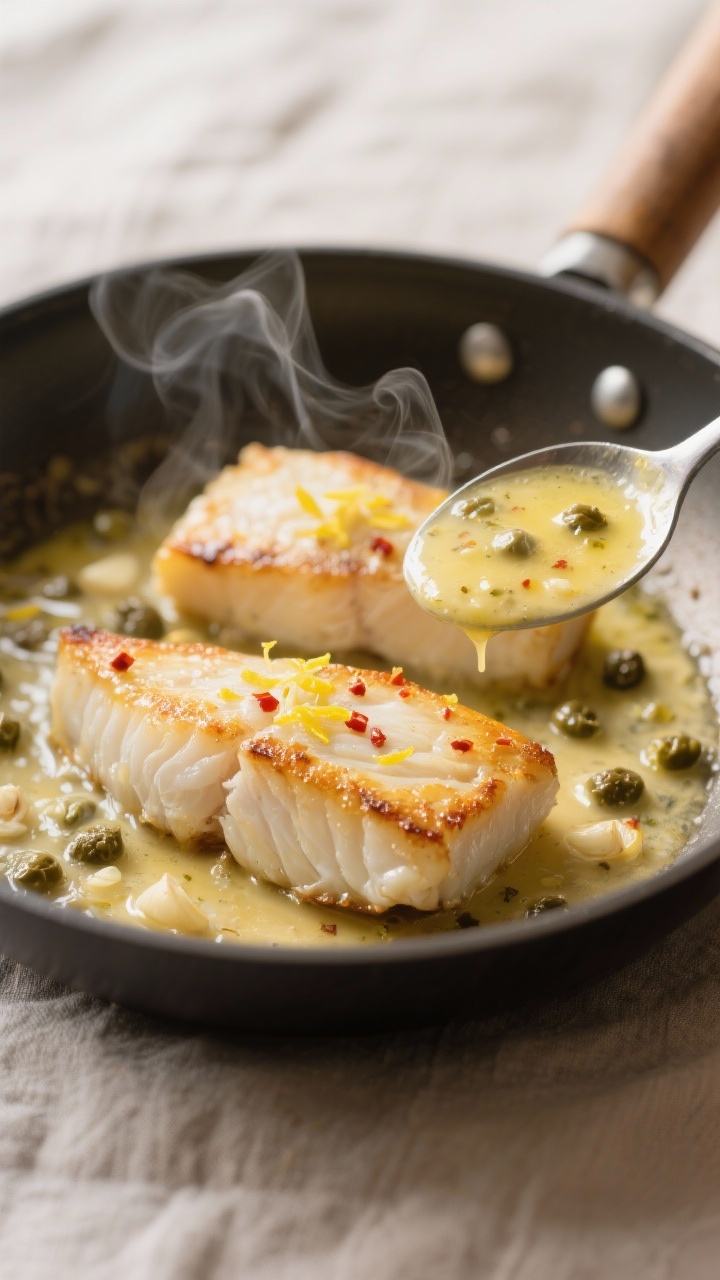
This recipe focuses on balance: bright citrus, warming garlic, and a little fat to carry flavor. The cod stays moist thanks to quick cooking and a simple pan sauce.
You can bake or pan-sear depending on your mood and time, and both methods deliver a clean, fresh taste. It’s also flexible, welcoming herbs, capers, or a splash of white wine without losing its core character.
Most of all, it’s a recipe you can remember without a card. Once you make it once or twice, it becomes second nature—perfect for weeknight cooking, dinner guests, or meal prep.
Ingredients
- 4 cod fillets (about 5–6 oz each), fresh or properly thawed
- 2 lemons (zest of 1, juice of both)
- 2–3 garlic cloves, minced
- 2 tablespoons olive oil
- 1 tablespoon unsalted butter (optional but recommended)
- 1 teaspoon Dijon mustard (for brightness and body)
- 1/2 teaspoon honey or a pinch of sugar (balances the acidity)
- 1/2 teaspoon kosher salt, plus more to taste
- 1/4 teaspoon black pepper
- 1/4 teaspoon red pepper flakes (optional for mild heat)
- 2 tablespoons fresh parsley, chopped
- 1 tablespoon capers, drained (optional but great)
- Lemon slices, for garnish
Instructions
- Prep the oven or pan: For baking, preheat the oven to 400°F (200°C).
Lightly oil a baking dish. For pan-searing, heat a large nonstick or stainless skillet over medium-high heat.
- Pat the cod dry: Use paper towels to remove surface moisture. This helps browning and prevents steaming.
- Season simply: Sprinkle the fillets on both sides with salt and black pepper.
Set aside while you make the sauce.
- Mix the lemon sauce: In a small bowl, whisk together olive oil, lemon zest, lemon juice, Dijon, honey, and minced garlic. Stir in red pepper flakes if using.
- Option A – Bake: Place cod in the baking dish, tuck lemon slices around, and pour the lemon sauce over the fillets. Dot the top with small pieces of butter.
Bake 10–12 minutes, or until the fish flakes easily with a fork and is opaque throughout. Thicker fillets may need up to 15 minutes.
- Option B – Pan-sear + quick sauce: Add a drizzle of olive oil to the hot pan. Sear the cod 2–3 minutes per side until lightly golden and just cooked through.
Remove to a plate. Turn the heat to medium-low, add the butter, capers (if using), and the lemon sauce to the pan. Simmer 1 minute, scraping up browned bits.
Return the fish to the pan and spoon sauce over the top for 30 seconds.
- Finish with herbs: Sprinkle parsley over the fish. Taste the sauce and adjust with a pinch more salt or a squeeze of lemon as needed.
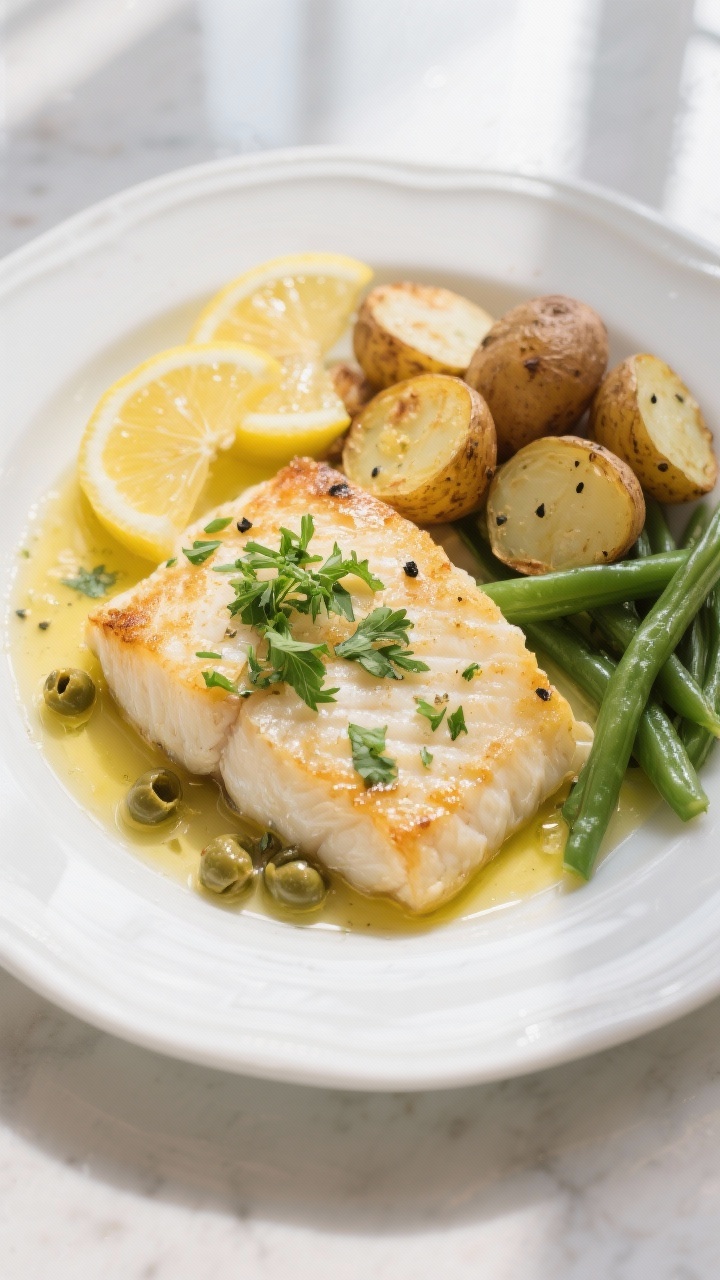
- Serve: Spoon sauce over each fillet. Garnish with fresh lemon slices.
Pair with steamed green beans, sautéed spinach, roasted potatoes, or rice.
Keeping It Fresh
Use cod that smells clean and like the sea, not fishy. If frozen, thaw it in the fridge overnight or in a sealed bag under cold water, then pat dry. Cook it the day you buy or thaw it for the best texture and taste.
Leftovers keep in an airtight container for up to 2 days.
Reheat gently in a covered skillet over low heat with a splash of water or extra lemon juice. Avoid microwaving on high; it can turn the fish rubbery.
Why This is Good for You
- Lean protein: Cod is naturally low in fat and high in protein, which helps with fullness and muscle repair.
- Low in calories: This dish delivers a bright, satisfying flavor without heavy creams or breading.
- Vitamin boost: Lemon adds vitamin C, and parsley offers vitamin K and antioxidants.
- Heart-friendly fats: Olive oil provides healthy monounsaturated fats; cod also contains omega-3s, though less than fattier fish like salmon.
What Not to Do
- Don’t overcook the cod: It should flake easily but still be moist. Dry cod is the main way this goes wrong.
- Don’t skip drying the fish: Moisture on the surface prevents good browning and dilutes flavor.
- Don’t drown it in lemon: Lemon is great, but too much acid can make the fish taste harsh.
Balance with a touch of honey or butter.
- Don’t use a cold pan for searing: You’ll get sticking and tearing. Preheat properly.
- Don’t overcrowd the pan: Cook in batches if needed so the fish sears instead of steams.
Alternatives
- Fish swaps: Try haddock, pollock, halibut, tilapia, or sea bass. Adjust cooking time for thickness.
- Dairy-free: Skip the butter and use an extra teaspoon of olive oil or a splash of coconut milk for richness.
- Herb variations: Swap parsley for dill, chives, basil, or cilantro.
Dill and lemon are especially classic.
- Add-ons: Stir in capers, minced shallot, or a splash of dry white wine. For a brinier note, add chopped olives.
- Sheet pan meal: Bake the cod with asparagus or broccolini tossed in olive oil, salt, and pepper. Everything finishes around the same time.
- Gluten-free and low-carb: This recipe is naturally both.
Serve with cauliflower rice or a crisp salad.
FAQ
How do I know when cod is done?
The flesh should turn opaque and flake easily with a fork. If you use a thermometer, aim for 130–135°F in the thickest part. Pull it just before your target; it will finish cooking off the heat.
Can I cook this in an air fryer?
Yes.
Preheat to 380°F, lightly oil the basket, and cook seasoned cod 8–10 minutes depending on thickness. Warm the lemon sauce separately and spoon over after cooking.
What if my cod smells fishy?
Fresh cod should smell clean. If it’s strongly fishy, it’s likely not fresh.
Rinsing and drying won’t fix age, so choose a different piece or another store.
Can I make the sauce ahead?
You can whisk the lemon mixture up to a day ahead and refrigerate. Add the garlic the day you cook for the brightest flavor, and whisk again before using.
Do I need to remove the skin?
Many cod fillets are sold skinless. If yours has skin, you can cook it skin-side down first when searing.
The skin helps hold the fish together, and you can remove it after cooking if you prefer.
What sides go best with lemon cod?
Try roasted baby potatoes, garlicky green beans, sautéed zucchini, a simple arugula salad, or herbed rice. Anything fresh and light pairs well with the citrusy sauce.
Can I use bottled lemon juice?
Fresh lemon juice tastes brighter and cleaner. If you must use bottled, choose a high-quality brand and compensate with extra zest to boost freshness.
In Conclusion
This lemon cod fish recipe is bright, zesty, and reliably delicious.
With simple ingredients and quick steps, it turns a mild white fish into a satisfying meal that feels both light and complete. Keep it basic or dress it up with capers and herbs—either way, it’s a dependable go-to for healthy, flavorful cooking. Serve it with your favorite green vegetable and something starchy, and dinner is done, beautifully.