This tuna sushi bowl brings the flavors of your favorite sushi spot to your own kitchen. It’s clean, fresh, and easy to put together on a weeknight. You’ll get the same satisfaction as a sushi roll without the fuss of rolling.
Think tender tuna, glossy rice, crunchy veggies, and a savory-sweet sauce that ties it all together. If you’re craving something light yet satisfying, this bowl hits the mark.
What Makes This Recipe So Good
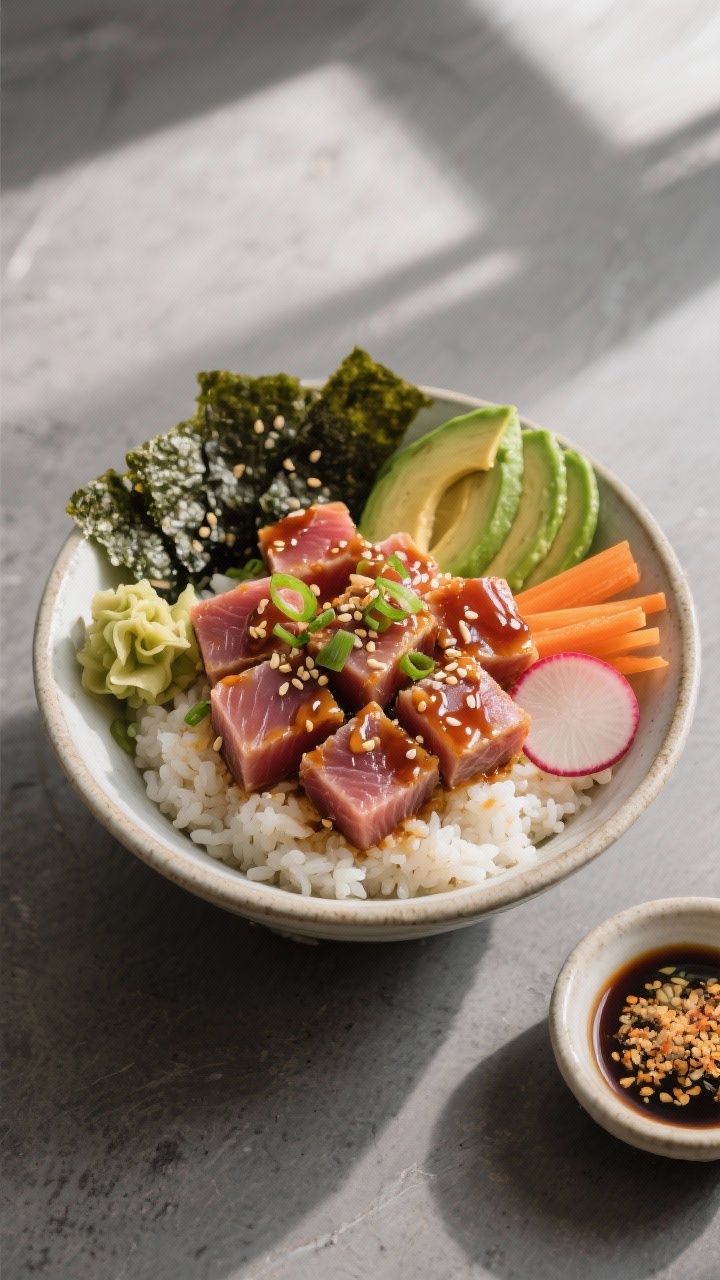
- Restaurant flavor, simple method: You get the same balance of textures and flavors as a sushi roll with none of the rolling or special gear.
- Quick to make: With a little prep, you can have this on the table in about 25 minutes, especially if you cook the rice ahead of time.
- Customizable: Swap veggies, adjust the sauce, or go spicy. It’s easy to tailor to your taste or what you have on hand.
- Nutritious and filling: Plenty of protein from tuna, complex carbs from rice, and fiber-rich veggies keep you full without feeling heavy.
- Beautiful presentation: Colorful toppings and glossy sauces make it feel special, even on a busy night.
Ingredients
- Sushi rice: 1 cup uncooked short-grain sushi rice, rinsed well
- Rice seasoning: 2 tablespoons rice vinegar, 1 teaspoon sugar, 1/2 teaspoon salt
- Tuna: 8–10 ounces sushi-grade ahi tuna, diced into 1/2-inch cubes
- Tuna marinade: 2 tablespoons low-sodium soy sauce or tamari, 1 teaspoon sesame oil, 1 teaspoon rice vinegar, 1 teaspoon honey or maple syrup, 1 teaspoon sriracha (optional), 1 teaspoon finely grated fresh ginger, 1 small garlic clove, minced
- Vegetables: 1 small cucumber, thinly sliced; 1 small carrot, julienned; 1 avocado, sliced or cubed; 2–3 radishes, thinly sliced
- Seaweed: 1 sheet roasted nori, cut into thin strips, or 1/4 cup seaweed salad (optional)
- Toppings: 1 tablespoon toasted sesame seeds, 2 green onions (scallions), thinly sliced, pickled ginger to taste
- Sauce drizzle: 2 tablespoons Japanese mayonnaise or regular mayo mixed with 1–2 teaspoons sriracha (optional for spicy mayo)
- Extras (optional): Edamame, mango cubes, microgreens, furikake seasoning, wasabi
Step-by-Step Instructions
- Cook the rice: Rinse the sushi rice under cold water until the water runs mostly clear.
Cook according to package directions. When done, gently fold in rice vinegar, sugar, and salt while the rice is warm. Spread on a tray to cool slightly.
- Prep the tuna: Pat the tuna dry with paper towels and dice into even cubes.
Keep it cold in the fridge while you mix the marinade.
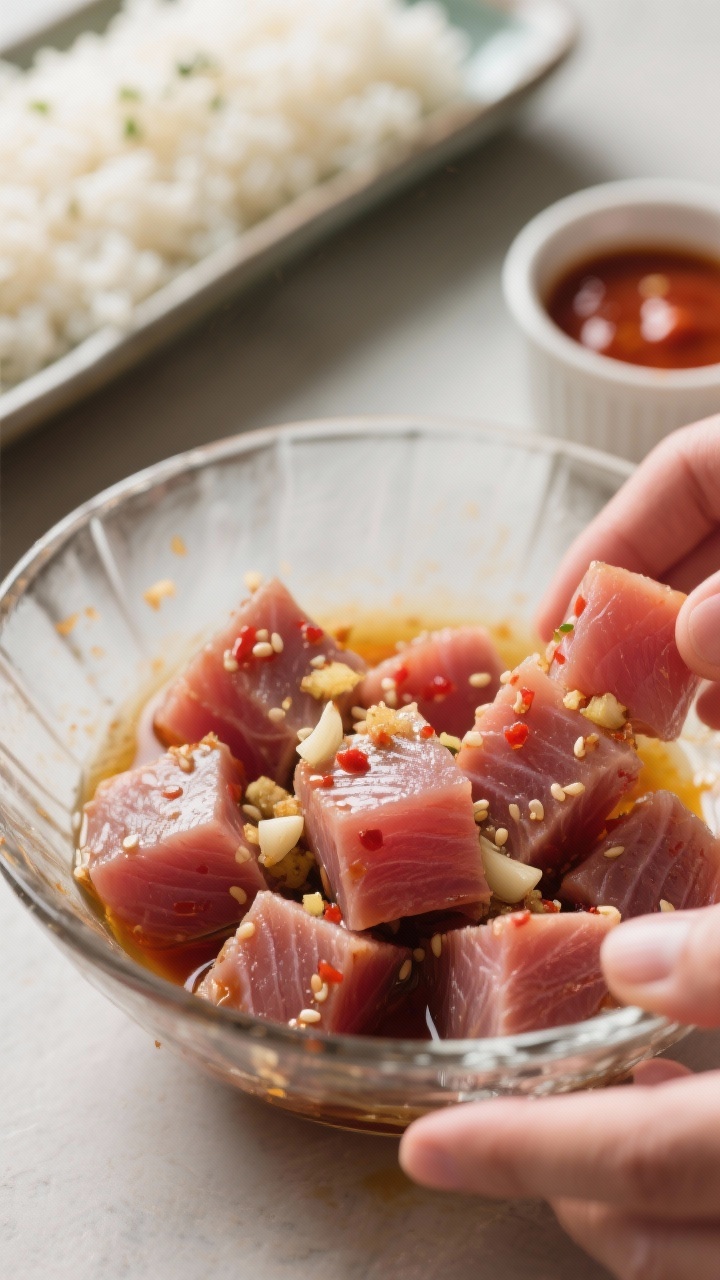
- Make the marinade: In a small bowl, whisk soy sauce, sesame oil, rice vinegar, honey, sriracha (if using), ginger, and garlic until smooth.
- Marinate briefly: Toss tuna with the marinade. Let it sit in the fridge for 10–15 minutes. Don’t over-marinate or the tuna will become mushy.
- Prep vegetables and toppings: Slice cucumber, carrot, radishes, and avocado. Cut nori into thin strips.
Slice green onions and gather sesame seeds and pickled ginger.
- Mix the sauce drizzle: Combine mayo with sriracha for a quick spicy mayo, or keep mayo plain for a milder bowl.
- Assemble the bowls: Add a scoop of seasoned rice to each bowl. Arrange marinated tuna, cucumber, carrot, avocado, and radishes over the rice. Scatter nori strips, green onions, and sesame seeds on top.
- Finish and serve: Add pickled ginger and a light drizzle of spicy mayo.
If you like, sprinkle furikake and an extra splash of soy sauce. Serve right away.
Storage Instructions
Best enjoyed fresh. Raw tuna has a short window for quality and safety. If you need to prep ahead, store the components separately.
- Cooked rice: Refrigerate up to 2 days in a sealed container.
Rewarm gently or use at room temperature.
- Vegetables: Store prepped veggies for 2–3 days. Keep avocado uncut until serving.
- Marinated tuna: Keep chilled and use within 24 hours. For best texture, marinate right before serving.
- Sauces: Spicy mayo keeps for 3–4 days refrigerated.
If you want leftovers, avoid dressing the entire bowl.
Keep tuna, rice, and sauces separate until you’re ready to eat.
Why This is Good for You
- Lean protein: Tuna is rich in protein, which supports muscle repair and keeps you satisfied.
- Omega-3 fats: Tuna offers heart-healthy fats that support brain and heart health.
- Balanced macros: Rice provides complex carbs, while avocado and sesame add healthy fats for steady energy.
- Micronutrients: Cucumber, carrots, and radishes deliver fiber, vitamins A and C, and antioxidants.
- Controlled sodium and sugar: Making your own marinade lets you keep levels in check compared to store-bought sauces.
Pitfalls to Watch Out For
- Using non-sushi-grade fish: For raw preparations, always choose sushi- or sashimi-grade tuna from a reputable seller.
- Over-marinating: Acid and salt can “cure” the tuna and make it mushy. Keep marinating time short.
- Warm rice + cold tuna timing: Let the rice cool slightly so the tuna doesn’t warm up, but don’t let it get fridge-cold and hard.
- Heavy sauces: Too much spicy mayo can overpower the fish and add unnecessary calories. Drizzle lightly.
- Knife skills: Uneven cuts lead to uneven texture.
Use a sharp knife and keep cubes consistent.
- Mercury concerns: Tuna can be higher in mercury. Limit portions if you are pregnant or serving young children, and consider swapping in lower-mercury fish.
Alternatives
- Protein swaps: Salmon (sushi-grade), cooked shrimp, tofu, or tempeh. For a fully cooked option, use seared or canned tuna.
- Base swaps: Brown rice, quinoa, cauliflower rice, or mixed greens for a lighter bowl.
- Flavor twists: Add ponzu for citrus notes, gochujang for heat, or yuzu kosho for a bright kick.
- Veggie variations: Edamame, shredded cabbage, blanched asparagus, or roasted sweet potato cubes.
- Gluten-free: Use tamari or coconut aminos instead of soy sauce and double-check mayo and furikake labels.
- Dairy-free: This recipe is naturally dairy-free as long as your mayo is dairy-free.
FAQ
How do I know if tuna is safe to eat raw?
Ask your fishmonger for sushi- or sashimi-grade tuna and buy from a reputable source that keeps fish very cold. Look for bright color, clean smell, and firm texture.
Keep it chilled and use it within 24 hours.
Can I make this ahead for meal prep?
Prep the rice, chop the veggies, and mix the sauces ahead of time. Assemble the bowl and marinate the tuna right before eating for the best texture and safety.
What if I don’t like raw fish?
Use cooked shrimp, seared tuna, baked salmon, or even canned tuna. The bowl still tastes great with the same veggies and sauces.
How spicy is the sauce?
It’s adjustable.
Add a little sriracha to the marinade for gentle heat, and more to the mayo if you want a spicy finish. Keep both mild if you prefer.
Can I skip the rice?
Yes. Try mixed greens, shredded cabbage, or cauliflower rice for a lighter, lower-carb bowl.
Keep the same toppings and sauces.
What’s a good vegetarian version?
Use marinated tofu or tempeh. A quick marinade of soy sauce, sesame oil, ginger, and garlic works well. Add edamame for extra protein.
Do I need furikake?
No, but it’s a nice touch.
It adds umami, sesame, and seaweed notes. If you don’t have it, use nori strips and sesame seeds instead.
Final Thoughts
This tuna sushi bowl is proof that fresh, clean flavors don’t need complicated steps. With a few quality ingredients and a quick marinade, you get a balanced, restaurant-inspired meal at home.
Keep it simple or load it up with toppings—either way, it’s bright, satisfying, and easy to love. If you’re new to making sushi-style dishes, this bowl is the perfect place to start.