This bluefin tuna recipe is all about clean, bold flavor with a silky texture and a restaurant-quality finish. It’s quick enough for a weeknight but special enough for guests. You’ll sear thick tuna steaks until just rare in the center, then finish with a bright soy-citrus glaze and a crunchy herb topping.
The result is tender, buttery fish that tastes fresh and refined without complicated steps. If you want a reliable tuna recipe that impresses every time, this is it.
Why This Recipe Works
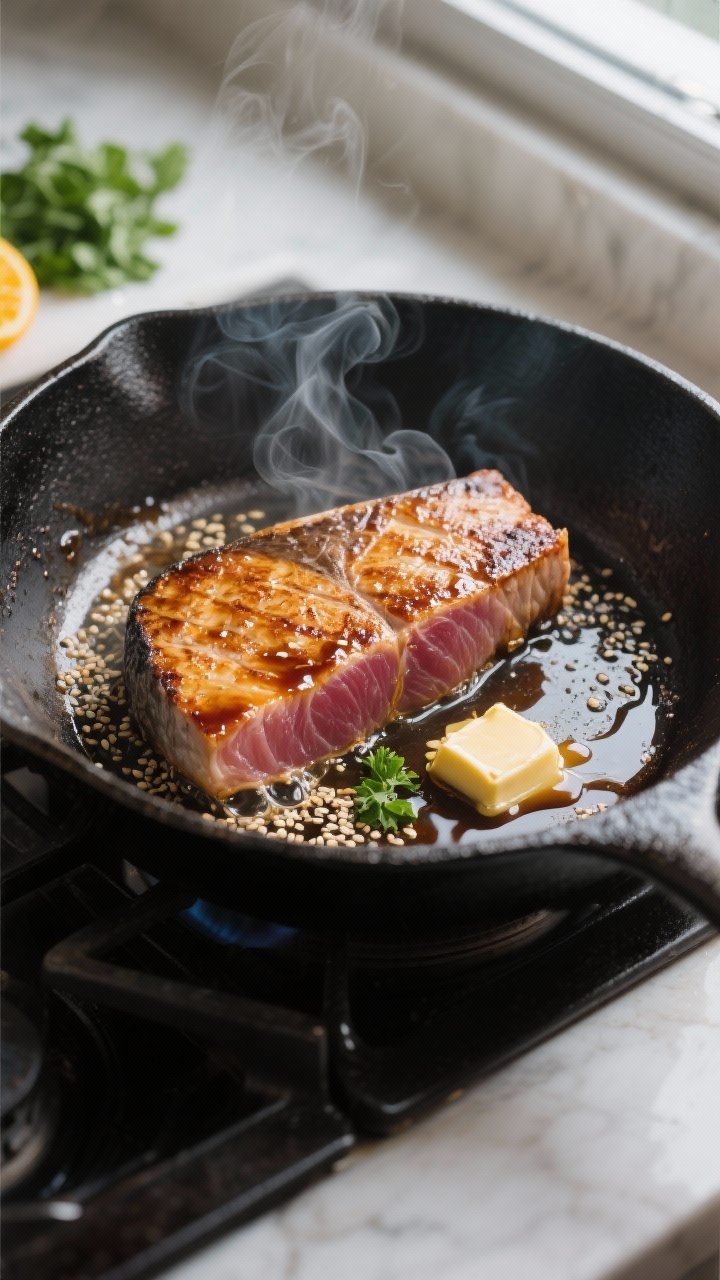
- High heat, quick cooking: Bluefin is rich and best enjoyed rare to medium-rare. A fast sear locks in moisture and keeps the center silky.
- Balanced glaze: Soy, lemon, and honey bring salty, tangy, and lightly sweet notes that complement the tuna’s natural richness.
- Textural contrast: A simple herb-garlic topping adds freshness and crunch, so every bite feels complete.
- Minimal ingredients, big payoff: You don’t need much to highlight quality fish—just smart seasoning and timing.
What You’ll Need
- Bluefin tuna steaks: 2 steaks (6–8 oz each), about 1 to 1.5 inches thick
- Kosher salt and freshly ground black pepper
- Neutral high-heat oil: Avocado, grapeseed, or canola
- Unsalted butter: 1 tablespoon (optional, for finishing)
- Soy sauce: 2 tablespoons (or tamari for gluten-free)
- Lemon juice: 1 tablespoon (or yuzu if available)
- Honey or maple syrup: 1 teaspoon
- Rice vinegar: 1 teaspoon
- Garlic: 1 small clove, very finely minced
- Fresh ginger: 1 teaspoon, finely grated
- Toasted sesame oil: 1/2 teaspoon
- Fresh herbs: 2 tablespoons finely chopped parsley or cilantro
- Toasted sesame seeds: 1 teaspoon (optional)
- Lemon or lime wedges for serving
Instructions
- Pat dry and season: Blot the tuna steaks dry with paper towels.
Season all sides with kosher salt and black pepper. Let them sit at room temperature for 10 minutes.
- Mix the glaze: In a small bowl, whisk soy sauce, lemon juice, honey, rice vinegar, garlic, ginger, and sesame oil. Set aside.
- Preheat the pan: Place a heavy skillet (cast iron or stainless steel) over medium-high to high heat.
Add a thin film of neutral oil and heat until it shimmers.
- Sear the tuna: Carefully lay the steaks in the hot pan. Sear 45–75 seconds on the first side until a deep golden crust forms. Flip and sear another 45–60 seconds.
Aim for rare to medium-rare; the center should remain soft and ruby.
- Optional butter baste: Reduce heat to medium. Add 1 tablespoon butter to the pan and tilt to baste the steaks for 10–15 seconds for a glossy finish.
- Glaze quickly: Pour the soy-citrus glaze around the tuna, not directly on top. Let it bubble 10–20 seconds to thicken slightly, then spoon a little over the steaks.
Remove tuna to a cutting board.
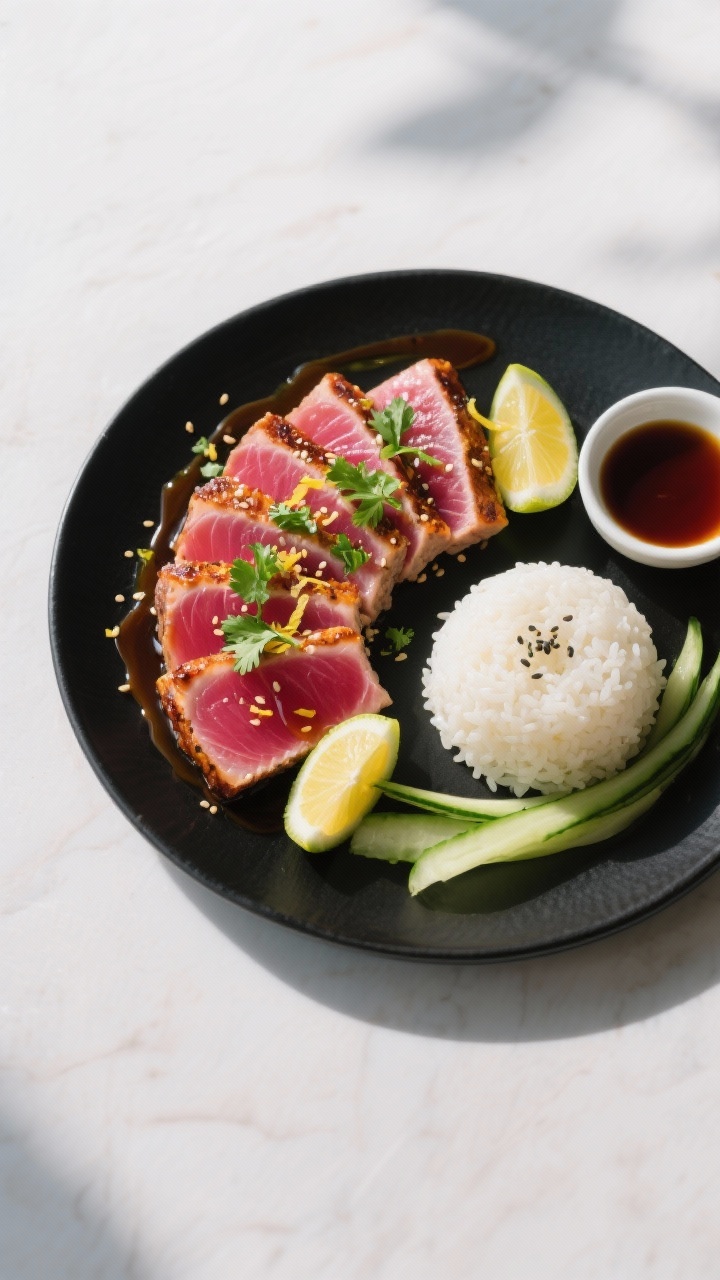
- Rest and slice: Let the tuna rest 2 minutes. Slice across the grain into 1/2-inch slices, or serve whole if you prefer.
- Finish and serve: Sprinkle with chopped herbs and sesame seeds. Serve with lemon or lime wedges and any extra glaze drizzled lightly over the top.
Storage Instructions
- Best fresh: This dish shines right after cooking.
The texture is most tender when warm or at room temperature.
- Short-term storage: If you must store, cool the tuna quickly, then refrigerate in an airtight container for up to 24 hours.
- Reheating: Avoid the microwave. Eat chilled in a salad or bring to room temperature for 20–30 minutes. Reheating can overcook the fish.
- Leftover glaze: Keep in a sealed jar up to 3 days in the fridge.
Stir before using.
Why This is Good for You
- Lean protein: Tuna delivers high-quality protein to support muscle repair and steady energy.
- Omega-3 fats: Helpful for heart and brain health, and they give the fish its satisfying richness.
- Lower sugar, big flavor: A small amount of honey balances acidity and salt without making the dish sweet.
- Fresh herbs and ginger: Add antioxidants and a clean, bright finish without heavy sauces.
What Not to Do
- Don’t overcook: Once the middle turns opaque, the tuna becomes dry and mealy. Pull it early rather than late.
- Don’t crowd the pan: If the pan cools down, you won’t get a hard sear. Cook in batches if needed.
- Don’t skip drying the fish: Moisture prevents browning and can cause splatter.
- Don’t drown it in sauce: The glaze should enhance, not mask, the fish’s natural flavor.
- Don’t use a low-heat oil: Olive oil can smoke at searing temps.
Choose a neutral, high-heat oil.
Variations You Can Try
- Sesame-crusted: Press a mix of white and black sesame seeds onto the seasoned tuna before searing for extra crunch and nutty flavor.
- Citrus-pepper: Add orange zest and cracked pink peppercorns to the seasoning for a floral, aromatic kick.
- Chili-lime: Stir a pinch of red pepper flakes or a dash of sriracha into the glaze and finish with lime zest.
- Miso finish: Whisk 1 teaspoon white miso into the glaze for deeper umami. Thin with a splash of water if it gets too thick.
- Tataki-style: Sear 20–30 seconds per side, chill briefly, then slice thin and serve with ponzu and grated daikon.
- Salad meal: Serve sliced tuna over mixed greens, cucumber, avocado, and radish with a light soy-ginger vinaigrette.
FAQ
How done should bluefin tuna be?
Most people prefer bluefin rare to medium-rare for the best texture and flavor. The center should stay deep pink to red and cool-warm, not hot.
Can I grill the tuna instead of pan-searing?
Yes.
Preheat a clean, oiled grill to high heat. Sear 45–60 seconds per side for rare, depending on thickness. Brush with glaze at the end.
What if I only have olive oil?
You can use light (refined) olive oil in a pinch, but avoid extra-virgin at high heat.
It can smoke and taste bitter.
How do I know the pan is hot enough?
A drop of water should sizzle and evaporate on contact, and the oil should shimmer. If the tuna doesn’t sizzle loudly when it hits the pan, wait.
Is there a substitute for honey?
Maple syrup or agave works. Start with the same amount and adjust to taste.
Can I use frozen tuna steaks?
Yes.
Thaw overnight in the refrigerator, then pat completely dry before seasoning and searing.
What should I serve with it?
Try steamed rice, garlicky sautéed greens, roasted asparagus, or a crisp cucumber salad. Keep sides light and fresh.
Is bluefin the only option?
You can use yellowfin (ahi) or bigeye with excellent results. Adjust cooking time slightly based on thickness.
Can I make it spicy?
Add a pinch of chili flakes to the glaze, a dab of wasabi on the side, or finish with a drizzle of chili crisp.
How do I avoid a fishy smell?
Buy the freshest tuna you can, keep it cold, and cook it the day you purchase it.
Fresh tuna should smell clean and ocean-like, not fishy.
Wrapping Up
This bluefin tuna recipe brings together a quick hard sear, a bright glaze, and fresh herbs for a plate that tastes elegant without fuss. With a hot pan, a short cook time, and a light hand on the sauce, you’ll get buttery, flavorful fish every time. Keep it simple, serve it fresh, and enjoy a meal that feels special with minimal effort.